

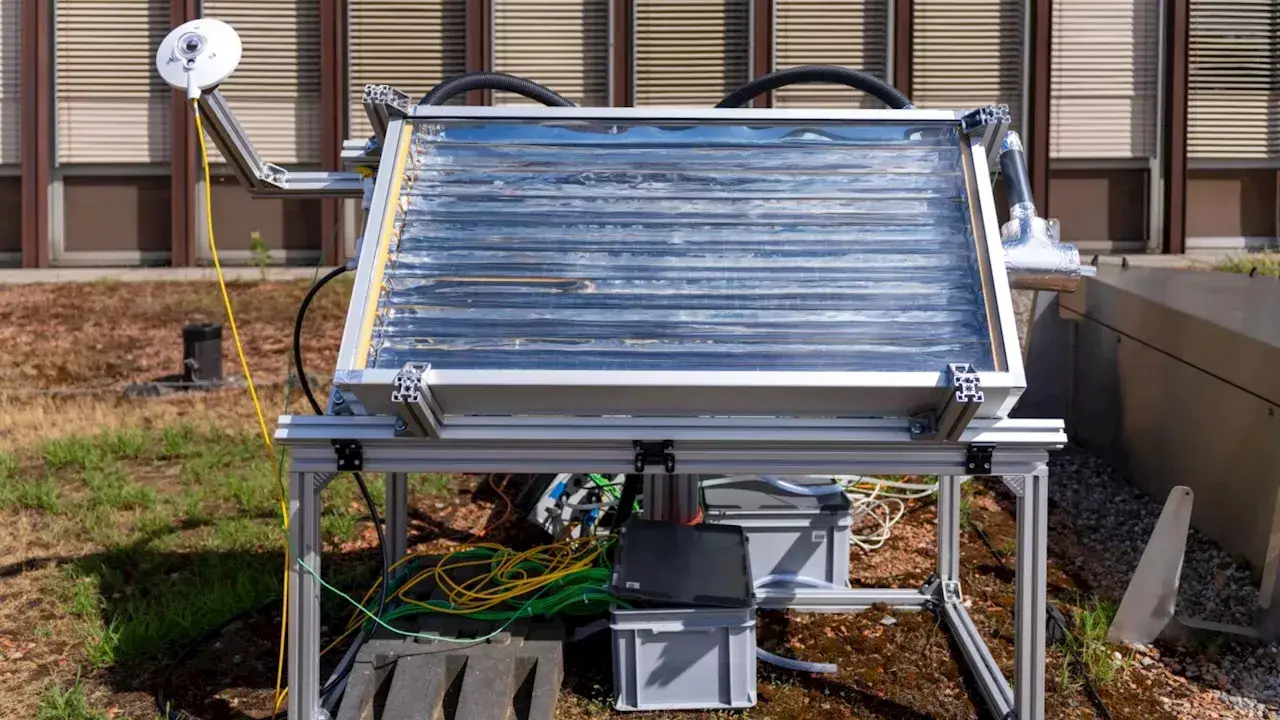

Developing a Lower-Cost Solar Alternative
An engineer at ETH Zurich has developed a new solar thermal collector designed to generate industrial process heat at temperatures reaching 302 degrees Fahrenheit (150 degrees Celsius). The technology, created by mechanical engineer and ETH Pioneer Fellow Luca Thommen, aims to provide industrial facilities with a renewable heat source that may cost less than burning fossil fuels.
The prototype device operates by efficiently concentrating sunlight, capturing its energy, and directly converting it into thermal energy. This process bypasses the need for intermediate steps often associated with electricity generation, leading to a more direct and potentially more cost-effective heat production. By offering a renewable heat source that aims to be more economical than traditional fossil fuel combustion, Thommen's innovation presents a compelling case for industrial facilities seeking to reduce both their carbon footprint and operational expenditures.
Crucially, this development is distinct from solar photovoltaic technologies that generate electricity. Instead, its singular focus is on the direct decarbonization of industrial heat generation, addressing a significant and often challenging segment of global energy consumption.
The Pervasive Challenge of Industrial Process Heat
Industrial processes worldwide demand vast quantities of heat, a requirement traditionally met by burning fossil fuels such as natural gas, coal, or oil. This reliance contributes substantially to global greenhouse gas emissions, making industrial heat a critical target for decarbonization efforts. Many manufacturing operations, from food and beverage production to chemical synthesis, require temperatures that can reach hundreds of degrees Celsius. While renewable electricity is increasingly available, converting it into heat through electrical resistance can sometimes be less efficient or more costly than direct thermal generation, especially for large-scale industrial needs.
The development by Thommen specifically targets this gap, offering a direct thermal solution that leverages solar energy to provide the necessary high temperatures without the associated carbon emissions of fossil fuels. This approach recognizes that a significant portion of industrial energy consumption is thermal, not electrical, and therefore requires specialized renewable solutions.
Targeting Specific Industrial Applications
The solar collector's ability to generate temperatures up to 302°F (150°C) makes it suitable for a broad spectrum of industrial applications. Among the potential uses identified for the technology are pasteurization in the food and beverage industry, which sterilizes products; various drying processes crucial for agriculture, textiles, and materials manufacturing; cleaning operations in diverse sectors; and specific chemical processing steps that require precise thermal inputs. These processes are foundational to modern industry and are currently major consumers of fossil fuel-derived heat.
By focusing on these specific, high-energy-demand use cases, the project addresses a segment of industrial decarbonization that, despite its significant environmental impact, is often less prominent in public discourse compared to renewable electricity generation or electric vehicle adoption. This initiative underscores the importance of tailored renewable energy solutions for different industrial challenges.
Engineering for Industrial Demands
The technical design of Thommen's device is central to its effectiveness. It is engineered to efficiently concentrate solar radiation, ensuring that the captured energy is converted into heat at the required industrial temperatures of up to 150 degrees Celsius. This precision allows for direct integration into existing industrial setups, potentially minimizing disruption and the need for extensive retooling.
The design prioritizes robustness and reliability, essential characteristics for industrial environments where consistent operation is paramount. Unlike systems that might require complex energy storage or grid integration for heat, this solar thermal collector aims to provide a direct, on-site heat source, simplifying energy management for facilities. This approach signifies a strategic shift in integrating renewable energy into heavy industry. Rather than relying solely on electrical resistance heating or grid-supplied power, which can incur transmission losses and conversion inefficiencies, the system utilizes direct solar thermal collection. This method aims to significantly reduce the carbon footprint of industrial facilities by directly displacing fossil fuel consumption with a clean, renewable alternative.
Innovation and the Energy Transition
The development of this solar thermal collector by Luca Thommen, an ETH Pioneer Fellow, is a significant contribution within the broader global efforts to transition towards a sustainable energy future. Industrial heating represents a substantial portion of global energy consumption, and the continued reliance on high-carbon fuels in many facilities presents a persistent hurdle to achieving climate targets.
As an ETH Pioneer Fellow, Thommen benefits from a program designed to support entrepreneurial scientists in transforming their research into market-ready innovations. This framework fosters the development of specific engineering solutions like the solar collector, which directly tackles the challenge of replacing fossil fuels in contexts where electricity alone may not be the most efficient or economical option for generating the necessary process heat. The introduction of a potentially cost-effective solar thermal alternative could fundamentally alter how industries approach their energy sourcing strategies. It offers a tangible pathway for businesses to meet increasingly stringent environmental regulations while simultaneously enhancing their energy independence and potentially lowering long-term operational costs.
Pathways to Sustainable Industrial Operations
The prototype developed by Thommen serves as a crucial proof of concept, demonstrating the viability of advanced solar thermal systems in demanding industrial settings. Its successful scaling and adoption could provide industrial facilities with a powerful tool to not only lower their operating costs but also drastically reduce their reliance on volatile fossil fuel markets. The project's unwavering focus on providing a viable, lower-cost alternative for processes requiring consistent, high-temperature heat aligns with the growing imperative for industries to achieve ambitious environmental goals.
As global economies push for deeper decarbonization, technologies that directly address the unique and substantial needs of industrial process heat are becoming increasingly critical. From food processing plants requiring efficient pasteurization to chemical manufacturers needing precise thermal control, the ETH Zurich project offers a promising pathway. By harnessing concentrated solar energy to replace traditional, carbon-intensive heating methods, it illustrates how targeted innovation can accelerate the transition to sustainable industrial operations worldwide.