

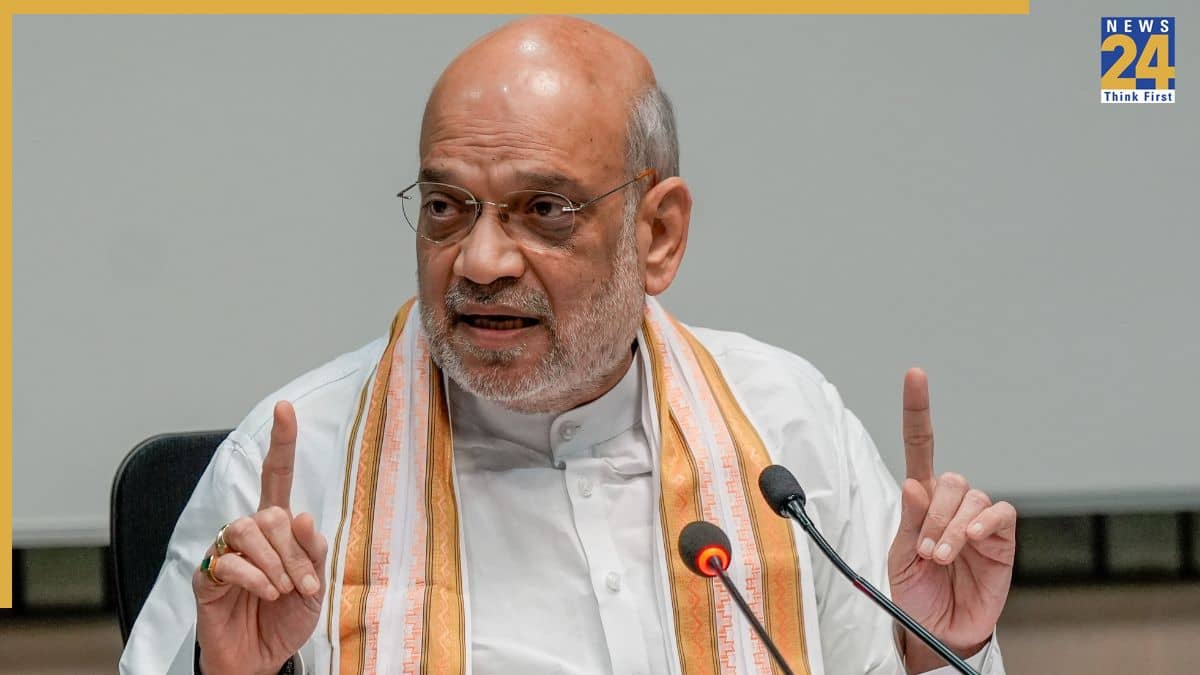

Home Minister Challenges Congress Stance on National Song
Union Home Minister Amit Shah has launched a sharp critique against the Indian National Congress party regarding its position on "Vande Mataram," the country's national song. The comments, made in the context of an ongoing political row, accuse the opposition of engaging in appeasement politics. Shah asserted that the Congress party's decision or stance on the matter was disrespectful to Bankim Chandra Chatterjee, the author of the song, as well as to those who sacrificed their lives during India's struggle for independence.
The remarks were reported by News24, which noted that Shah's intervention has ignited a fresh political debate. The Home Minister characterized the Congress party's approach not merely as a policy difference but as a fundamental insult to the legacy of the freedom struggle. By framing the issue in this manner, Shah sought to draw a direct line between the opposition's current actions and historical reverence for national symbols.
Allegations of Insult to Freedom Fighters
Central to Shah's criticism is the assertion that the Congress party's position undermines the sacrifices made by those who fought for India's sovereignty. According to the reporting, Shah stated that the decision was an insult to Bankim Chandra Chatterjee, who wrote "Vande Mataram," and also to those who sacrificed their lives during India's freedom struggle. This framing places the controversy within the broader narrative of national pride and historical accountability.
The Home Minister alleged that the Congress party was employing appeasement politics in relation to the national song. The term "appeasement" suggests a strategic move to gain political favor by diluting or challenging established national sentiments, according to Shah's characterization. The criticism highlights a deepening rift between the ruling Bharatiya Janata Party (BJP) and the Congress party over cultural and historical symbols.
Triggering the Political Row
The fresh political row was triggered by Shah's public condemnation of the Congress party's stance. The incident has drawn attention to the ongoing tensions between the major political parties regarding the interpretation and respect for national icons. News24 reported that the controversy has become a focal point for political discourse, with Shah's comments serving as a catalyst for renewed debate.
The Home Minister's statements emphasize the BJP's stance on protecting national symbols against perceived attacks or indifference from opposition groups. By linking the issue to Bankim Chandra Chatterjee and the freedom fighters, Shah aimed to elevate the dispute beyond immediate political tactics to matters of historical respect and national identity.
Broader Implications for Political Discourse
The controversy underscores the continued use of cultural and historical narratives in Indian political campaigns. Shah's allegations against the Congress party reflect a broader strategy by the BJP to position itself as the guardian of national heritage and values. The accusation of appeasement politics is a recurring theme in BJP rhetoric, often used to criticize opposition parties for compromising on issues of national importance.
As the political debate intensifies, the focus remains on the interpretation of "Vande Mataram" and its role in contemporary Indian society. The Home Minister's comments have ensured that the issue remains in the public eye, with both sides likely to engage in further exchanges over the coming days. The dispute highlights the sensitivity surrounding national symbols and the political stakes involved in their public discourse.
Responses and Reactions
While the primary source material details Shah's allegations and the resulting political row, specific responses from the Congress party or other stakeholders were not included in the provided reporting. The focus of the initial reports remains on the Home Minister's criticism and the accusations leveled against the opposition. The absence of immediate rebuttal in the current coverage leaves the narrative centered on Shah's assertions regarding appeasement politics and the alleged insults to freedom fighters.
The incident serves as a case study in how historical figures like Bankim Chandra Chatterjee are invoked in modern political conflicts. By associating the Congress party's stance with an insult to the author of the national song, Shah has framed the debate in terms of loyalty and respect for India's past. This approach aims to mobilize public sentiment around issues of national pride and historical continuity.