

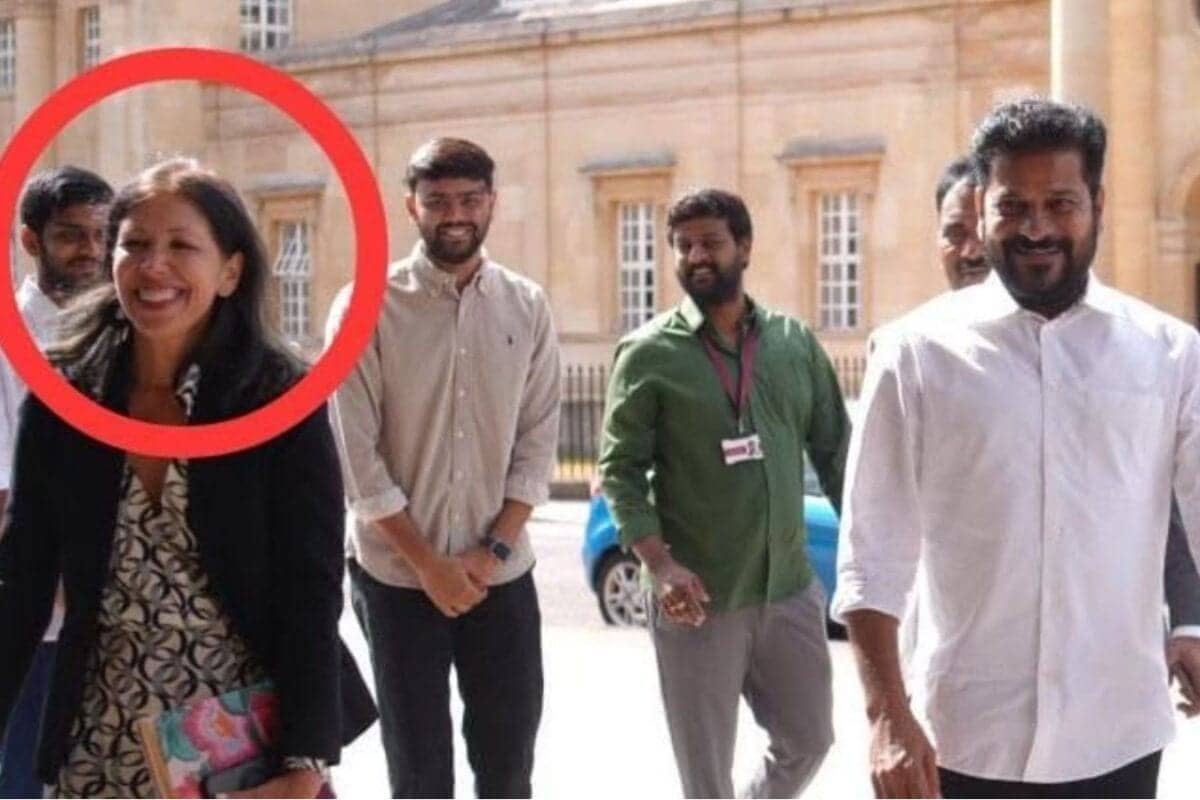

Political Fallout From Diplomatic Engagement
A Bharatiya Janata Party (BJP) Member of Parliament has characterized Oxford University professor Maya Tudor as "anti-India" following a meeting between the academic and Telangana Chief Minister Revanth Reddy. The designation marks a sharp political reaction to the interaction, which brought an international scholar into the orbit of Indian state governance.
The controversy centers on the professional background of Professor Tudor and the subsequent labeling by a senior member of the ruling national party in India. While the meeting itself involved high-level state leadership, the aftermath has focused intensely on the academic's perceived political alignment with the nation.
Profile of an Oxford Scholar
Professor Maya Tudor is identified as an academic affiliated with Oxford University. Her professional work is situated within the fields of political science and international relations, specifically examining the structures that define modern governance.
Academic Focus on State Structures
According to available information, Professor Tudor’s research interests are centered on democracy, nationalism, and state-building. Her work is not confined to a single geographic region but extends across various countries. This comparative approach allows her to analyze how different nations construct their political identities and administrative frameworks.
The scope of her studies includes the mechanisms through which states establish authority and how democratic institutions function within diverse national contexts. This academic focus on the theoretical and practical aspects of state-building places her work in the broader discourse on global political development.
The Meeting With Chief Minister Reddy
The immediate trigger for the political dispute was a meeting between Telangana Chief Minister Revanth Reddy and Professor Maya Tudor. As the head of the state government in Telangana, Chief Minister Reddy’s engagement with international academics is part of his official duties. The meeting involved discussions likely related to governance, policy, or academic exchange, given Tudor's expertise.
Chief Minister Revanth Reddy belongs to the Indian National Congress party, which is in opposition to the BJP at the national level. His decision to meet with an Oxford professor has drawn attention from political rivals who scrutinize the interactions of state leaders with foreign academics.
BJP Response and Allegations
Following the announcement or report of the meeting, a BJP Member of Parliament issued a statement describing Professor Tudor as "anti-India." This characterization represents a direct criticism of the academic by a member of the ruling party. The term "anti-India" is a serious political allegation, implying that the subject's views or actions are detrimental to the interests of the nation.
The BJP MP’s statement serves as the primary source for this specific claim. No further details regarding the content of the meeting between Reddy and Tudor were provided in the initial reports. The focus remains on the political reaction to the association rather than the substantive outcomes of their discussion.
Context of Academic and Political Intersections
The incident highlights the intersection of academic inquiry and domestic politics in India. Scholars who study nationalism and state-building often operate within complex political environments, particularly when their work is perceived to critique or analyze national narratives.
Professor Tudor’s status as an Oxford academic gives her work international visibility. When such figures engage with regional leaders like Chief Minister Reddy, the interactions are often interpreted through a partisan lens. The BJP’s labeling of Tudor reflects a broader tendency within Indian politics to frame engagements with foreign institutions in terms of national loyalty.
Chief Minister Revanth Reddy’s government has not issued a detailed public response to the specific "anti-India" allegation in the available reports. The engagement stands as a factual event: a meeting between a state chief minister and an Oxford professor whose research covers democracy and nationalism.
Implications for Academic Discourse
The labeling of an academic by a ruling party member raises questions about the reception of scholarly work in political arenas. Professor Tudor’s research on state-building and nationalism is described as comparative and international in scope. The political reaction suggests that such academic work can be viewed as politically charged when it intersects with domestic governance.
The BJP MP’s statement remains the only recorded criticism from the opposing party in this specific instance. It establishes a clear point of contention between the ruling party and the participants in the meeting with Telangana’s chief minister.