

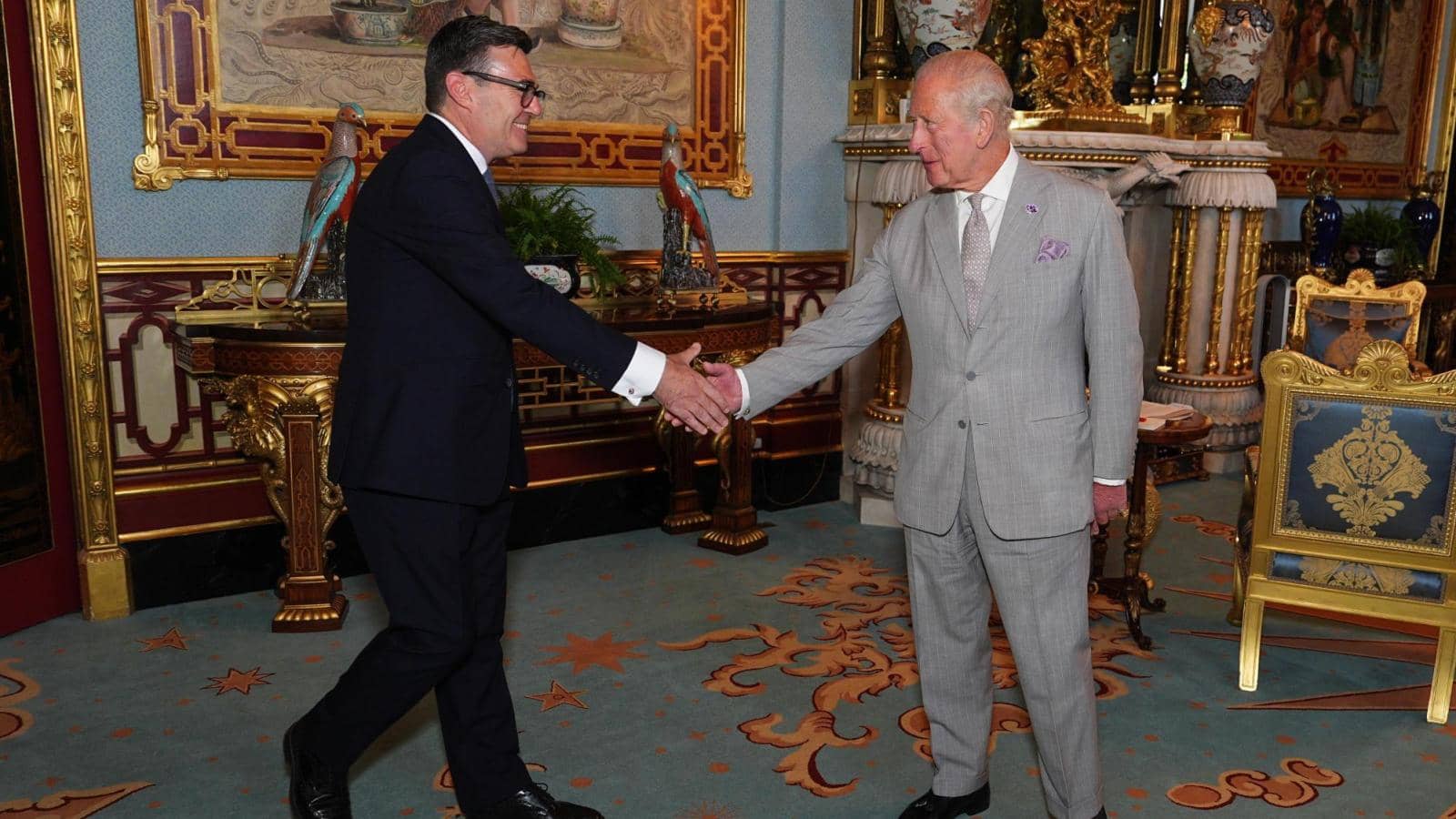

Official Appointment Confirmed After Leadership Transition
The United Kingdom has entered a new political era as Andy Burnham officially assumes the role of Prime Minister. This appointment marks a significant change in leadership, occurring immediately following the resignation of Keir Starmer from his position at 10 Downing Street.
According to reports released on Monday, July 20th, 2026, the transition was formalized during a private meeting between Andy Burnham and King Charles III. The ceremony took place within the grounds of Buckingham Palace in London. During this engagement, the monarch formally recognized Burnham’s appointment to lead Her Majesty's Government.
Reports indicate that Burnham accepted the role without public comment at the time of the announcement. His ascension brings a new face to the highest office in the land within a ten-year period. Statistics from government records confirm this is only the seventh instance where the title Prime Minister has been held by an individual different from their predecessor over the last decade.
The Daily Press noted that the event was reported globally on July 20th, with international observers marking the date as a pivotal moment in British politics. The atmosphere at Buckingham Palace during the meeting remained formal and traditional, adhering to established constitutional protocol for such transitions of power.
Historical Context of Recent Leadership Changes
The rapid succession of leadership changes has drawn attention from political analysts regarding recent trends within Westminster. Burnham’s appointment as the seventh prime minister in ten years places him alongside a short list of leaders who have taken office during this specific timeframe.
Political commentators noted that while the number seven is historically significant, it does not necessarily imply instability but rather reflects the evolving nature of parliamentary democracy. The resignation of Keir Starmer was treated as an administrative decision by his party and personal choice according to sources close to the leadership team at 10 Downing Street.
Opposition parties have stated they will work with the new administration on matters of national importance once Burnham’s term begins. The Conservative Party expressed readiness to engage in dialogue regarding upcoming legislative priorities as outlined by their parliamentary schedule for late July 2026.
The Role and Responsibilities Under New Leadership
Andy Burnham brings experience from his previous tenure leading a metropolitan area into the national stage. His background includes managing complex urban development projects before entering central government service. This trajectory has been highlighted by biographers as an example of local governance influencing national policy.
The King’s role in this appointment remains ceremonial, consistent with constitutional conventions that have governed British politics for centuries. He invited Burnham to form a government following the resignation letter submitted by Starmer earlier on Monday morning.
Government departments are expected to maintain continuity of operations during the transition period between July 20th and subsequent dates in August 2026. Civil servants have stated they will continue their duties under the new Prime Minister’s direction while administrative adjustments take place within Whitehall.
Security arrangements at Buckingham Palace were increased for the duration of the meeting, according to Metropolitan Police sources who monitored the event. The security detail included officers from both domestic and international units stationed around the palace perimeter during the official proceedings on July 20th.
International Reactions and Diplomatic Implications
Nations across Europe have acknowledged Burnham’s appointment through standard diplomatic channels. The European Union issued a brief statement welcoming continuity in UK-EU relations following the leadership change on Monday evening.
The United States State Department confirmed receipt of notification regarding the new Prime Minister via established communication lines between Washington and London. Diplomatic envoys have scheduled meetings with Burnham’s office to discuss bilateral trade agreements and security cooperation protocols.
Commonwealth nations extended formal congratulations on social media platforms following confirmation of the appointment from Buckingham Palace sources. The Commonwealth Secretariat noted that member states view this transition as a routine constitutional process consistent with democratic norms established since 1801.