

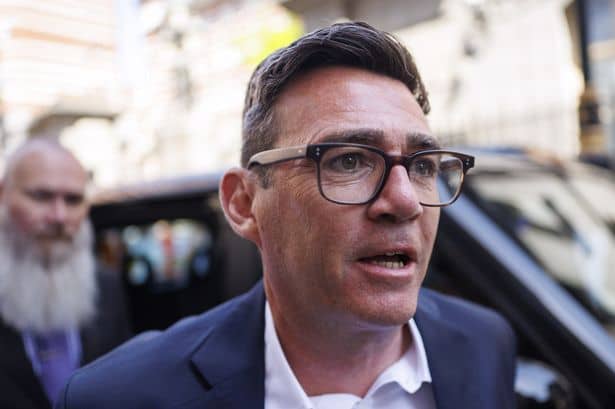

Burnham Outlines National Agenda in Manchester Speech
Andy Burnham is set to deliver a major address in Manchester this morning, marking his first significant policy update since returning to Westminster. With only weeks remaining until he potentially assumes the role of Prime Minister, Burnham has begun to articulate the agenda for his prospective government, signaling a profound shift in the nation's political trajectory.
In his speech, Burnham vowed to implement a "major political shake-up" across the United Kingdom. Central to this ambitious plan is the establishment of a "No10 of the North," a symbolic and administrative initiative intended to fundamentally decentralize power from London. He promised to spread authority throughout the UK, moving decision-making closer to the communities it affects, while simultaneously leading a ten-year mission aimed at driving up living standards for all citizens.
The announcement positions Burnham as the incoming leader of the Labour party, set to replace Keir Starmer. This transition marks a significant shift in the country's political landscape, underscoring a period of rapid change, with the United Kingdom expected to have its seventh Prime Minister in less than a decade. Burnham's potential elevation to Prime Minister follows his recent return to Westminster, a move that has quickly propelled him into contention for the nation's top political office.
A Vision for Decentralized Governance and Economic Uplift
The proposed "No10 of the North" is more than just a geographical relocation; it represents a core tenet of Burnham's vision for a rebalanced United Kingdom. This initiative aims to challenge the long-standing centralization of power in the capital, fostering a more equitable distribution of influence and resources across the country. The commitment to a ten-year mission to improve living standards further emphasizes a long-term, strategic approach to national development, moving beyond short-term electoral cycles to address deeply entrenched socio-economic disparities.
The Mirror reported that Burnham began his address by focusing on a radical bid to take power away from central authorities. While specific mechanisms for this transfer were not fully detailed in the initial live coverage, the speech serves as the starting point for his public agenda as he prepares to potentially lead the country, setting a clear direction for his prospective government's priorities.
Debate Over Experience and Policy Transferability
Burnham’s rapid ascent to national leadership has prompted scrutiny regarding his qualifications for the role. Critics have raised questions about whether his background is sufficient for governing at the national level. Specifically, some observers argue that his experience as the mayor of Greater Manchester, while significant in a regional context, may be inadequate preparation for the complexities and broader scope of national leadership, which demands a different scale of policy formulation and international engagement.
Further concerns have been voiced about the applicability of his local policy framework, known as "Manchesterism," to a broader national context. There are doubts expressed by commentators whether policies designed for a specific metropolitan area can effectively translate to the entire country, which encompasses diverse regions with unique economic, social, and cultural landscapes. These reservations highlight a key point of contention about Burnham becoming Prime Minister immediately after being elected as an MP, suggesting a potential gap between local governance and the demands of national office.
Questions Regarding Leadership Representation
The elevation of Burnham has also drawn attention to issues of representation within the Labour party. Analysts note that the British Labour party has not yet selected a woman to lead, a significant milestone achieved by the Conservative party three times and by sister social democratic parties in Australia, New Zealand, Denmark, Sweden, Finland, and Austria at least once. This observation highlights a disparity in leadership diversity compared to both domestic political rivals and international counterparts.
Rob Manwaring of Flinders University and Emily Foley of the University of Canberra wrote that Burnham’s rise raises critical questions about the changing dynamics of political parties, leadership, and representation in an accelerated political climate. They stated that one aspect often overlooked in the coverage of his rise is the party's failure to select female leadership compared to international counterparts, suggesting a broader discussion is warranted regarding the evolution of political leadership in the UK.
Implications for UK Political Dynamics and Future Governance
Burnham’s potential tenure as Prime Minister-in-waiting signals changing patterns of power and representation within the United Kingdom's political landscape. His return to Westminster and subsequent rapid rise are viewed by some as indicative of broader shifts in how political leadership is defined and selected, moving beyond traditional pathways and potentially prioritizing direct executive experience over parliamentary tenure.
His proposed agenda, centered on decentralization and a decade-long mission to improve living standards, represents a significant challenge to the status quo. This approach suggests a fundamental re-evaluation of the relationship between central government and local communities, aiming to empower regions and address inequalities that have long persisted. The success or failure of these proposals could reshape the very structure of UK governance.
As Burnham prepares to set out his government plans, the focus remains intently on his promise to decentralize power and improve economic conditions over the next decade. The reaction to his speech and his proposed "No10 of the North" will likely influence the ongoing debate about the future structure of the UK government and the direction of national policy. His rise is seen as indicative of changing political dynamics, leadership, and representation, prompting a wider discussion on the future of British politics.