


Logistical Preparations and Departure
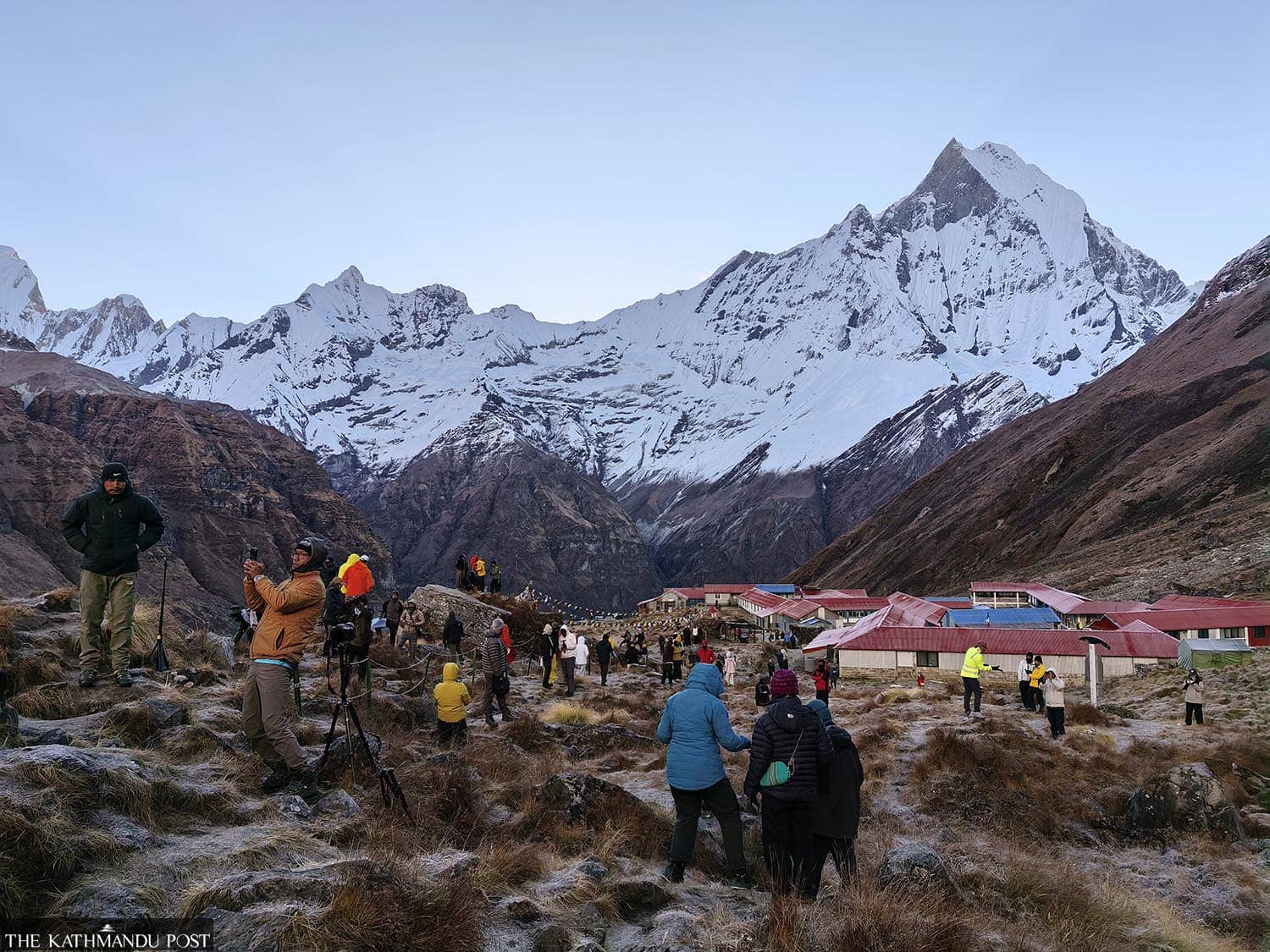
Pushkar Kafle of Jhapa waited a week in Kathmandu for his uncle Jagannath to arrive from Saudi Arabia before beginning their trek to the Annapurna Base Camp, which sits at 4,130 metres above sea level. During this waiting period, Kafle, identified as an Australian returnee, met with family in the Nepali capital and purchased trekking equipment for both travelers.
Jagannath arrived in Kathmandu one night in early October, sleeping only a couple of hours before flying to Pokhara the next morning. The pair traveled from the airport in the lake city to Hari Chowk to catch a jeep bound for Jhinu Danda, which served as the starting point for their five-day trek.
Kafle explained that taking a week off work allowed them to avoid missing the opportunity to travel amid the festive rush back home to Jhapa for Dashain. His nephew had arrived from Canada after a decade of migrating there and planned to trek in the Annapurna region, while his wife and children headed separately to Biratnagar.
The author initially doubted undertaking such a long trip due to devastation caused by the Bhotekoshi flash flood and subsequent nationwide rainfall that snapped highways. However, on October 5, the group took a tourist bus from Thamel to Pokhara, arriving in the afternoon after a largely hassle-free ride.
Trail Conditions and Physical Challenges
Upon arrival in Pokhara, the author purchased trekking essentials including sticks, a rain cover, medicines, and ORS, utilizing an ordinary bag and shoes for the journey. Nearly two decades of city life with little outdoor activity made him unsure his legs could carry him through the extreme climb.
The group faced immediate physical demands. After lunch at Chhomrung, they were unable to book accommodation in the upper ridges but secured a place for four people at Lower Sinuwa for the following evening. As they descended toward their lodging, rain greeted the group, bringing chill after the extreme climb under sunshine.
The trek involved navigating infrastructure projects and difficult terrain. A mule train crossed the trekkers, bringing diesel for an excavator deployed at a hydropower project site along the trail. The combination of physical exhaustion and the changing weather conditions characterized the daily experience on the path to the base camp.