

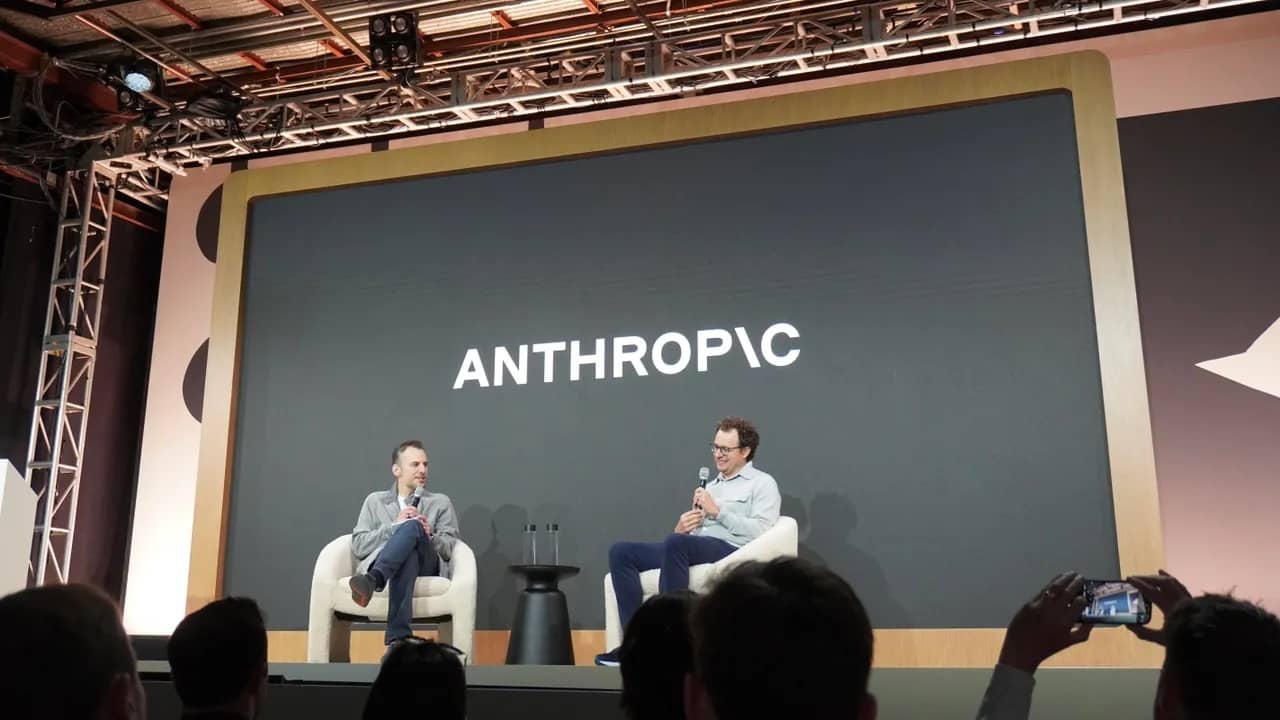

Chris Olah, a co-founder of leading artificial intelligence research company Anthropic, has issued a call for the regulation of AI to originate from entities outside the technology industry. Speaking at an event held at the Vatican, Olah emphasized that the rapid pace of AI development and the profound risks associated with it necessitate stronger oversight from governments, religious institutions, and civil society groups, rather than being left solely to the discretion of tech companies.
Concerns Over Rapid AI Development and Profound Risks
Olah articulated his concerns regarding the accelerated trajectory of artificial intelligence advancement. He stated that the speed at which AI capabilities are evolving presents challenges that transcend the traditional scope of corporate governance and internal ethical frameworks. According to Olah, the potential societal and ethical implications of advanced AI systems are too significant for their development and deployment to be managed exclusively by the private sector.
The co-founder highlighted the "profound risks" inherent in current AI development. While not detailing specific scenarios during the reported remarks, discussions within the AI safety community, including those involving Anthropic, frequently touch upon issues such as the potential for misuse of powerful AI systems, the exacerbation of societal biases, the spread of misinformation, labor market disruption, and long-term existential considerations. Olah's statement underscores a growing sentiment among some AI developers and ethicists that the industry's rapid progress outpaces the establishment of robust safety mechanisms and comprehensive regulatory frameworks.
Olah's emphasis on the speed of development reflects a common observation within the tech sector. Breakthroughs in areas like large language models and generative AI have occurred at a pace that many experts find challenging to predict or fully comprehend. This rapid evolution makes it difficult for existing legal and ethical frameworks to keep pace, creating a regulatory vacuum that some argue could lead to unforeseen consequences if not addressed proactively by external bodies. The challenge of self-regulation by technology companies is often cited, as competitive pressures and profit motives may not always align with the broader societal need for caution and comprehensive risk mitigation.
Call for Broader External Oversight
In his address, Olah specifically advocated for the involvement of external stakeholders in shaping AI regulation. He identified governments, religious institutions, and civil society groups as crucial actors in this process. This call suggests a belief that these entities, with their diverse perspectives, public mandates, and ethical foundations, are better positioned to represent broader societal interests than technology companies alone. The argument for external oversight often centers on the idea that companies, driven by competitive pressures and profit motives, may not always prioritize long-term societal well-being over immediate innovation or market dominance.
- Governments: Olah's appeal to governments aligns with ongoing international efforts to develop legislative and regulatory frameworks for AI. Many nations and blocs, including the European Union with its comprehensive AI Act, the United States with executive orders and proposed legislation, and various national strategies, are actively exploring how to govern AI development and deployment to ensure public safety, fairness, and accountability. Governments possess the unique authority to enact laws, enforce standards, and establish independent oversight bodies capable of holding AI developers accountable, thereby providing a necessary layer of public protection.
- Religious Institutions: The inclusion of religious institutions points to the ethical and moral dimensions of AI. Organizations like the Vatican have increasingly engaged with technological advancements, often convening discussions on the ethical implications of emerging technologies, including genetic engineering, biotechnology, and artificial intelligence, from a human-centric perspective. These institutions can contribute a deep understanding of human dignity, social justice, and the common good, offering a moral compass for AI development that extends beyond purely utilitarian or economic considerations.
- Civil Society Groups: Civil society organizations often play a critical role in advocating for public interests, raising awareness about potential harms, and holding corporations and governments accountable. Their involvement in AI regulation could ensure that diverse voices, particularly those of marginalized communities potentially most affected by AI, are heard and integrated into policy-making. These groups can also act as watchdogs, monitoring AI's real-world impacts and advocating for protections against algorithmic bias, privacy infringements, and other societal harms, thereby ensuring a broader representation of public concerns.
Anthropic's Stance on AI Safety
Olah's remarks are consistent with Anthropic's publicly stated mission and operational philosophy. Co-founded by former members of OpenAI, Anthropic was established with a strong emphasis on AI safety and alignment research. The company is known for its "Constitutional AI" approach, which aims to train AI models to be helpful, harmless, and honest by providing them with a set of principles or a "constitution" to guide their behavior, rather than relying solely on human feedback. This method is designed to imbue AI systems with a robust ethical framework from their inception, aiming to reduce the risk of harmful outputs.
This approach reflects an internal recognition within Anthropic of the significant ethical challenges posed by advanced AI. The company's focus on developing AI systems that are inherently safer and more aligned with human values positions its leadership to speak with authority on the necessity of external oversight, viewing it as a complementary layer of protection alongside internal safety efforts. By advocating for external regulation, Anthropic's leadership signals that even companies committed to safety recognize the limitations of self-governance in addressing the broad societal implications of AI.
The Vatican as a Platform for Ethical Discourse
The choice of the Vatican as the venue for Olah's statements highlights the increasing recognition of AI as a topic with profound ethical and moral implications that extend beyond technical and economic realms. The Holy See has, in recent years, become a notable convener of discussions on technology ethics, often bringing together leaders from technology, academia, and government to explore the human impact of scientific and technological progress.
The Vatican's involvement in these debates, exemplified by initiatives like the "Rome Call for AI Ethics" which advocates for principles such as transparency, inclusion, accountability, and impartiality in AI development, provides a unique platform. This platform allows for discussions that transcend purely technical or economic considerations, focusing instead on the broader societal and humanistic dimensions of AI. Such a venue reinforces Olah's call for diverse external perspectives in regulation by demonstrating the value of engaging non-traditional stakeholders in technological governance discussions.
The ongoing dialogue between technology leaders and ethical institutions underscores a growing consensus that the governance of artificial intelligence requires a multi-stakeholder approach to navigate its complex challenges effectively, ensuring that technological advancement serves humanity's best interests.