

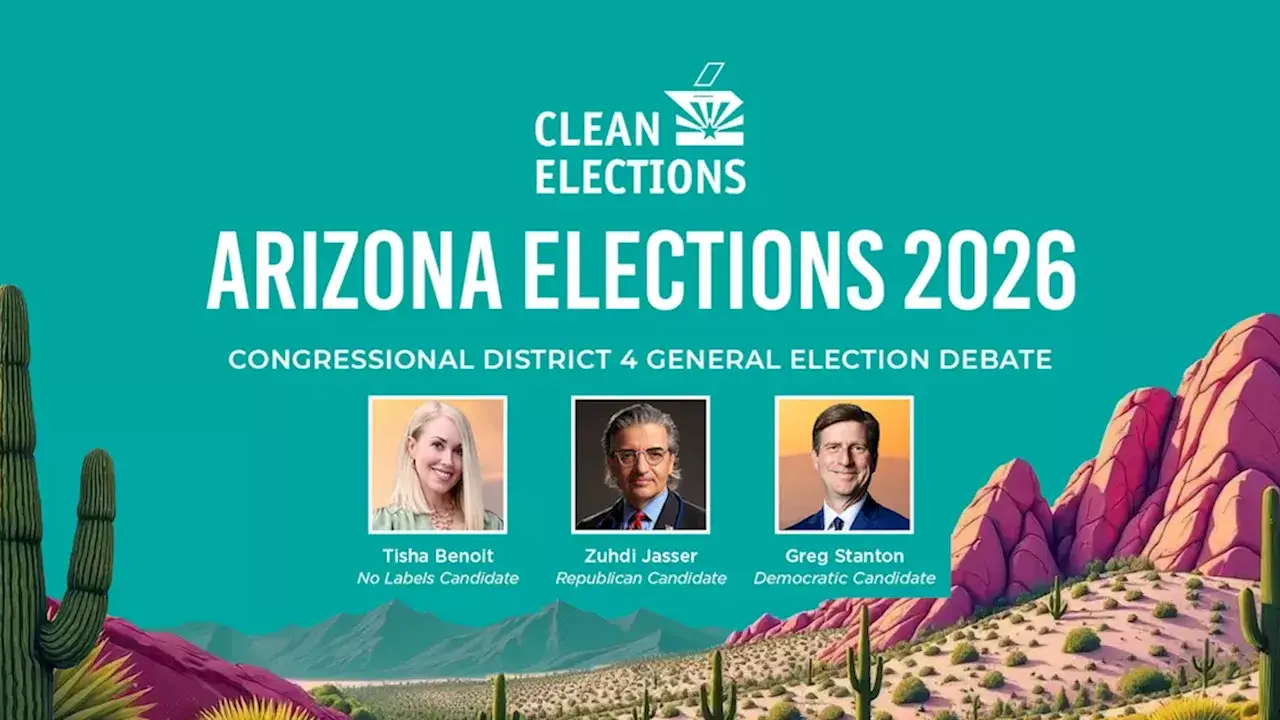

Candidates Debate for Arizona’s 4th Congressional District Seat
Three candidates are set to face off in a debate for Arizona’s 4th Congressional District on the afternoon of October 5, organized by the Citizens Clean Elections Commission. The contest features incumbent Greg Stanton alongside challengers Tisha Benoit and Zuhdi Jasser.
The district covers a significant portion of the Phoenix metropolitan area, including all of Ahwatukee, parts of Chandler and Tempe, and portions of Mesa. This geographic scope places the race at the center of suburban political dynamics in one of Arizona’s most populous regions.
Incumbent and Challengers Outline Divergent Platforms
Greg Stanton enters the debate as the incumbent, having first been elected to Congress in 2018 after defeating Republican Stephen L. Ferrara. His presence on the ballot continues a tenure that has defined the district’s recent political history.
Tisha Benoit, who listed herself in March 2026 as seeking the nomination of the Arizona Independent Party, is campaigning on a platform she describes as "seven pillars of renewal." Her policy outline includes cutting unnecessary regulations and strengthening pro-growth tax policies. She also emphasizes tackling inflation and expanding U.S. manufacturing capabilities.
Benoit’s agenda extends to supporting data center transparency and shifting the healthcare focus toward proactive optimization. On education, she advocates for reconnecting schooling to the real economy, while simultaneously supporting border security measures.
Zuhdi Jasser brings a different background to the debate. Born in Syria, Jasser moved to the United States with his parents in 1966 due to political instability. He attended university in Wisconsin and served in the U.S. Navy before entering politics. His campaign focuses on reining in wasteful spending and cutting needless regulations, while also advocating for advanced military spending.
Voting on various measures associated with this district closes at 11:59 p.m. on October 5, marking a critical deadline for the congressional race.
Historic Shift in Lieutenant Governor Selection Process
In a separate but equally significant development for Arizona politics, voters will elect a governor and lieutenant governor together as a joint ticket for the first time in state history on November 3. This change follows the passage of Proposition 131 in 2022, which altered the structure of executive leadership succession.
The newly created lieutenant governor role acts as the next in line to take over if the governor dies, resigns, is removed from office, or is permanently unable to carry out duties. Prior to this constitutional amendment, the Secretary of State stepped in if the governor could not serve.
Debate Highlights New Succession Realities
Lisa Castillo, Angela Harrolle Mohan, and Sine Kerr are participating in a candidate debate for Lieutenant Governor on October 5 at 6 p.m. MST, also hosted by the Citizens Clean Elections Commission. The debate underscores the importance of the role under the new system.
Arizona State Senator J.D. Mesnard stated in June that previous succession triggers included impeachment, death, indictment, and resignation. He cited Jan Napolitano as an example of a governor who resigned from office.
The historical context for these succession events is extensive. Raul Castro resigned in 1977, followed by Wesley Bolin dying in office in 1978. Evan Mecham was impeached and removed in 1988, Fife Symington resigned in 1997, and Janet Napolitano resigned in 2009. These examples illustrate the varied circumstances under which the governorship has changed hands in the past.
Lisa Castillo is running as a Green Party candidate on the ticket with Risa Lombardo. A small-business owner, Castillo advocates for practical, humane solutions to homelessness and stronger mental-health services. She emphasizes leadership grounded in compassion, honesty, and common sense.
As the October 5 debates conclude, voters will have heard from candidates across multiple offices, setting the stage for a November election that reshapes how Arizona’s executive branch operates.