

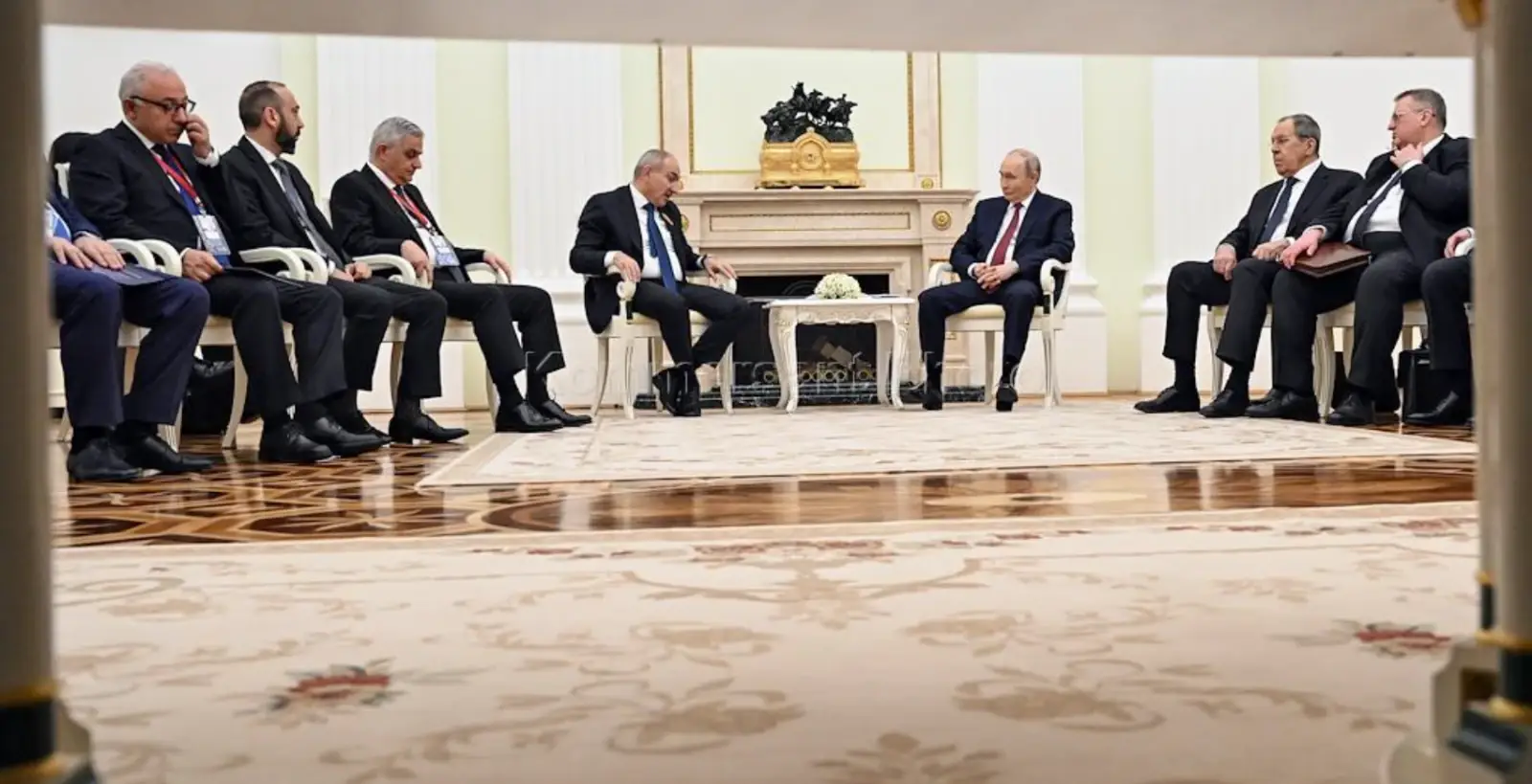

Diverging Strategic Visions Exposed at Bilateral Talks
The recent meeting between Armenian Prime Minister Nikol Pashinyan and Russian President Vladimir Putin revealed a growing divergence in their perspectives on the future of Armenia-Russia relations. The encounter, which took place on September 1 on the sidelines of the Shanghai Cooperation Organization (SCO) summit in Bishkek, marked the first bilateral discussion between the two leaders since Armenia's parliamentary elections.
According to reports from Civilnet, the meeting exposed a widening gap between Yerevan and Moscow regarding the trajectory of their partnership. While Russia continues to perceive Armenia within the framework of a traditional security alliance, Armenian officials increasingly view this model as outdated. Pashinyan’s administration is aiming to decrease its reliance on Moscow, though sources indicate this shift is not intended to result in an immediate severing of ties.
Yerevan's Evolving Security Outlook
For decades, Armenia's foreign policy and national security strategy have been heavily intertwined with Russia, rooted in a comprehensive military and political alliance. This traditional framework often entailed Russian military presence on Armenian soil, extensive defense cooperation, and reliance on Moscow's diplomatic and military support in regional conflicts. However, Armenia's recent experiences have led its leadership to question the efficacy and relevance of this long-standing arrangement.
The Pashinyan administration's stated goal to decrease reliance on Moscow signals a strategic recalibration. This move, while not aiming for an immediate rupture, suggests a desire to diversify Armenia's security partnerships and enhance its sovereign decision-making capacity. The shift reflects a growing conviction within Yerevan that the traditional model no longer adequately serves Armenia's contemporary security needs or strategic interests.
Moscow's Traditional Stance
In contrast, Russia's consistent perception of Armenia within the traditional security alliance framework underscores its enduring geopolitical interests in the South Caucasus. For Moscow, Armenia has historically represented a key strategic outpost, vital for maintaining regional influence and projecting power. The Russian leadership's adherence to this model suggests an expectation that Armenia will continue to align with its security policies and remain firmly within its sphere of influence.
The gathering was announced in advance and was followed by public remarks from both leaders, as well as separate comments regarding the outcome. These statements underscored a deeper structural problem in bilateral relations: the two sides increasingly hold different understandings of the nature and purpose of their relationship, highlighting a fundamental disconnect in strategic priorities.
Security Experiences Reshape Alliance Dynamics
The gap in understanding stems primarily from Armenia’s security experience over the past several years and Russia’s role in addressing those challenges. A core issue contributing to strained relations is this differing perception of the alliance's utility, which has been heavily influenced by specific military events in the region.
Azerbaijani Escalations Challenge Russian Guarantees
A critical turning point for Armenian public and political discourse has been Russia's actions during Azerbaijan's military escalations against Armenia in 2021 and 2022. These periods saw significant incursions by Azerbaijani forces into Armenian sovereign territory, leading to clashes and casualties. Within Armenia, these events became significant points of discussion regarding the effectiveness of its security relationship with Moscow. The perceived inadequacy of Russian support or intervention during these direct threats to Armenia's borders severely undermined the confidence in the alliance's protective capabilities.
Nagorno-Karabakh's Impact on Trust
Furthermore, Russia's conduct during the 2023 ethnic cleansing of Nagorno-Karabakh has been cited as a central issue in Armenia’s public debate over relations with Moscow. The swift Azerbaijani military offensive in September 2023 led to the exodus of nearly the entire Armenian population from Nagorno-Karabakh. Despite Russia's peacekeeping presence in the region, its inability or unwillingness to prevent this outcome profoundly damaged the security rationale that previously underpinned the Armenia-Russia relationship.
These cumulative events—the border escalations and the fate of Nagorno-Karabakh—have significantly undermined the security rationale that previously underpinned the relationship. The traditional expectation that Russia would serve as Armenia's ultimate security guarantor against external threats has been severely challenged. The cumulative effect of these incidents has fundamentally weakened the security logic that traditionally supported the alliance, leading Yerevan to reassess its dependence on Russian security guarantees and explore alternative pathways for national defense and regional stability.
Political Implications for Regional Stability
The meeting in Bishkek occurred against a backdrop of shifting geopolitical alignments, particularly in the South Caucasus. By holding talks on the sidelines of a regional summit involving multiple powers, both leaders signaled the continued diplomatic engagement despite internal disagreements. However, the public remarks following the meeting highlighted that the fundamental assumptions about the alliance have changed, indicating a deeper, more systemic shift rather than a temporary disagreement.
Regional Power Dynamics Shift
For Russia, the persistence of the traditional security lens suggests an expectation that Armenia will remain within its sphere of influence, a critical component of Moscow's broader strategy for maintaining stability and control in the post-Soviet space. Any perceived deviation from this traditional alignment could be viewed by Russia as a challenge to its regional hegemony, potentially leading to further diplomatic pressure or strategic maneuvers.
For Armenia, the move toward reducing dependence reflects a strategic recalibration driven by perceived failures in mutual defense commitments during critical periods of conflict. This recalibration is not merely a reaction to past events but an active pursuit of a more diversified and resilient foreign policy. It implies a potential opening to closer ties with other international actors and a greater emphasis on self-reliance in defense matters, fundamentally altering the geopolitical calculus of the region.
Armenia's Path to Diversification
The divergence noted during the Pashinyan-Putin talks illustrates a broader trend in post-Soviet security architectures, where member states are increasingly evaluating their alliances based on recent performance rather than historical precedent. The specific timeline of events from 2021 through 2023 has been identified as the primary catalyst for this reevaluation, demonstrating how concrete security challenges directly impact alliance dynamics. This case highlights the evolving nature of international relations in a region traditionally dominated by a single major power, signaling a potential for greater fluidity and competition among external influences in the South Caucasus.