


Shifting Dynamics in Global Defense Exports
For decades, the architecture of the global arms trade was defined by a unidirectional flow of military hardware. The United States and Western Europe served as the primary designers and suppliers of the world's most advanced weapons systems. Asian countries functioned predominantly as importers within this established framework. This traditional model is currently undergoing a significant transformation as Asian nations develop indigenous capabilities and begin exporting their own military technology.
Chris Oberoi, head of Asia-Pacific research at Bank of America Global Research, notes that Asia's defense boom is actively rewiring the global arms supply chain. The region is moving beyond mere consumption to become a substantial participant in the production and export of defense equipment. This shift marks a departure from the historical reliance on Western suppliers for advanced weaponry.
South Korea Emerges as Key Exporter
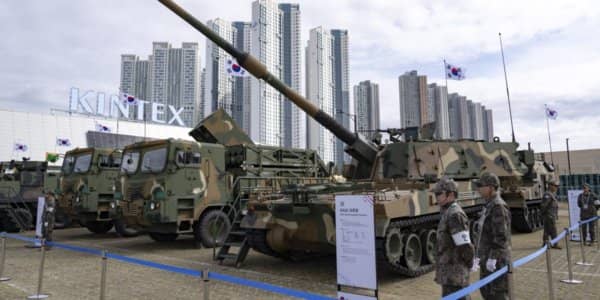
South Korea has emerged as a significant player in this evolving landscape, showcasing its capacity to design and manufacture complex military systems. A prominent example of this capability is the K9A1 self-propelled howitzer. The weapon system was displayed during the Seoul International Aerospace and Defense Exhibition (ADEX 2025) held at KINTEX in Ilsan, Goyang, South Korea.
The exhibition took place on October 20, 2025. The presence of the K9A1 at this event highlighted South Korea's growing proficiency in heavy artillery and self-propelled gun systems. The display served as a tangible indicator of the country's expanding role in the international defense market.
Strategic Positioning in Asia-Pacific
The rise of South Korea as a defense exporter is part of a broader trend within the Asia-Pacific region. According to Oberoi, the region is no longer solely dependent on external suppliers for its security needs. Instead, local manufacturers are meeting domestic demand and seeking opportunities in international markets.
This development challenges the long-standing monopoly held by Western contractors. The traditional direction of arms sales, which flowed from the West to Asia, is being supplemented by reverse flows of technology and finished goods. Asian defense industries are leveraging their manufacturing strengths to compete with established Western powers.
Implications for the Global Arms Market
The transformation of the global arms supply chain has implications for international security dynamics. As Asian nations produce more advanced weaponry, the distribution of military power becomes more decentralized. This diversification of suppliers offers potential buyers alternative options to traditional Western equipment.
Oberoi's analysis suggests that this shift is driven by increased defense spending and industrial policy within Asia. Countries in the region are investing heavily in their domestic defense sectors to ensure technological sovereignty and reduce reliance on foreign sources. This investment has resulted in a surge of high-quality military products entering the global market.
The K9A1 howitzer serves as a case study for this broader trend. Its design and production demonstrate that Asian firms can compete with Western counterparts in terms of technology and reliability. The successful export of such systems indicates a growing confidence among international buyers in Asian defense manufacturers.
Historical Context of Arms Trade
The current changes stand in contrast to the post-World War II era, when the United States and Europe dominated military technology development. Western nations possessed the research and development infrastructure necessary to create advanced combat aircraft, naval vessels, and ground systems. Asian countries largely purchased these systems to modernize their armed forces.
Over time, however, Asian defense industries have accumulated technical knowledge and manufacturing expertise. This accumulation has enabled them to transition from license production of Western designs to the creation of original platforms. The result is a more competitive global market where Asian exporters can offer comparable or superior alternatives to traditional suppliers.
The data from ADEX 2025 and other regional exhibitions underscores this progress. The presence of advanced systems like the K9A1 signals that Asia is no longer just a customer but a competitor in the high-end defense sector. This competition is reshaping the strategic alliances and procurement strategies of nations worldwide.
Future Trajectory of Defense Industry
The ongoing reconfiguration of the arms supply chain will likely continue as Asian nations further refine their technologies. South Korea's entry into the market for advanced artillery is just one facet of this expansion. Other countries in the region are also developing capabilities in areas such as naval vessels, aircraft, and missile systems.
Oberoi's assessment at Bank of America Global Research indicates that this trend is structural rather than cyclical. The investment in defense industrial bases across Asia is substantial and sustained. This long-term commitment ensures that Asian exporters will maintain a growing share of the global market.
The implications for Western defense contractors include increased competition for contracts and pressure to innovate. As Asian suppliers offer cost-effective and technologically advanced options, traditional markets may see shifts in procurement patterns. The unidirectional flow of arms sales has effectively ended, replaced by a more complex and multipolar supply network.
Regional Security Implications
The increase in indigenous defense production within Asia affects regional security calculations. Nations with robust domestic industries can sustain their military capabilities without external support during conflicts or geopolitical tensions. This autonomy enhances their strategic independence.
Furthermore, the export of these systems allows Asian countries to build diplomatic ties through military cooperation. Sales of equipment like the K9A1 can strengthen relationships with purchasing nations, creating long-term partnerships that extend beyond simple transactions.
The transformation described by Oberoi highlights a fundamental change in the global defense landscape. Asia is no longer on the periphery of arms technology but is central to its development and distribution. This shift will influence international relations and military strategy for years to come.