


History often measures governments by roads constructed, bridges commissioned and buildings unveiled. Such achievements matter, but they tell only part of the story. The deeper test of leadership lies in restoring confidence in public institutions, reviving dormant assets, strengthening governance and creating systems capable of serving citizens long after an administration has left office.
Assessing Leadership Beyond Visible Infrastructure
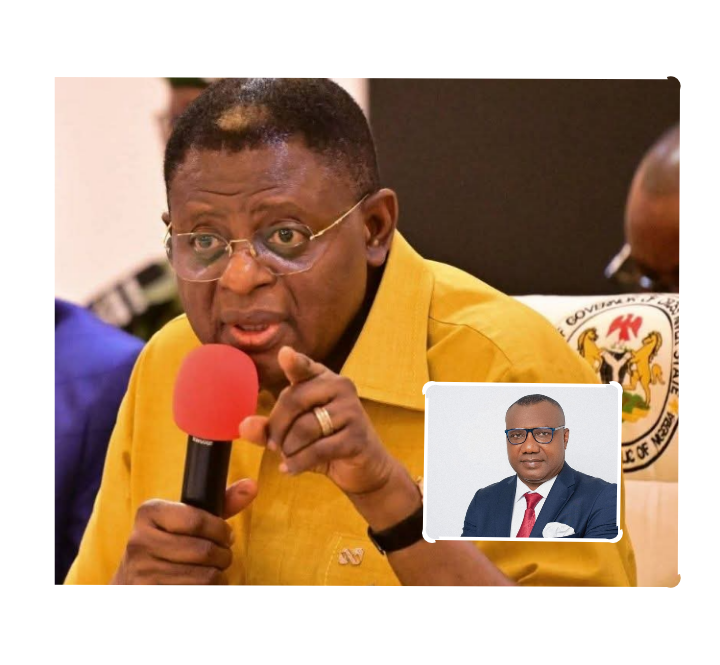
This is the lens through which the leadership of Governor Prince Bassey Edet Otu deserves to be assessed. Across Cross River State, attention has rightly focused on his administration's investments in roads, healthcare, tourism, security and public utilities.
Beneath these visible achievements, however, lies a quieter transformation that may prove to be his most enduring legacy: the rebuilding of institutions and restoration of public assets that had suffered years of neglect. Unlike physical projects that eventually wear out, institutional strengthening provides a different metric for evaluation.
It is an empirical truth that great leaders are not merely remembered for the monuments they commissioned, the roads they constructed or the buildings they unveiled. They are remembered more enduringly for the institutions they restored, the systems they strengthened and the foundations they laid for future generations to build upon.
The Scope of Institutional Restoration
Governor Prince Bassey Edet Otu's leadership is being assessed through the lens of restoring institutions and public assets, beyond visible projects like roads and healthcare. His legacy is characterized by strengthening governance, reviving dormant assets, and creating systems for long-term citizen service.
This approach focuses on enduring impact through institutional renewal rather than solely on physical infrastructure. The distinction between temporary construction and permanent systemic change remains central to the current discourse regarding his administration's performance in Cross River State.
A Shift From Physical Assets To Systems
The narrative surrounding Governor Prince Bassey Edet Otu suggests a deliberate pivot away from standard development metrics toward more complex governance challenges. The focus has moved beyond simple infrastructure counts to an examination of how public assets function within the broader state ecosystem.
Restoring confidence in public institutions is cited as one of the primary outcomes sought during his tenure. This involves addressing issues that extend past the physical presence of a building or road, targeting instead the operational capacity and reliability of government machinery.
The rebuilding of institutions represents a specific strategy employed to counteract years of neglect reported within various sectors of Cross River State. By reviving dormant assets, the administration aimed to re-activate resources that had previously been underutilized or left idle due to administrative hurdles.
Strengthening Governance Mechanisms
The creation of systems capable of serving citizens long after an administration has left office is identified as a critical component of this legacy. Such systems are designed with longevity in mind, ensuring that improvements made during one term do not vanish immediately upon the departure of officials.
Strengthening governance implies a focus on internal processes and administrative structures rather than just external visibility projects. This distinction allows for an evaluation based on sustainability metrics rather than immediate visual impact alone.
The Long-Term Perspective On Public Service
The enduring nature of these efforts is measured by their ability to persist beyond the political cycle that typically drives infrastructure announcements. The goal was to establish foundations upon which future administrations could continue building, thereby reducing administrative friction and increasing service delivery efficiency.
By prioritizing the restoration of public assets over mere construction of new ones where possible, the administration sought to maximize existing resources rather than constantly seeking fresh capital for immediate but potentially short-lived projects. This strategy aligns with broader economic principles regarding asset management within state governments.
The assessment of Governor Prince Bassey Edet Otu's tenure relies heavily on these qualitative measures alongside quantitative data from road construction and healthcare investments. The interplay between visible achievements and invisible institutional work forms the complete picture presented to observers analyzing Cross River State development trends.
Implications For Future Administrations
The emphasis laid by Governor Prince Bassey Edet Otu on these less tangible aspects of governance sets a precedent for how future leaders might be evaluated. It suggests that legacy building requires patience and a commitment to systemic change rather than rapid, high-profile announcements.
Restoring confidence in public institutions serves as both an objective and subjective measure of success. Confidence levels among citizens often correlate directly with perceived government effectiveness, making this metric difficult but essential for long-term stability.
The quiet transformation described involves multiple layers of administrative reform that may not be immediately apparent to the general public without detailed scrutiny. These reforms include adjusting bureaucratic workflows, retraining staff where necessary, and updating regulatory frameworks to better serve local populations needs.