


Madison Square Garden as a Political Arena for Indian Debates
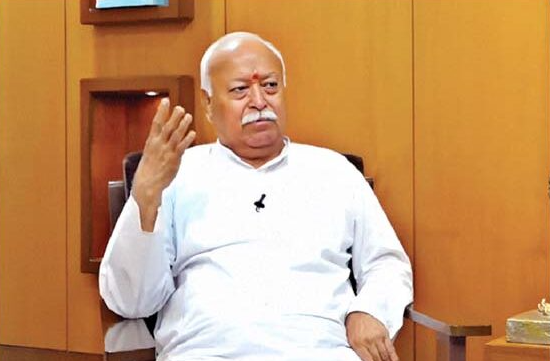
The arrival of Dr. Mohan Bhagwat, the Sarsanghchalak of the Rashtriya Swayamsevak Sangh (RSS), in New York has ignited a significant development that extends far beyond the immediate controversy surrounding his appearance at Madison Square Garden. This iconic venue, often described as America’s most powerful political arena, served as a potent conduit for carrying one of India’s most enduring ideological arguments directly into the American political and media mainstream.
The choice of Madison Square Garden for such a high-profile address underscores the strategic intent to elevate the discourse. It transformed what might have been a community event into a moment of broader political and cultural engagement on American soil. According to reporting by The Sunday Guardian, the profound significance of Bhagwat’s visit lies in the fact that discussions previously confined to Indians or the Indian diaspora are now being interpreted, contested, and politically framed by American institutions themselves. This shift marks a pivotal transition from private community discourse, often occurring within expatriate circles, to a realm of public institutional engagement, where American governmental bodies, political establishments, and civil society organizations are actively participating in the interpretation and debate of these ideologies.
Elevating Diaspora Discussions to National Discourse
Historically, the ideological currents emanating from India, even those with significant global implications, often remained largely within the purview of the Indian diaspora in the United States. These discussions, while passionate and deeply felt, typically unfolded in community centers, academic forums, or ethnic media outlets. Dr. Bhagwat's address at Madison Square Garden, however, dramatically altered this landscape. By speaking at a venue synonymous with major national and international events, the RSS leader effectively placed the organization's philosophy and its associated debates onto a much larger, more visible platform, compelling a wider American audience and its institutions to take notice and engage.
Multi-Front Institutional Response to the RSS
In the space of just a few days following Dr. Bhagwat’s arrival, the Rashtriya Swayamsevak Sangh (RSS) has become the subject of multiple distinct forms of engagement and opposition within the United States. This multi-faceted response indicates a rapid escalation of interest and concern from various sectors of American society, moving beyond mere observation to active intervention and mobilization.
The organization is now facing intervention by a congressionally created American commission, according to the source text. The involvement of such a body signifies a formal, governmental level of scrutiny, suggesting that the ideological positions represented by the RSS are being assessed through the lens of American policy and human rights frameworks. This level of engagement elevates the discussion from a purely cultural or community matter to one with potential implications for international relations and domestic policy considerations.
Local Political Pushback and Advocacy Mobilization
Simultaneously, the RSS has encountered significant opposition from New York’s political establishment. This local political pushback often manifests through public statements from elected officials, city council resolutions, or organized protests endorsed by local leaders. The opposition from a major metropolitan political hub like New York adds another layer of institutional challenge, demonstrating that the concerns are not confined to federal bodies but resonate at the municipal level, where diverse communities and their representatives hold sway.
This local political resistance has been accompanied by widespread mobilization by various advocacy and civil-rights organizations across the country. These groups, often with long histories of championing human rights, religious freedom, and social justice, have actively organized in response to Bhagwat’s presence and the ideological platform he represents. Their activities typically include public demonstrations, educational campaigns, and lobbying efforts aimed at raising awareness and influencing public opinion and policy makers regarding the implications of the RSS's ideology.
Hindu American Community's Internal Divide and Counter-Mobilization
The external opposition from American institutions and advocacy groups has been met with a corresponding internal response within the Hindu American community itself. The reporting notes a significant counter-mobilization among sections of this community. This indicates that the event has not only drawn criticism but has also spurred organizational activity among supporters of the ideology being presented. This counter-mobilization often involves efforts to articulate a defense of the RSS, clarify its objectives from their perspective, and highlight its contributions, thereby presenting an alternative narrative to the criticisms being leveled.
This dual dynamic of mobilization and counter-mobilization signifies that the RSS is no longer operating solely within the sphere of Indian expatriate communities, where internal debates might have remained largely insular. Instead, it is now a subject of sustained attention across sections of the American mainstream media, which has covered the controversy extensively in recent days. This media scrutiny further amplifies the ideological arguments, bringing them into millions of American homes and shaping public perception.
Indian Ideological Debates Enter American Mainstream Framing
The core implication of Dr. Bhagwat’s address at Madison Square Garden is the profound expansion of the geographic and political scope of Indian ideological debates. What might once have remained an argument primarily among Indians, or at most within the Indian diaspora, has now decisively entered a broader American context, demanding engagement from diverse American institutions.
According to the analysis provided in the source material, this engagement signifies that discussions previously confined to specific cultural or ethnic groups are now being interpreted, contested, and politically framed by American institutions. The involvement of a congressionally created commission highlights the federal level of interest, indicating that these debates are seen as having national and potentially international policy implications. Simultaneously, the opposition from New York’s political establishment demonstrates local political stakes, reflecting concerns within diverse urban constituencies.
The convergence of these elements—federal commission intervention, local political opposition, civil rights mobilization, Hindu American counter-mobilization, and extensive mainstream media coverage—constitutes a significant and unprecedented shift in how Indian ideological debates are processed in the United States. The RSS has become a focal point for these diverse American institutional responses, marking a new and critical phase in the visibility and contestation of Indian ideological arguments within US political discourse.