

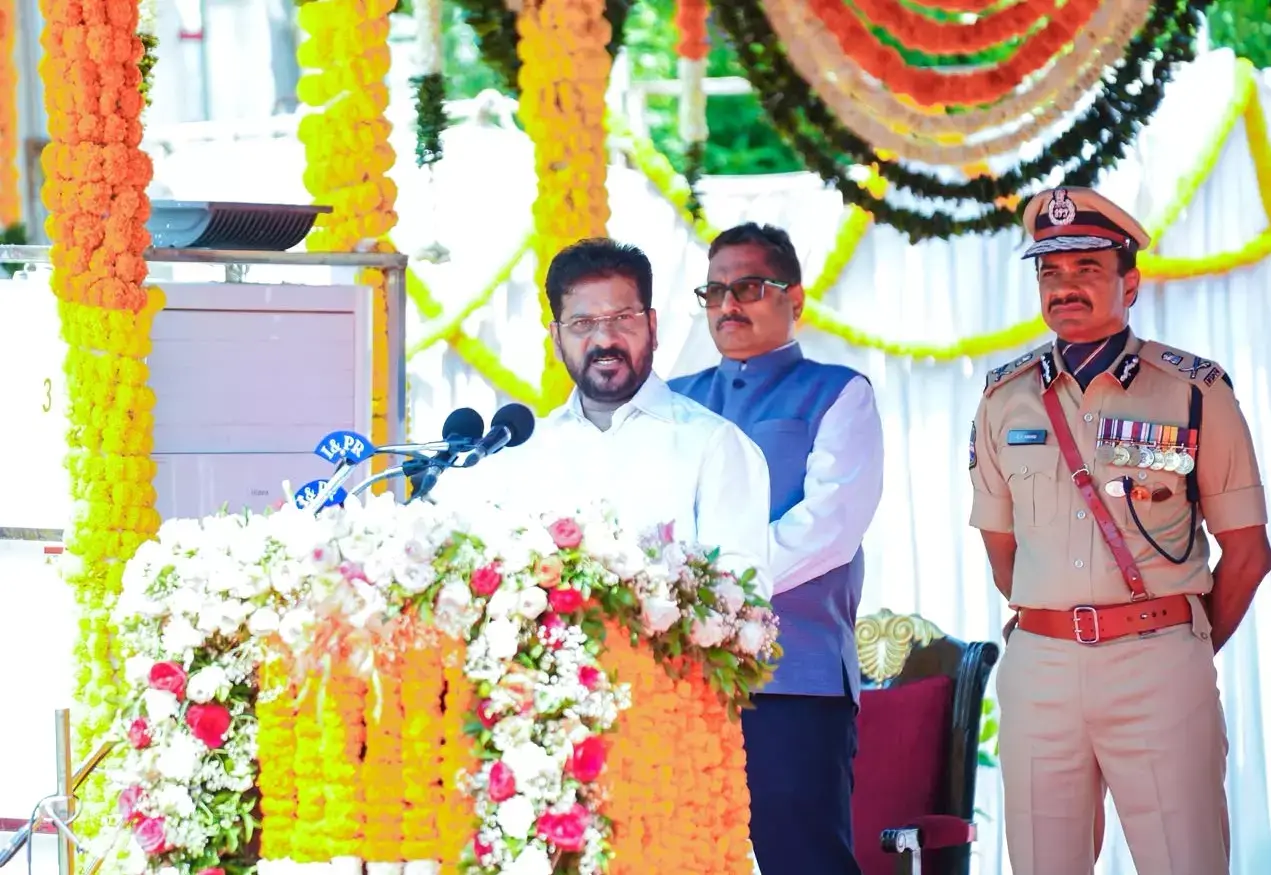

Chief Minister Praises Nizam Era, Sparks Political Firestorm
Telangana Chief Minister A. Revanth Reddy has come under intense scrutiny from political opponents after repeatedly describing the former Nizam of Hyderabad as "one of the best rulers and an exceptional administrator." These comments, which highlighted significant development during that historical period, were made at a time when both state and Central governments were observing integration and liberation celebrations on September 17.
Reddy's Justification for Praising the Nizam
Chief Minister Reddy specifically cited substantial growth across various sectors as the basis for his praise. He pointed to advancements in industry, agriculture, education, and the medical sectors during the Nizam period as evidence of effective governance. This characterization, however, has ignited a fervent political debate, particularly given the historical context of September 17.
The timing of these remarks has intensified the political debate surrounding the region's history. While the government marks September 17 as Liberation Day to commemorate the end of Nizam rule and the integration of Hyderabad into the Indian Union, Reddy’s characterization of the era has been met with strong disapproval from senior leaders of the Bharatiya Janata Party (BJP).
September 17: A Day of Contested History
September 17 holds profound historical significance for Telangana, marking the day in 1948 when the erstwhile princely state of Hyderabad was integrated into the Indian Union through 'Operation Polo,' ending the rule of the Nizam. For many, this day symbolizes liberation from an autocratic regime and the dawn of a new era of democratic governance. Both the state and Central governments actively participate in celebrations to honor this pivotal moment in history, emphasizing the values of freedom and national unity.
The Legacy of Hyderabad's Integration
The observance of integration and liberation celebrations on September 17 underscores a particular narrative of Hyderabad's past, one that focuses on the end of a feudal system and the embrace of a democratic framework. This historical perspective often contrasts sharply with any attempts to glorify the Nizam's rule, especially from political figures. The BJP, in particular, has consistently championed the narrative of liberation, viewing the Nizam era through the lens of oppression and resistance rather than administrative excellence.
BJP Leaders Condemn Glorification of Autocratic Rule
Union Ministers G. Kishan Reddy and Bandi Sanjay Kumar, along with BJP state president N. Ramchander Rao, issued sharp criticisms regarding the Chief Minister’s stance. The opposition leadership argued that praising a regime often associated with autocratic rule was inappropriate and insensitive during celebrations focused on liberation from that very authority.
Kishan Reddy's Call for Historical Honesty
In response to the controversy, Union Minister G. Kishan Reddy employed a direct historical analogy to underscore his criticism. He pointed out that Germans have never attempted to hide historical incidents such as the dictatorial rule of Adolf Hitler and the atrocities committed by the Nazis. According to Kishan Reddy, this approach by Germany demonstrates a necessary commitment to historical transparency and accountability, even when confronting dark chapters of its past.
Kishan Reddy used this comparison to suggest that acknowledging dark chapters in history is necessary for a mature political discourse. By referencing Germany’s approach to its own past, he implied that similar transparency and critical assessment should be applied to India’s regional histories, rather than glorifying periods marked by authoritarian governance. The Minister’s statement was part of a broader condemnation from the BJP leadership, aligning with Union Minister Bandi Sanjay Kumar and party state president N. Ramchander Rao in rejecting the Chief Minister’s narrative.
Broader Implications for Telangana's Historical Narrative
The dispute highlights the ongoing tension over how historical periods are interpreted in contemporary political discourse. The BJP leaders’ reaction indicates a strategic effort to frame the Chief Minister’s comments as insensitive to the struggles associated with the end of the Nizam’s rule and a distortion of the historical memory celebrated on Liberation Day. By invoking international examples of historical accountability, Kishan Reddy sought to elevate the debate beyond local politics to broader principles of historical honesty.
The criticism suggests that the BJP views the glorification of the Nizam era as a distortion of history that conflicts with the values celebrated during liberation observances. As the integration and liberation celebrations continue, the exchange between the Telangana government and central BJP leadership remains a focal point of political discussion, underscoring the sensitivity surrounding historical narratives in the region and the role of political figures in shaping public memory of past regimes.