


The Paradox of Secure Governance
Political stability does not automatically lead to meaningful institutional reform, according to experts who analyze the dynamics of modern governance. While stable governments often provide a crucial sense of policy predictability and continuity, they may simultaneously lack the urgent incentives necessary to implement significant changes that unstable administrations might be compelled to undertake. The comfort of a secure position can, paradoxically, foster an environment where difficult, long-term reforms are deferred.
Tricia Yeoh, an associate professor at the University of Nottingham Malaysia, highlighted this dynamic, stating that political pressure and instability can sometimes push governments to implement reforms they might otherwise avoid. She argued that when administrations feel secure in their positions, with little immediate threat to their power, they often become less compelled to pursue difficult or transformative policy shifts. This can manifest as a preference for maintaining the status quo, even when systemic issues require more radical intervention.
Political Vulnerability as a Catalyst for Dialogue
Yeoh cited the administration of former Prime Minister Ismail Sabri Yaakob as a compelling case study for how political vulnerability can drive negotiation and, by extension, reform. His administration, which governed with a razor-thin parliamentary majority, was in a precarious position, constantly facing the threat of no-confidence motions or defections. Consequently, in 2021, it signed a memorandum of understanding (MoU) with Pakatan Harapan (PH), which was then in the opposition.
This bipartisan arrangement, born out of political necessity, demonstrated a critical principle: when governments find themselves too secure and stable, they tend to believe they can maintain existing structures without engaging in the compromises or reforms necessary to address systemic issues. The lack of a strong majority forced the Ismail Sabri administration to negotiate with opposition forces, creating a mechanism for policy adjustment and institutional agreements that governments with more secure majorities often bypass. This situation underscored how external pressure, rather than internal ideological commitment, can become a potent driver for legislative cooperation and change.
Coalition Dynamics and the Quest for Reform
The current political landscape in Malaysia offers a different, yet equally complex, perspective on the relationship between stability and reform. The government, comprising Pakatan Harapan (PH) and Barisan Nasional (BN), has achieved a measure of political stability and policy predictability after governing together for almost a full term. This stability is not an inherited condition but a deliberate outcome of a pragmatic alliance forged after a period of electoral uncertainty.
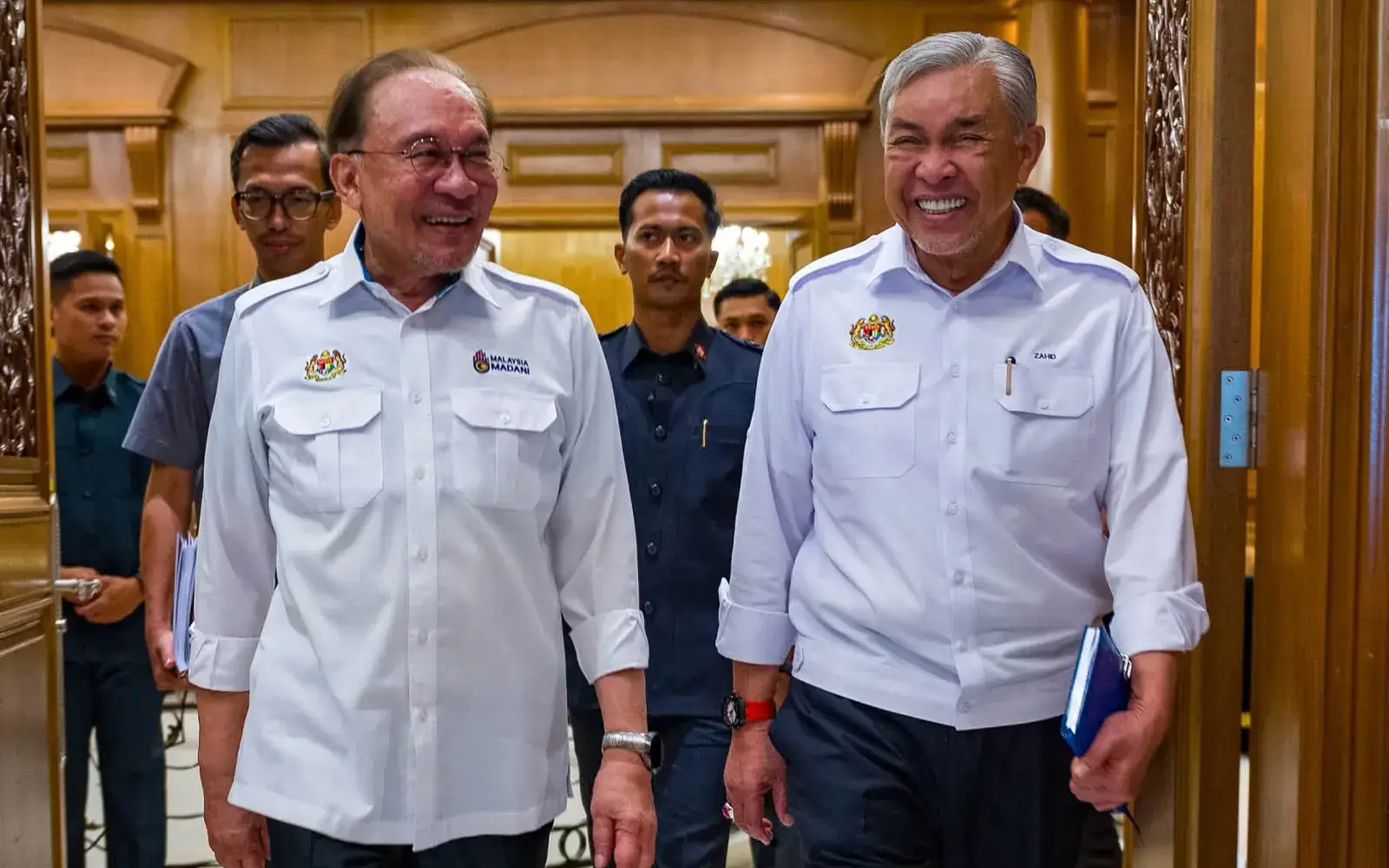
This coalition represents a significant shift from decades of intense rivalry. Anwar Ibrahim’s PH, which historically emerged as a reformist opposition force, and Ahmad Zahid Hamidi’s BN, long the dominant political bloc, have now governed together for nearly an entire electoral cycle. Despite their long-standing antagonism, the two coalitions have established a working relationship that has stabilized the national government, providing a degree of calm after a turbulent political period.
The Dynamics of a Unified Front
Asrul Hadi, commenting on the dynamics of coalition governance, noted that coalition politics inherently encourage negotiation and consensus. The necessity of maintaining a unified front and ensuring the survival of the government often requires continuous dialogue and compromise among partner parties. This constant engagement can facilitate policy implementation that might otherwise be stalled in a more polarized or fragmented political environment, as policies must gain buy-in from diverse factions.
However, analysts caution that this hard-won stability alone is no guarantee of meaningful institutional reform. While the PH-BN coalition has restored predictability, the very absence of acute external political pressure may reduce the urgency for deep structural changes. The consensus-driven nature of coalition politics, while beneficial for stability, can sometimes lead to incremental adjustments rather than comprehensive overhauls. Achieving internal harmony within the coalition might, at times, take precedence over pursuing potentially divisive but necessary reforms that challenge entrenched interests or require unpopular decisions.
Beyond Predictability: Driving Deeper Institutional Change
The distinction between merely maintaining political stability and actively pursuing institutional reform is critical for understanding the trajectory of legislative progress. Stable governments, particularly those with comfortable majorities or cohesive coalitions, may prioritize maintaining their secure position over undertaking risky or contentious reforms. These reforms often involve challenging powerful groups, altering long-standing societal norms, or implementing policies with short-term costs for long-term benefits.
Yeoh’s analysis strongly suggests that the comfort derived from a stable majority can lead to complacency. When a government does not face immediate threats to its power, it may delay necessary but unpopular reforms such as fiscal discipline, comprehensive anti-corruption measures, or electoral system adjustments. The MoU signed by the Ismail Sabri administration stands as a powerful example of how political necessity – the imperative for survival – can drive institutional agreements and reforms more effectively than ideological commitment alone.
As the current PH-BN coalition continues its term, observers will closely monitor whether the achieved stability translates into substantive policy changes or merely serves to maintain existing structures. The consensus-building inherent in coalition politics provides a robust framework for negotiation and policy development. However, the ultimate motivation to pursue and implement significant institutional reform may depend on factors beyond mere political security, including sustained public demand, the long-term vision of its leaders, and the pressing need to address fundamental national challenges that cannot be ignored indefinitely.