


Quartz as a Critical Component of Modern Technology
\nOne of the most abundant minerals found within the Earth\u2019s crust is quartz. Despite its prevalence in nature, this specific form of silica holds essential utility for manufacturing core components utilized in smartphones and computers. The mineral serves a foundational role in the production of materials required to build modern electronic devices.\n
\nIndustry analysis indicates that most of the world\u2019s supply of this essential material originates from a single mining district located within the Appalachian Mountains. This specific geological region is situated in the southeast United States, representing a concentrated source for global industrial needs.
\nThe Spruce Pine District and Global Supply Chains
\nWithin the Blue Ridge Mountains of North Carolina lies the Spruce Pine mining district. Geographical surveys place this valley some 800 metres above sea level. The area covers only a few square kilometres, yet it functions as a vital link in the global technology economy.
\nData estimates suggest that the mines at Spruce Pine produce the world\u2019s purest known natural quartz. This high degree of purity is necessary for specific industrial applications where standard-grade silica cannot be substituted. The district is estimated to supply more than 80 percent of global demand for this high-purity variety.
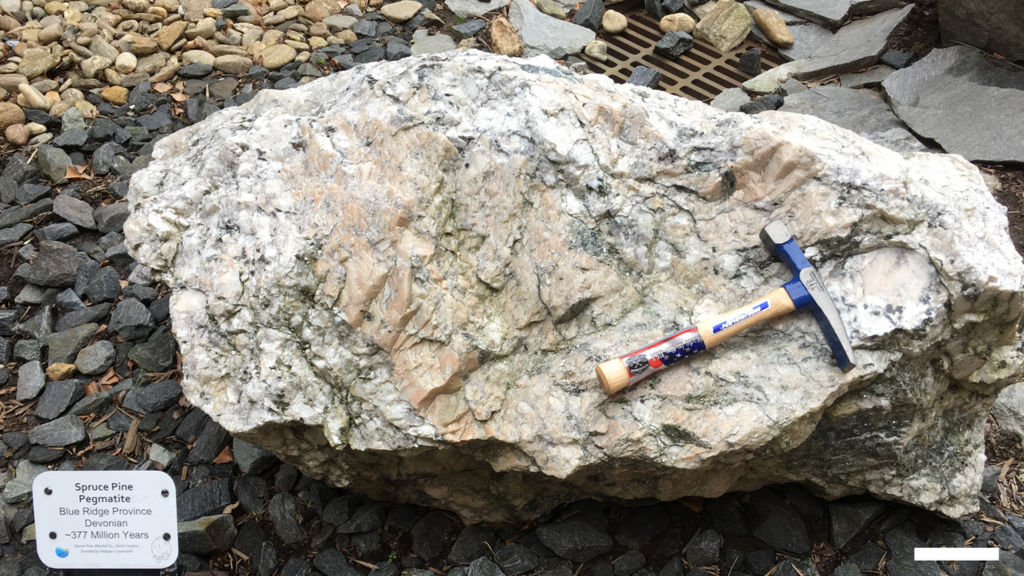
\nThe concentration of such a significant percentage of the world\u2019s required material within one valley highlights the dependency of international markets on this specific American location. A sample of Spruce Pine pegmatite is displayed in Appalachian State University's rock garden, illustrating the geological formations found at these sites.
\nGeological Specificity and Industrial Requirements
\nThe distinction between standard quartz and high-purity quartz used for electronics lies in chemical composition. The mineral must be free of impurities that could interfere with manufacturing processes or degrade electronic performance over time.\n
\nSpruce Pine pegmatites provide the necessary grade of material required to feed the global computer chip industry. Without this specific geological output, manufacturers face limitations in sourcing components capable of meeting current technological standards.
\nGeopolitical Implications of a Single Source Region
\nThe reliance on one district for over 80 percent of demand creates a unique geopolitical dynamic. The location is described as an unlikely linchpin of the global tech economy, given that quartz itself is common in nature.
\nInternational trade flows depend heavily on access to this specific region in North Carolina. Disruptions or changes in production at Spruce Pine would have immediate effects on supply chains worldwide. This dependency underscores how geological abundance does not always equate to economic accessibility for global manufacturers.
\nEconomic and Strategic Significance of the Blue Ridge Mines
\nThe economic impact extends beyond simple extraction costs. The value derived from processing Spruce Pine quartz supports a network of industries that rely on high-purity inputs. This includes semiconductor fabrication, optical fiber production, and other advanced manufacturing sectors.
\nAppalachian State University maintains interest in the region through its rock garden displays, which educate observers about local geology while highlighting industrial relevance. The presence of these samples serves to document the specific types of pegmatite found at Spruce Pine.\n
\nSustainability and Future Production Considerations
\nWhile current production levels meet global demand estimates, long-term sustainability depends on managing resources within a single district effectively. Mining operations must balance extraction rates with preservation efforts to maintain the quality of quartz produced.
\nThe article notes that these mines feed an industry capable of producing billions of devices annually. The scale of operation required to satisfy this volume is significant for a region comprising only a few square kilometres of active mining sites.\n
"