

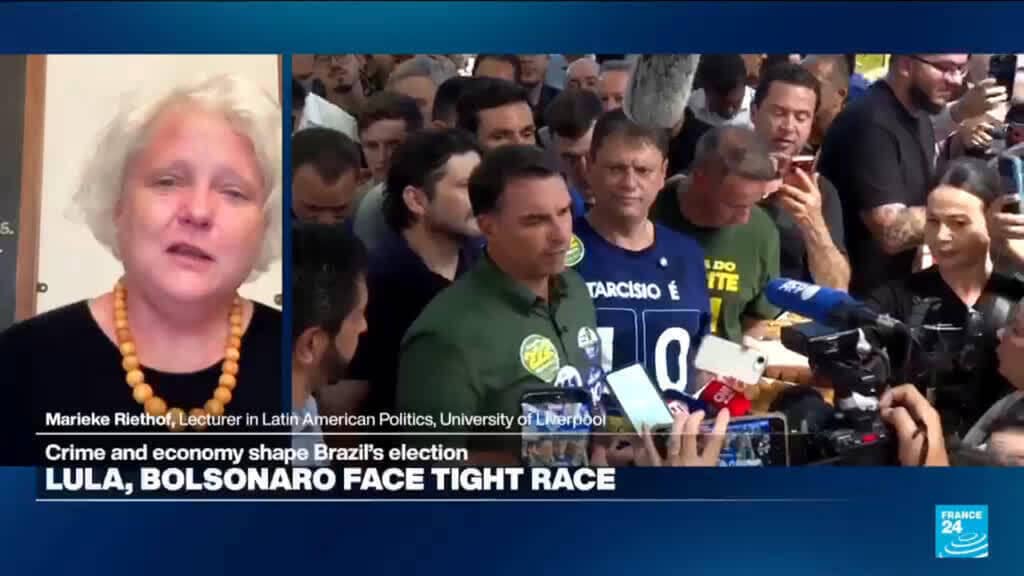

Voters Head to Polls in Critical Brazilian Election
Brazil opened its polling stations on October 4, 2026, for a presidential election that has drawn intense domestic and international scrutiny. Voting hours were scheduled from 8 a.m. to 5 p.m. Brasilia time across the nation.
Incumbent President Luiz Inacio Lula da Silva and his main challenger, Senator Flavio Bolsonaro, concluded their campaign trails on Saturday in the state of Sao Paulo. Sao Paulo is a critical electoral battleground, accounting for one-fifth of the country's electorate. Approximately 159 million Brazilians are eligible to vote in this high-stakes contest.
Lula, aged 80, represents the Workers' Party (PT) as he seeks a fourth term in office. His primary opponent is Flavio Bolsonaro, aged 45, who runs under the Liberal party banner. The race also includes several other candidates: Augusto Cury, Ronaldo Caiado, Renan Santos, and Romeu Zema.
Polling Data Shows Tight Race
Recent polling data indicates a competitive field, with Lula maintaining a narrow lead over Bolsonaro in most surveys. A CNT-MDA poll projects Lula at 47.8 percent and Bolsonaro at 42.1 percent. Similarly, a Datafolha poll places Lula at 45 percent compared to Bolsonaro's 42 percent.
Other metrics show even closer margins. A Quaest poll projects Lula at 46 percent and Bolsonaro at 45 percent. Meanwhile, a Bloomberg and AtlasIntel poll shows Lula with 47 percent of the vote against Bolsonaro's 44.1 percent.
The first round of voting takes place on October 4, with a potential run-off scheduled for October 25 if no candidate secures 50 percent of the vote. The narrow margins in recent polls suggest that a second round may be necessary to determine the winner.
International Tensions and Diplomatic Friction
The election is unfolding against a backdrop of strained relations between Brazil and the United States. US President Donald Trump is closely watching the election as he works to establish ties with Latin America. Trump has previously praised former president Jair Bolsonaro, Flavio’s father, and sanctioned a Supreme Court justice involved in his sentencing probe.
Trump also imposed a 50 percent tariff on Brazil and called Jair Bolsonaro’s trial a “witch hunt.” In response, the Lula administration has been at odds with Washington over tariffs, trade, and participation in the BRICS bloc. Brazil denied visas to two US officials who planned to cast doubt on the integrity of Brazilian elections.
Flavio Bolsonaro has pledged a hard stance on crime and closer cooperation with the United States if elected. This platform contrasts sharply with Lula’s current foreign policy approach, which has prioritized multilateral engagement through BRICS over bilateral alignment with Washington.