


Global Oil Markets React to Escalating U.S.-Iran Tensions
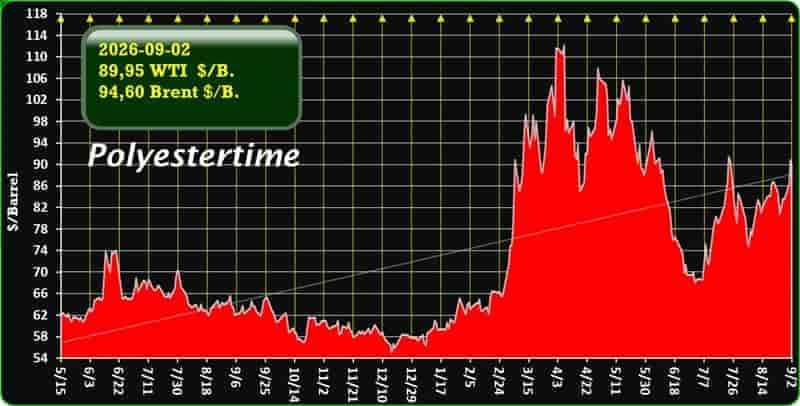
Brent crude oil prices are trading near $95 a barrel, while West Texas Intermediate (WTI) is hovering around $90 a barrel. This significant price movement follows renewed fighting between the United States and Iran, which has intensified concerns regarding the stability of energy supplies in the Middle East. The situation has specifically heightened fears of supply disruption, particularly for oil moving through the critical Strait of Hormuz.
The current market dynamics reflect a pronounced geopolitical risk premium, where traders are assigning a higher value to crude due to the increased probability of disruptions to global oil flows. This premium is a direct consequence of ongoing military actions and reported attacks on commercial vessels in a region vital for global energy security.
Benchmarks Hit Multi-Week Peaks
According to market data reported by Polyestertime on September 2, 2026, Brent futures settled at $94.65 a barrel on September 1, representing an increase of $4.16, or 4.6%. During the same trading session, WTI futures settled at $90.22 a barrel, up $4.46, or 5.2%.
Both key benchmarks recorded their highest closing prices in approximately five weeks. This immediate upward trajectory in pricing underscores the market's sensitivity to geopolitical developments, particularly those impacting the Middle East, a region central to global oil production and transit.
Geopolitical Risk Premium Drives Upward Trend
The market's current posture indicates that traders are paying more for oil due to an increased probability of disruptions to oil flows. This geopolitical risk premium is not, however, pricing in a complete and lasting shutdown of Gulf exports. Instead, the market is factoring in a higher risk of renewed disruptions to already fragile shipping flows, rather than anticipating a total cessation of production or export capabilities.
Strait of Hormuz Becomes Focal Point of Supply Fears
The surge in oil prices coincides directly with reports of attacks involving commercial tankers near the Strait of Hormuz. This narrow waterway is recognized as a critical chokepoint for global energy trade, through which a substantial portion of the world's seaborne oil passes daily. Any disruption to traffic through this vital strait immediately raises fears of supply shortages and has a ripple effect across global energy markets.
Critical Waterway Under Threat
The Strait of Hormuz's strategic importance cannot be overstated. Its vulnerability to geopolitical tensions means that reported attacks involving commercial tankers in its vicinity directly translate into heightened fears of supply disruption, specifically for the vast quantities of oil that transit this passage. The latest rally in prices began following direct U.S. strikes on Iranian targets, further underscoring the immediate link between military actions and market sentiment regarding this crucial shipping lane.
The ongoing military engagements and reported incidents involving commercial vessels have intensified concerns among traders and analysts about the security of oil shipments. This environment compels market participants to assign a higher risk to the movement of crude, thereby pushing prices upward.
Market Prices for Disruption, Not Shutdown
Market analysis indicates a nuanced understanding among traders: the current pricing does not reflect expectations of a complete and lasting shutdown of Gulf oil exports. Rather, the market is pricing in a higher probability that already fragile shipping flows will face renewed disruptions. This distinction is central to current market calculations, as it implies a heightened state of alert and increased operational costs for shipping, rather than an outright cessation of trade.
Traders are reacting to the immediate threat to tanker traffic and the increased likelihood of intermittent interruptions, rather than anticipating a total cessation of production or export capabilities from the region. This dynamic creates a volatile trading environment where prices are highly reactive to new information.
Future Price Movements Hinged on De-escalation
Oil prices are described as highly volatile and subject to significant change based on emerging reports from the region. Intraday quotations can move materially as new information regarding military engagements, shipping safety, or diplomatic efforts becomes available, reflecting the market's constant re-evaluation of the geopolitical landscape.
Volatility Amid Shifting Geopolitical Landscape
Market observers note that oil prices could climb further if tanker traffic through the Strait of Hormuz decreases significantly or if military escalation in the region continues. Such developments would exacerbate existing supply fears and likely lead to an even higher geopolitical risk premium being factored into prices.
Conversely, prices could retreat if shipping conditions stabilize and diplomatic efforts to de-escalate the conflict gain momentum. A reduction in tensions and a clearer path towards peaceful resolution would likely diminish the perceived risk of supply disruptions, allowing the geopolitical risk premium to dissipate.
The distinction between a temporary disruption and a permanent shutdown remains central to current market calculations. Traders are monitoring the situation closely to determine whether the geopolitical risk premium will persist or dissipate as the security environment evolves. The market's next significant move will depend heavily on the trajectory of military actions, the safety of commercial shipping, and the progress of any diplomatic initiatives.