

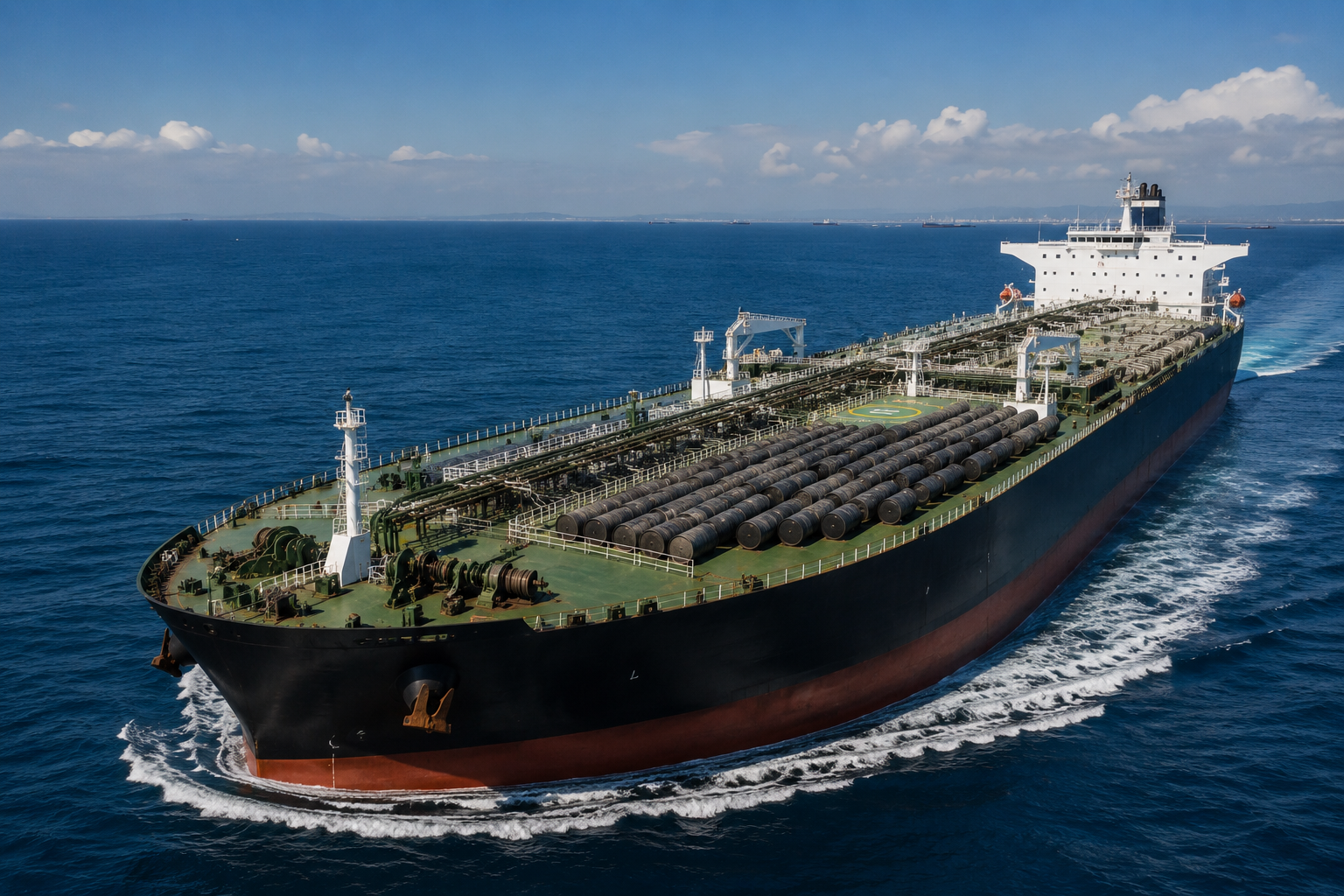

Market Rally Driven by Geopolitical Risk in Key Corridors
Brent crude oil prices surpassed the $92 per barrel mark on Wednesday, marking a significant advance from previous levels and extending a rally that has seen benchmarks reach a five-week high. Concurrently, West Texas Intermediate (WTI) futures gained 1% during the session, settling near $85 per barrel. This notable price movement follows a Tuesday surge that established the five-week high, indicating a rapid response by the market to emerging concerns.
The current rise in crude values is attributed largely by market participants to escalating geopolitical risks and potential disruptions in key energy supply routes, rather than evidence of an immediate physical shortage in global inventories. This crucial distinction, highlighted by analysts, suggests that the market is pricing in a risk premium based on perceived threats. Consequently, current prices are deemed highly vulnerable to sharp reversals should shipping conditions improve or if geopolitical tensions recede, as the underlying physical supply-demand balance has not fundamentally shifted.
Futures for Brent crude rose 1.1% during Wednesday's session, while West Texas Intermediate also added value as traders reassessed the security of supply across critical global routes. The rally reflects a pronounced shift in market focus. Instead of reacting to confirmed deficits in available stockpiles, the market is now primarily driven by the anticipation of potential disruptions, underscoring a heightened sensitivity to geopolitical developments.
Mounting Geopolitical Risks in Critical Shipping Lanes
The immediate concern for global energy markets centers on mounting pressure at several key maritime chokepoints. The Strait of Hormuz, identified as a critical waterway for international oil transit, remains under intense scrutiny. This strategic passage is particularly vulnerable due to ongoing tensions involving US-Iran dynamics and broader regional instability, which consistently pose a threat to the unimpeded flow of crude.
Strait of Hormuz: A Vital Chokepoint Under Scrutiny
The Strait of Hormuz serves as the sole sea passage from the Persian Gulf to the open ocean, making it indispensable for a significant portion of the world's oil supply. The persistent geopolitical friction between the United States and Iran, often manifesting in military posturing and rhetoric, creates an environment where the risk of disruption is ever-present. Any escalation in this region could severely impact global oil flows, prompting traders to factor in a substantial risk premium.
Red Sea Threats and the Emerging Second Wave of Disruptions
Simultaneously, threats emanating from Houthi forces in the Red Sea continue to significantly influence pricing dynamics. These actions, which have targeted commercial shipping, present a distinct and immediate challenge to maritime security. These developments collectively represent an emerging "second wave" of supply disruptions. Unlike isolated incidents, this confluence of threats across multiple, geographically diverse, yet equally vital energy corridors fundamentally reshapes the global energy calculus, adding layers of complexity to existing friction points elsewhere.
Black Sea Export Terminal Adds to Supply Concerns
Further compounding market sentiment regarding supply security is a fresh disruption reported at a Black Sea export terminal. While specific details of the incident may vary, any interruption in a region crucial for energy exports contributes to the overall tightening of supply perceptions. The convergence of these distinct but simultaneous events — from the Persian Gulf to the Red Sea and the Black Sea — creates a scenario where significant risk premiums are priced into crude oil despite the absence of verified physical shortages in global inventories.
Market Vulnerability to Shifting Geopolitical Tides
The current pricing structure for crude oil relies heavily on geopolitical narratives and the perceived risk of future supply disruptions, rather than on fundamental shifts in demand or confirmed depletion of global inventories. This reliance on sentiment makes the market particularly sensitive to changes in the geopolitical landscape. Consequently, any significant improvement in shipping conditions within the Strait of Hormuz or a de-escalation of Red Sea threats could swiftly trigger rapid declines in both Brent and West Texas Intermediate prices, unwinding the current risk premium.
Traders Assess Persistence of Supply Constraints
Market participants and traders are closely monitoring developments in these specific corridors. Their assessment hinges on determining whether the current supply constraints and threats are likely to persist, or if market sentiment is potentially overreacting to what might prove to be isolated or temporary incidents. The rapid ascent to a five-week high, first observed on Tuesday, serves as a stark reference point for how quickly the rally has developed in response to news of simultaneous disruptions and threats across multiple critical locations.
Supply Security Dominates Market Focus
A defining characteristic of the current market environment is that participants are prioritizing supply security above virtually all other factors influencing commodity prices. This intense focus has notably shifted attention away from traditional economic indicators such as global growth forecasts, inflation data, or even interest rate expectations, which had previously been the primary drivers of price movements over the past several weeks. The emphasis is now squarely on the physical availability and safe transit of oil.
Despite the different regional influences that typically affect each benchmark, the divergence between Brent and WTI performance remains minimal in this environment. Both benchmarks have responded positively and in tandem to news regarding potential interruptions in global shipping lanes that serve a significant portion of international trade volume.
Broader Implications for Global Energy Trade and Stability
The simultaneous emergence of significant risks across two major energy corridors — the Strait of Hormuz and the Red Sea — suggests a profoundly complex and fragile environment for global supply chains. This scenario highlights that the international oil transport network faces multiple, interconnected points of potential failure, challenging the resilience of energy markets worldwide. While the Strait of Hormuz and the Red Sea represent distinct geographic challenges, their combined and immediate impact on global pricing underscores the interconnectedness of the global energy system.