

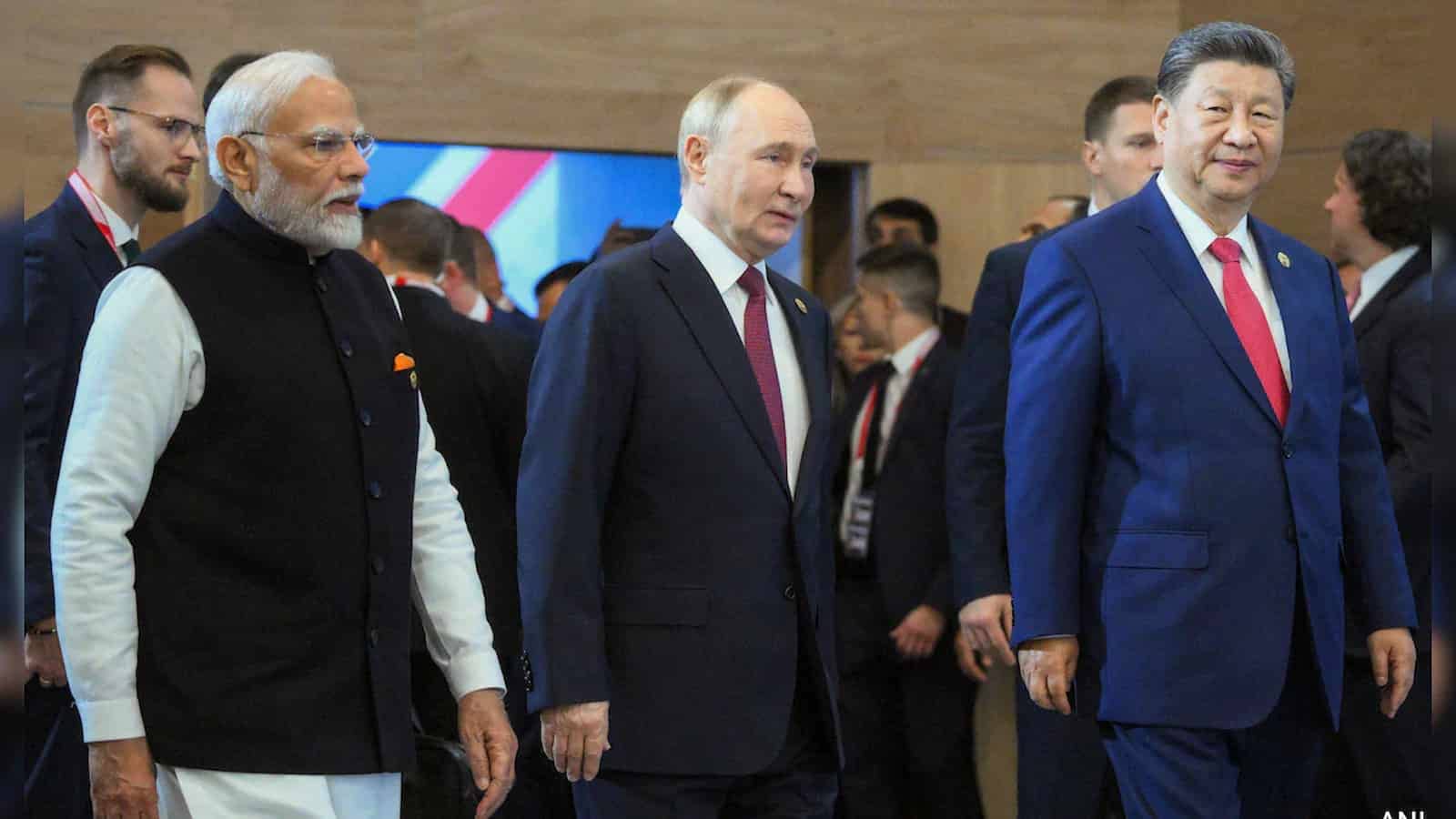

New Delhi Hosts Divided Bloc on 20th Anniversary
The 2026 BRICS Summit is currently being held in New Delhi, marking the 20th anniversary of the grouping of major emerging economies. Prime Minister Narendra Modi launched commemorative stamps to mark the occasion as leaders from the 11-nation bloc convened for a two-day meeting focused on resilience and cooperation. This milestone summit underscores the bloc's evolution from its initial four members to a significant global platform representing a diverse array of emerging markets.
Chinese President Xi Jinping arrived in New Delhi on Saturday for the summit, highlighting the complex dynamics within the group. The presence of leaders from China, India, Russia, and Iran underscores the geopolitical significance of the event, which takes place against a backdrop of deepening US-China rivalry and internal divisions among member states. While the summit aims to foster greater collaboration, the divergent strategic interests and economic priorities of its members present a considerable challenge to achieving unified outcomes.
The conflicts in the Middle East and Ukraine, along with global trade turbulence and energy security concerns, are expected to dominate discussions at the summit. These pressing global issues test the cohesion of the bloc, as member nations often hold differing perspectives and allegiances that complicate the formulation of common strategies. India, as the host, aims to foster consensus and strengthen the leadership of the Global South, a critical objective given the current geopolitical fragmentation.
Bilateral Engagements and Regional Tensions
Bilateral meetings on the sidelines of the summit have become a focal point for diplomatic engagement, offering opportunities to address specific regional and international challenges. Iranian President Masoud Pezeshkian met with UAE Crown Prince Mohammed bin Zayed Al Nahyan, addressing regional tensions that complicate the broader BRICS agenda. Such discussions are crucial for de-escalating conflicts and fostering stability in volatile regions, which in turn can contribute to a more conducive environment for global trade and cooperation.
Prime Minister Modi held discussions with Vietnamese Prime Minister Le Minh Hung to deepen strategic ties between India and Vietnam. These bilateral interactions occur as India attempts to balance its relationships within the BRICS framework and with other global partners, reflecting New Delhi's multi-aligned foreign policy approach. Strengthening these strategic partnerships is vital for India's regional influence and economic growth.
The summit also provides a platform for addressing energy security, a critical issue for many emerging economies. Discussions are expected to cover ways to stabilize energy supplies, explore alternative energy sources, and manage the economic impacts of global trade disruptions. Given the reliance of many BRICS nations on energy imports, collaborative efforts to ensure stable and affordable energy access are paramount for their economic development and stability.
Geopolitical Fault Lines Test Bloc Cohesion
The 2026 BRICS Summit in New Delhi is unfolding amidst significant geopolitical fault lines, which are testing the very cohesion and purpose of the 11-nation bloc. The deepening rivalry between the United States and China casts a long shadow over the proceedings, influencing the strategic calculations and diplomatic postures of individual BRICS members. This dynamic makes India's role as host particularly challenging, as it strives to maintain unity within a group that includes both a major US rival (China) and nations with strong ties to the West.
Navigating US-China Rivalry
India's position as host requires a delicate diplomatic balancing act, as the US-China rivalry permeates various aspects of global governance and economic policy. While BRICS aims to offer an alternative to Western-dominated institutions, the internal divisions stemming from this rivalry can hinder its effectiveness. India seeks to leverage the summit to project its leadership of the Global South, but this ambition is complicated by the need to accommodate the diverse interests of member states, some of whom have closer economic or strategic alignments with either Washington or Beijing. The presence of Chinese President Xi Jinping in New Delhi underscores the high stakes involved in navigating these complex geopolitical currents.
Divisions on Global Economic Order
The BRICS bloc remains divided on several key issues that reflect broader global disagreements, particularly concerning the future of the international economic order. Discussions have revealed differing views on the role of former US President Donald Trump, whose potential return to power could significantly alter global trade policies and alliances. Furthermore, the bloc is grappling with the impact of sanctions related to Iran, which affect energy markets and trade routes for several members. The dominance of the US dollar in global finance is another contentious point, with some members advocating for de-dollarization efforts and the increased use of local currencies in international trade. Lastly, the future of global trade rules, including debates over protectionism versus free trade, continues to be a source of internal friction. These divisions make it difficult for BRICS to present a united front on critical economic and financial matters, challenging its stated goal of strengthening the voice of emerging economies.
India's Diplomatic Balancing Act and Domestic Stakes
India faces a significant diplomatic challenge as it hosts the BRICS Summit, tasked with fostering consensus among member states while simultaneously strengthening the leadership of the Global South. This effort requires New Delhi to skillfully navigate the competing interests of China and other major powers within the bloc, all while attempting to project a unified vision for a more equitable global order. The success of the summit will largely depend on India's ability to bridge these divides and steer discussions towards actionable outcomes that benefit the collective.
Domestically, the Congress party has called on the Modi government to restore India’s diplomatic stature and space, urging it to provide moral leadership and strategic clarity to BRICS. This criticism reflects significant domestic political pressure on the Indian government to demonstrate effective foreign policy management during the summit. The opposition's demands highlight the expectation that India should not only host a successful event but also articulate a clear vision for the bloc's future, reinforcing its role as a responsible and influential global player.
Economic Repercussions for Indian Citizens
Decisions made at the BRICS Summit can have tangible and far-reaching impacts on ordinary Indians in areas such as jobs, trade, investment, prices, and market access. As a grouping of 11 major emerging economies, the policies formulated and agreements reached by BRICS nations on trade and finance have direct economic consequences for the Indian populace. For instance, new trade agreements or tariff reductions could open up new markets for Indian goods, potentially creating jobs in export-oriented sectors, or conversely, increase competition for domestic industries.