

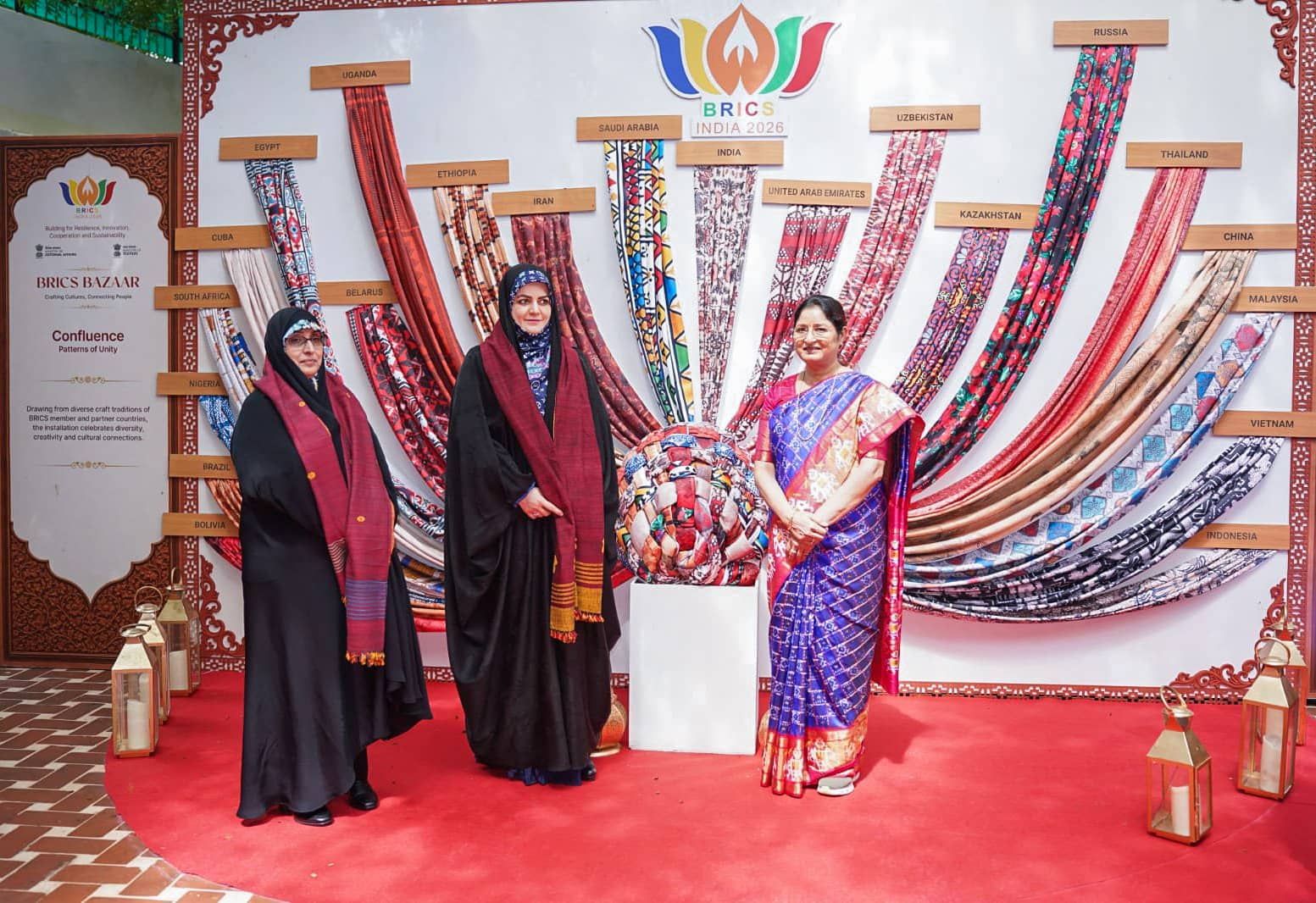

Side Events Highlight Cultural Exchange at BRICS Summit
Zahra Pezeshkian, the daughter of Iranian President Masoud Pezeshkian, spent part of Saturday exploring the cultural and craft landscape of New Delhi. Her visit occurred concurrently with the BRICS Summit, a major geopolitical gathering that has dominated diplomatic conversations in the capital.
While high-level officials engaged in formal negotiations and state dinners, Ms. Pezeshkian focused on India’s artisanal heritage. Accompanied by her husband, Hassan Majidi, she visited two significant cultural institutions: the BRICS Bazaar located within the National Crafts Museum and the Pradhanmantri Sangrahalaya.
The visit to the BRICS Bazaar provided an opportunity to observe handicrafts from member nations of the BRICS alliance. The event is designed to showcase traditional arts and crafts, serving as a cultural component alongside the political and economic discussions of the summit.
Itinerary Includes National Crafts Museum and Sangrahalaya
Ms. Pezeshkian’s itinerary began at the National Crafts Museum, where she toured the BRICS Bazaar. This venue typically displays textiles, pottery, and other artisanal goods from the member countries of the grouping, which includes Brazil, Russia, India, China, and South Africa, along with recent additions.
Following her time at the museum, Ms. Pezeshkian and Mr. Majidi proceeded to the Pradhanmantri Sangrahalaya. This museum is dedicated to the history of India’s Prime Ministers and their contributions to the nation. The site features exhibits detailing the political and administrative legacy of India’s leadership since independence.
The choice of venues underscores a focus on soft power and cultural diplomacy during the summit. By visiting sites dedicated to traditional crafts and national history, the Iranian presidential family engaged with aspects of Indian heritage distinct from the formal diplomatic agenda.
Parallel Activities During High-Level Talks
The activities undertaken by Ms. Pezeshkian took place while the primary focus of the BRICS Summit remained on geopolitical and economic cooperation. The summit has drawn attention for discussions regarding trade, currency, and international relations among the member states.
Official diplomatic engagements typically involve bilateral meetings, plenary sessions, and joint statements. In contrast, cultural visits such as those undertaken by Ms. Pezeshkian offer a glimpse into the non-political interactions that occur during such large-scale international events.
The presence of family members of heads of state at cultural sites is not uncommon during diplomatic tours. These visits often serve to highlight bilateral ties through shared appreciation of art, history, and tradition.
BRICS Summit Context in New Delhi
New Delhi has hosted the BRICS Summit as part of India’s rotating presidency or participation in the bloc’s activities. The summit serves as a platform for member nations to discuss global issues, including economic development, security, and multilateralism.
The event attracts delegates from across the member countries, along with observers and media personnel. The cultural programs associated with the summit are designed to complement the formal diplomatic work, showcasing the host nation’s heritage to international guests.
Ms. Pezeshkian’s exploration of Delhi’s craft landscape aligns with these broader objectives of cultural exchange. Her visits to the National Crafts Museum and the Pradhanmantri Sangrahalaya reflect a structured engagement with India’s artistic and historical narratives.
Role of Cultural Diplomacy in International Relations
Cultural diplomacy plays a role in fostering mutual understanding between nations. By visiting institutions that preserve national history and artisanal skills, international visitors gain insight into the host country’s values and traditions.
The BRICS Bazaar specifically aims to promote trade and cultural awareness among member states. It provides a platform for artisans to display their work, potentially leading to commercial opportunities and cross-cultural appreciation.
Similarly, museums like the Pradhanmantri Sangrahalaya offer educational resources on political history. For international guests, these sites provide context about the host nation’s governance and leadership evolution.
Details of the Visit
Zahra Pezeshkian is the daughter of President Masoud Pezeshkian of Iran. Her presence in New Delhi during the summit highlights the personal and familial dimensions of diplomatic travel.
Hassan Majidi, her husband, accompanied her throughout the cultural tour. The pair moved through the venues at a pace that allowed for detailed observation of the exhibits.
The visit to the National Crafts Museum included time at the BRICS Bazaar. This segment of the tour focused on the diverse handicrafts representing the member nations.
Subsequently, the group visited the Pradhanmantri Sangrahalaya. This institution houses archives and exhibits related to the lives and tenures of India’s Prime Ministers.
Implications for Bilateral Ties
While no specific agreements were announced during Ms. Pezeshkian’s cultural tour, such visits contribute to the overall atmosphere of cooperation between Iran and India.
The two nations have maintained long-standing relations in energy, trade, and regional security. Cultural exchanges serve as a supplementary pillar of these ties, reinforcing people-to-people connections.
Media coverage of such visits often emphasizes the human interest aspect of diplomatic missions. Reports highlight how family members of leaders engage with local culture, providing a softer narrative to the hard politics of summits.