

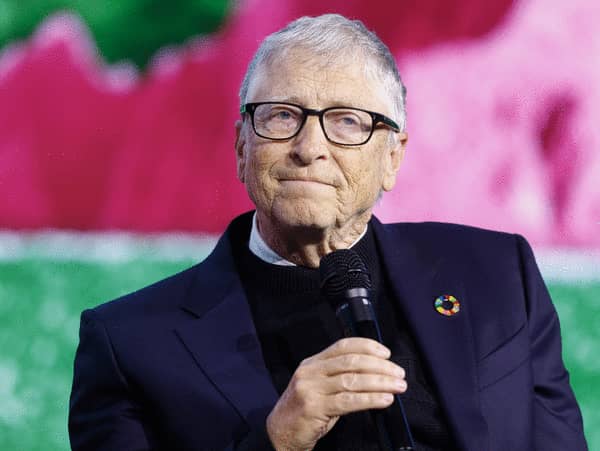

Challenging the Boiling Frog Narrative
In an opinion piece published on September 13, 2026, Mark Gongloff argues that Bill Gates is still wrong regarding climate change issues. The article, originally featured in Bloomberg Opinion and subsequently republished in the Op Eds section of Arcamax, centers its critique on a specific metaphor often used to describe the gradual nature of global warming: the "boiling frog." Gongloff utilizes this imagery to dismantle what he perceives as fundamental errors in Gates' understanding or communication of the crisis.
The "boiling frog" metaphor suggests that if a frog is placed in water that is heated slowly, it will not realize the danger until it is too late. Applied to climate change, this analogy implies that humanity is being harmed incrementally and passively, without sufficient immediate realization of the threat until catastrophic levels are reached. Gongloff references this popular metaphor to frame his argument against Gates' positions.
The Limits of Passive Harm
Gongloff challenges the passive interpretation of this metaphor. He posits that if humans are indeed the frogs, the situation involves more than just being "cooked alive" slowly without awareness. The text indicates a rejection of the idea that we are merely getting cooked so slowly; Gongloff implies that there are active factors or realizations that complicate this simple narrative of passive suffering. By questioning the utility and accuracy of the boiling frog analogy, Gongloff sets the stage for his broader critique of Gates' climate arguments.
The article does not provide specific counter-metaphors but focuses on the insufficiency of the current one to accurately describe the human experience of climate change according to Gongloff's view. This rejection of the passive harm narrative serves as a foundational element in his assertion that Gates remains incorrect on the subject.
Publication Context and Source Attribution
The opinions expressed in this piece are attributed solely to Mark Gongloff. The content was published on Bloomberg Opinion on September 13, 2026. It was later republished by Arcamax as part of their Op Eds section. The publication details confirm the timeline and origin of these specific claims regarding Bill Gates' climate stance.
Arcamax provides the platform for this opinion piece, categorizing it under Politics and Op Eds. The presence of standard subscription and privacy policy language on the Arcamax page indicates the commercial context in which this opinion is disseminated, though the core content remains focused on Gongloff's critique.
Specific Claims Regarding Bill Gates
Gongloff's central claim is that Bill Gates "is still wrong" about climate change. The use of the word "still" implies a continuing disagreement or a previous instance where Gates' views were contested. However, the provided source text does not detail the specific technical or policy points on which Gates is alleged to be incorrect, nor does it quote Gates directly.
The article relies on the deconstruction of the boiling frog metaphor to support its broader assertion that Gates' understanding or advocacy is flawed. By arguing that the metaphor misrepresents the reality of human experience with climate change, Gongloff suggests that any policy or perspective derived from such a misunderstanding would also be incorrect.
No response from Bill Gates or his representatives is included in the provided source material. The article presents only Gongloff's perspective on the matter. The text does not offer independent verification of Gates' actual statements but focuses entirely on Gongloff's interpretation and criticism of them.
Implications of the Critique
The critique suggests that the prevailing narratives around climate change, as promoted or interpreted by figures like Bill Gates, may be fundamentally flawed. By attacking the "boiling frog" analogy, Gongloff implies that the urgency, nature, or human response to climate change is being misrepresented. This misrepresentation, in his view, leads to incorrect conclusions and policies.
The article does not explore alternative solutions or metrics for measuring climate progress. It remains focused on the disagreement between Gongloff's assessment of reality and Gates' alleged position. The lack of opposing views in the text means that the argument stands as a singular opinion piece challenging a prominent figure's stance on global warming.
Metaphor Analysis and Human Agency
Gongloff's analysis of the boiling frog metaphor extends to the concept of human agency. If humans are not merely passive victims being cooked alive, then the narrative of inevitable, unnoticed doom is incomplete. This distinction is crucial to Gongloff's argument that Gates' views are incorrect.
The article suggests that the complexity of the climate crisis involves active realization and response, rather than passive acceptance of a slow demise. By highlighting this difference, Gongloff argues that Gates' framework fails to account for the dynamic nature of human interaction with environmental changes.
This perspective positions Gongloff as a critic of established climate narratives. His work challenges the audience to reconsider the metaphors and assumptions that underpin discussions about global warming, specifically those associated with Bill Gates. The article serves as a direct counterpoint to the popular understanding of climate urgency as depicted by Gates.