


Philosophical Anchors in Fiscal Policy
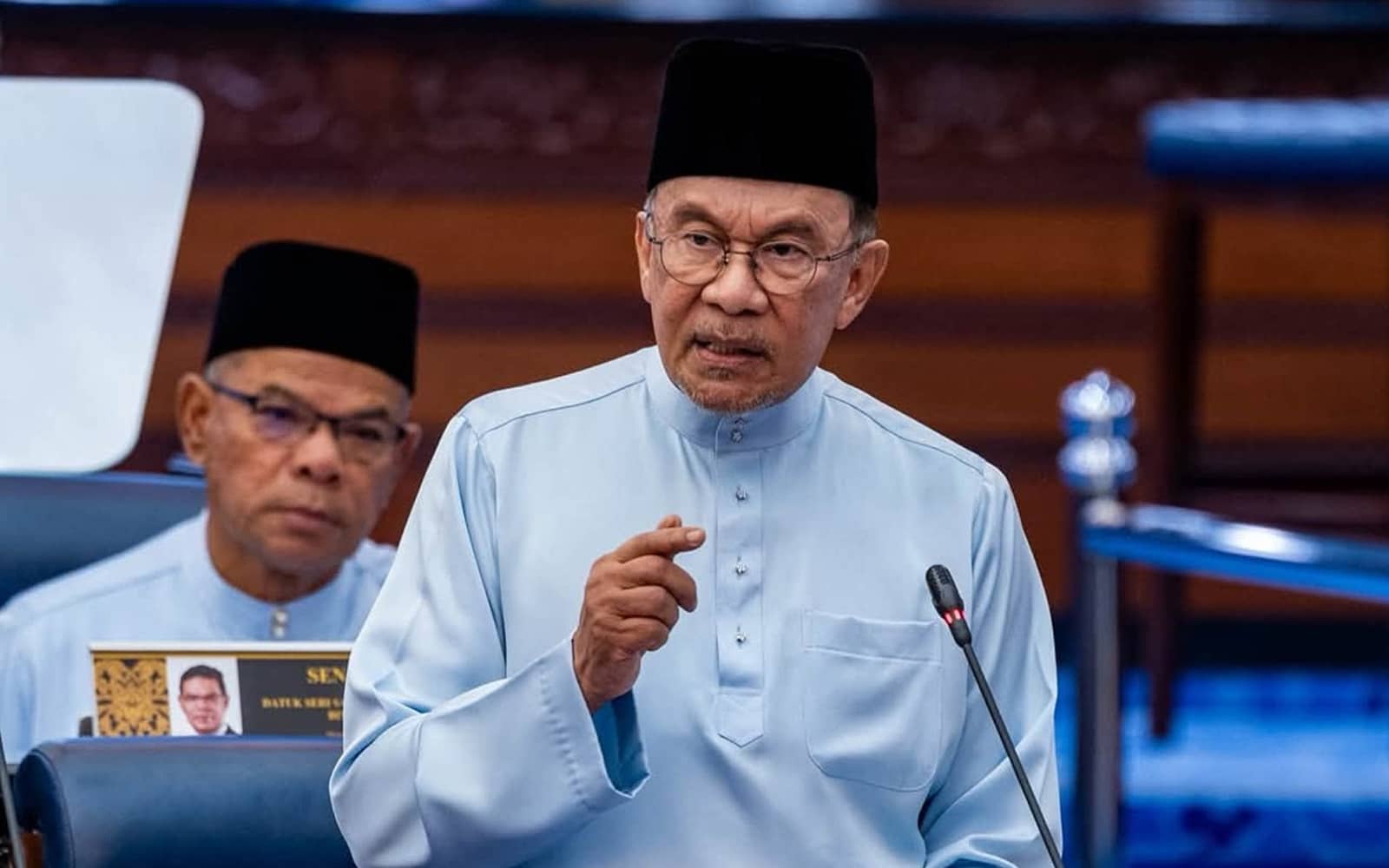
\nFinance Minister Anwar Ibrahim presented Budget 2027 on Oct. 9 by tabling the Supply Bill, framing the nation’s fiscal strategy through a lens of philosophy and intergenerational ethics. In his address, Anwar assembled references from five civilizations to argue that a national budget is not merely an arithmetic exercise but a \"covenant\" owed to the future.
\nOpening the narrative with lighad (\"for tomorrow\") from Surah al-Hashr (59:18), Anwar established intergenerational obligation as both a religious duty and a fiscal imperative. He stated, \"True progress is measured not by how far we travel, but by what we carry together along the way: human dignity, strong families, a fair chance for each generation to rise, the integrity of our institutions.\"
\nThe Finance Minister utilized British philosopher Isaiah Berlin’s metaphor of the hedgehog and the fox to outline the government’s approach to governance. Anwar cited this framework to argue that while a nation requires one constant ambition—represented by the hedgehog—it must also employ flexible methods, akin to the fox, to navigate complex challenges.
\nFurther grounding his argument in classical thought, Anwar referenced tenth-century jurist Al-Mawardi regarding the necessity of order, law, and responsibility for power. He also cited the classical Malay poet Raja Ali Haji’s Gurindam Dua Belas to anchor the concept of governance in waad, or covenant.
\n\nEthical Frameworks for Resource Allocation
\nThe budget address applied philosophical principles directly to economic policy, specifically regarding equity and state development. Anwar invoked American philosopher John Rawls to justify differentiated state allocations based on equity rather than uniform treatment.
\nAccording to the Finance Minister, this approach allows developed states to \"surge ahead\" while providing developing states with the necessary room to \"pick up pace.\" This differentiation was presented as a practical application of Rawlsian ethics within the national fiscal framework.
\nConcrete policy details followed these philosophical introductions. The budget includes a RM69 billion allocation for education. Within this figure, RM50 million is designated specifically for Tamil primary schools. Anwar placed this announcement immediately after referencing the Tamil poet-philosopher Thiruvalluvar’s Thirukkural, linking cultural heritage to educational investment.
\n\nCultural References and Fiscal Sacrifice
\nThe address incorporated literary references to contextualize the economic measures required of the populace. Prior to addressing fiscal sacrifice and subsidy rationalization, Anwar cited a verse by a Tang-dynasty monk on the plum blossom.
\nThis sequence served to frame the upcoming discussion on subsidy rationalization within a broader cultural and moral context, suggesting that short-term sacrifices are part of a larger, enduring narrative.
\n\nConcluding Narrative Arc
\nAnwar closed the address by returning to classical literature, referencing Homer’s Odysseus and Ithaca. This reference was used to bookend the speech, bringing the narrative back