

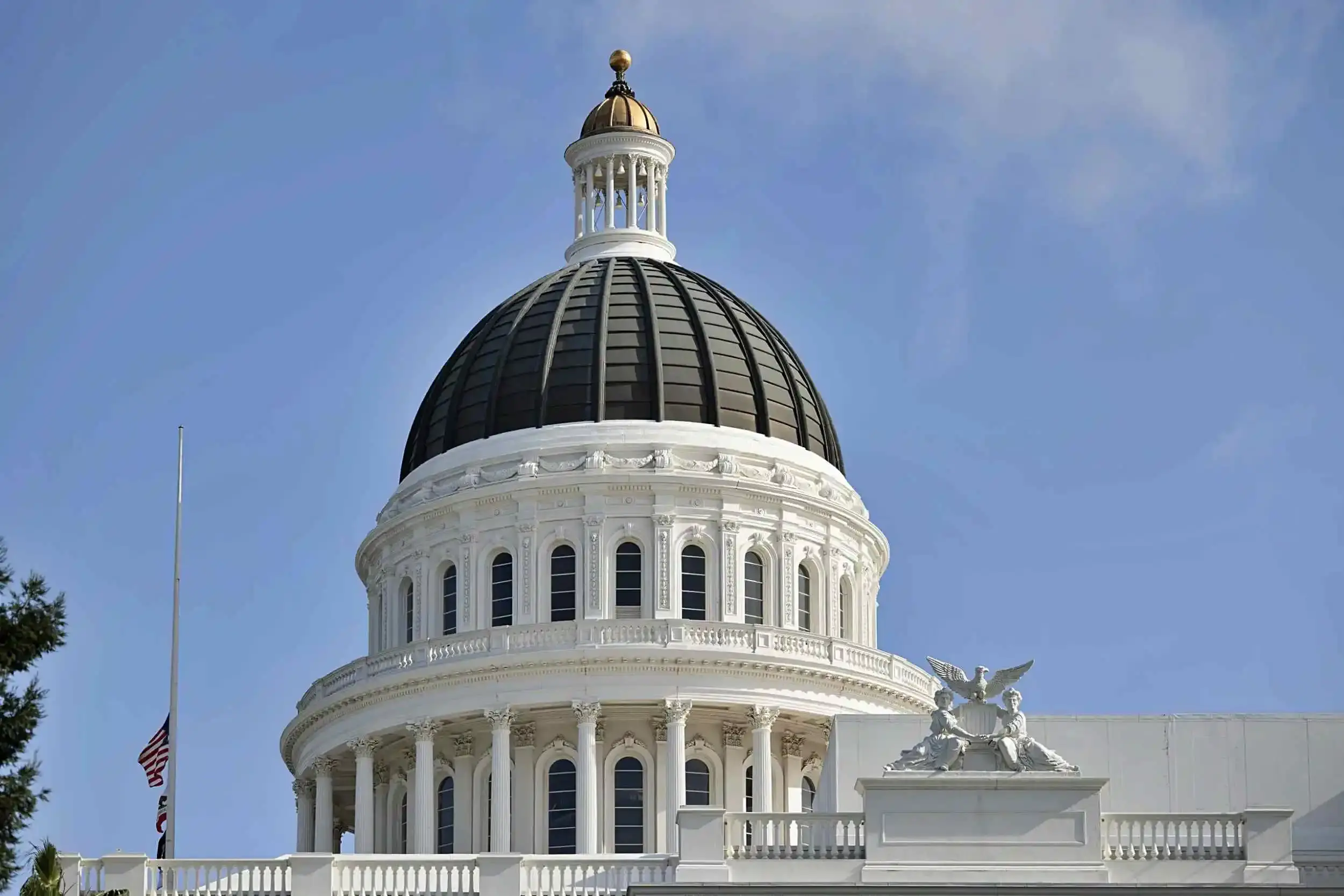

2026 Legislative Session Advances Liability Changes
The California Legislature passed new measures in 2026 that alter the state's landscape for business liability and worker lawsuits, underscoring the continued influence of interest groups at the state Capitol.
Among the key enactments was Assembly Bill 1776, which significantly expands the Cartwright Act, California’s long-standing law prohibiting monopolistic arrangements among businesses. The legislation was proposed by the state’s Law Revision Commission, which recommended extending the act to cover actions by a single corporation that produce monopolistic effects.
Business interests opposed the initial concept of expanding the Cartwright Act, arguing it was unneeded. They particularly objected to provisions that would have allowed private parties to file suits under the revised law.
Before Assembly Bill 1776 received final approval, the provision allowing private lawsuits was stricken from the bill. The final version limits enforcement of the expanded Cartwright Act to the attorney general or a local prosecutor.
The second major measure in the 2026 session was state Senate Bill 690, which arose out of an Am [Stated].
Historical Context of Liability Battles
The passage of these laws occurs within a decades-long conflict known as "tort wars," which pits lawyers who file personal injury lawsuits and their allies against business interests and their insurers.
This struggle is not new. In September 1987, veteran lobbyists for major tort war interests explored a potential multipoint deal to resolve long-simmering issues with key legislators behind closed doors at Frank Fat’s restaurant in Sacramento.
During that 1987 meeting, Willie Brown, then the speaker of the Assembly, bounced from table to table as negotiations restarted spontaneously. The result was an infamous "napkin deal" that gave everyone involved at least part of what they wanted, which was quickly drafted into legislation and passed with no public input.
One provision in the 1987 napkin deal protected the tobacco industry from lawsuits by disease-stricken former smokers.
The Arena of Money and Influence
The state Capitol remains an arena where lobbyists for thousands of interest groups battle over issues that mostly involve money, often big money. The Legislature and the governor can, and often do, write into law new provisions that financially benefit one interest or are costly for another.
These groups fight over laws that specify which actions cause damages, known as "torts," which can be the subject of liability lawsuits and what compensation can be collected if such cases prevail. The stakes in these conflicts can be immense, involving many billions of dollars.
New legislation in 2026 underscored that the struggle between these groups continues. Two years ago, the business side scored a significant victory with the passage of two bills that narrowed the scope of the Private Attorneys General Act (PAGA), which allows workers to sue their employers in the name of the state for alleged violations of workplace laws.
Employer groups had qualified a ballot measure to overhaul PAGA, which prodded lawyers and other rival interests to agree to a compromise in return for dropping the measure.