


Escalation From Student Protests to Widespread Riots
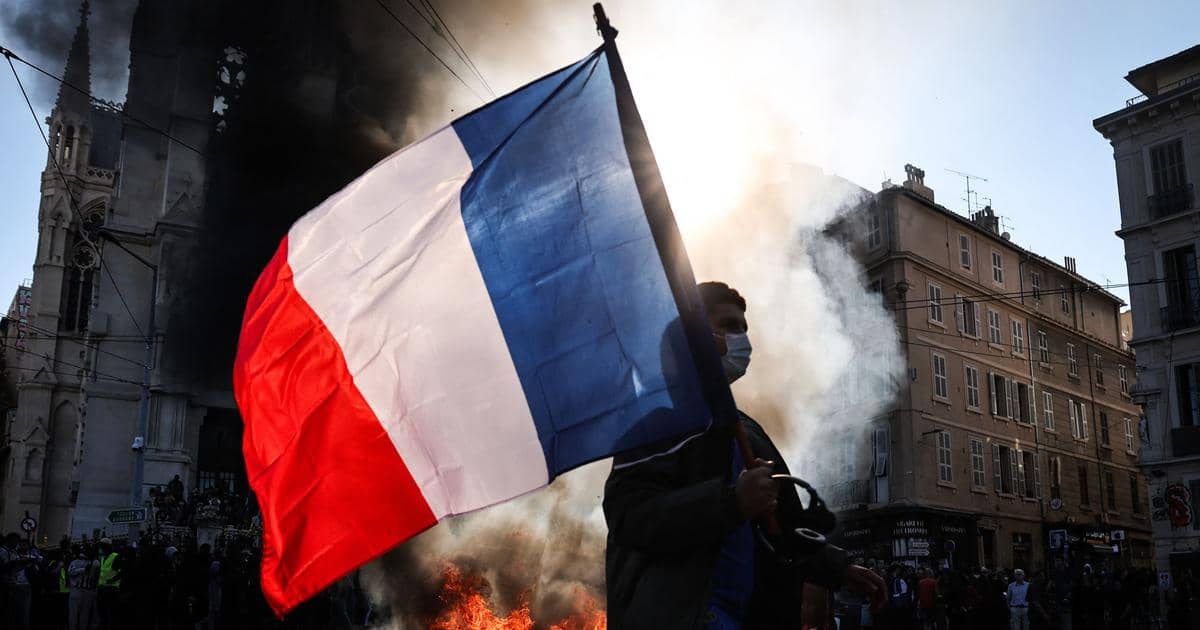
Protests that began with high school students in France have escalated into widespread riots, resulting in significant property damage, injuries, and arrests. The unrest has been described as a political gift for far-right leader Marine Le Pen and her party, the Rassemblement National, as they prepare for the 2027 presidential election.
Between 500,000 and 800,000 demonstrators participated in cities and towns across the country, with most participants identified as students. The initial demonstrations began on September 21 in Créteil, a working-class suburb of southeastern Paris. High school students gathered to protest poor conditions in their schools, citing dilapidated facilities, a shortage of teachers, and inconvenient timetabling.
The protests spread rapidly to more than 700 schools across France without the presence of central leaders or formal manifestos. The grievances extend beyond immediate school conditions. Senior school students have expressed frustration with the Parcoursup university application online portal, citing inefficiencies and inequities in the system. Many French schoolteachers share these concerns, noting large class sizes, poor working conditions, and salary scales that are comparatively low when measured against other professions such as policing.
Specific environmental factors have exacerbated the situation. Summer heatwaves continued to be felt in September, with classrooms lacking cooling systems. Additionally, the structure of the French school day often spreads classes between 8 a.m. and 6 p.m., including Saturday mornings, leaving only one clear afternoon for students.
Violence, Arrests, and Infrastructure Damage
The nature of the unrest shifted from demonstrations to violent riots in several locations. More than 100 police officers and many protesters have been injured as clashes intensified. Up to 2,000 people have so far been arrested in connection with the disorder.
Violent young men, known as casseurs, smashed into shops, set fire to public buildings, and attacked police forces. Major public buildings were destroyed, including the town hall in Limoges and the historic tourist office in Lyon. Other public structures sustained damage, while hundreds of shops were looted by small groups of mainly young men.
Such anti-social action represents a violent repudiation of the structures of French institutions and society. The destruction has drawn parallels to May 1968, when university students protested against a stultifying educational system and a "société bloquée" characterized by conservative politics and limited opportunities. However, high school students today feel their life chances are limited by AI, climate change, and international conflict.
Political Fallout and Regional Context
Neither the centre-right government of Emmanuel Macron nor its likely right-wing successor, the Rassemblement National led by Marine Le Pen, appeals to the protesters. The unrest reflects broader discontent in France, where the years since 2020 have been marked by deep resentment from those whose lives were upended by pandemic restrictions, rising costs of living, and housing crises.
These issues are exacerbated by an energy crisis aggravated by war in the Middle East and Ukraine. The unrest is not isolated to France; recent eruptions of student and wider protests have occurred in Spain, Italy, Portugal, and Belgium. In Spain, tens of thousands protested across the country after parliament rejected housing measures to ban evictions, freeze rents, and regulate short-term rentals on October 3, 2026.
As the riots continue, the political landscape remains volatile. The escalation from student grievances to widespread criminality provides a stark backdrop for the upcoming electoral cycle, with far-right narratives gaining traction amidst the chaos.