


Summit Interactions Highlight Diplomatic Separation
A recent report indicates that China is maintaining a strategic separation from Iran, despite being the Islamic Republic's most significant economic partner. The analysis suggests that Beijing has shown little interest in linking its broader Middle East strategy to Tehran, even as the two nations continue their substantial trade relationship. This calculated approach underscores China's nuanced foreign policy, where economic imperatives do not automatically translate into close political or strategic alignment.
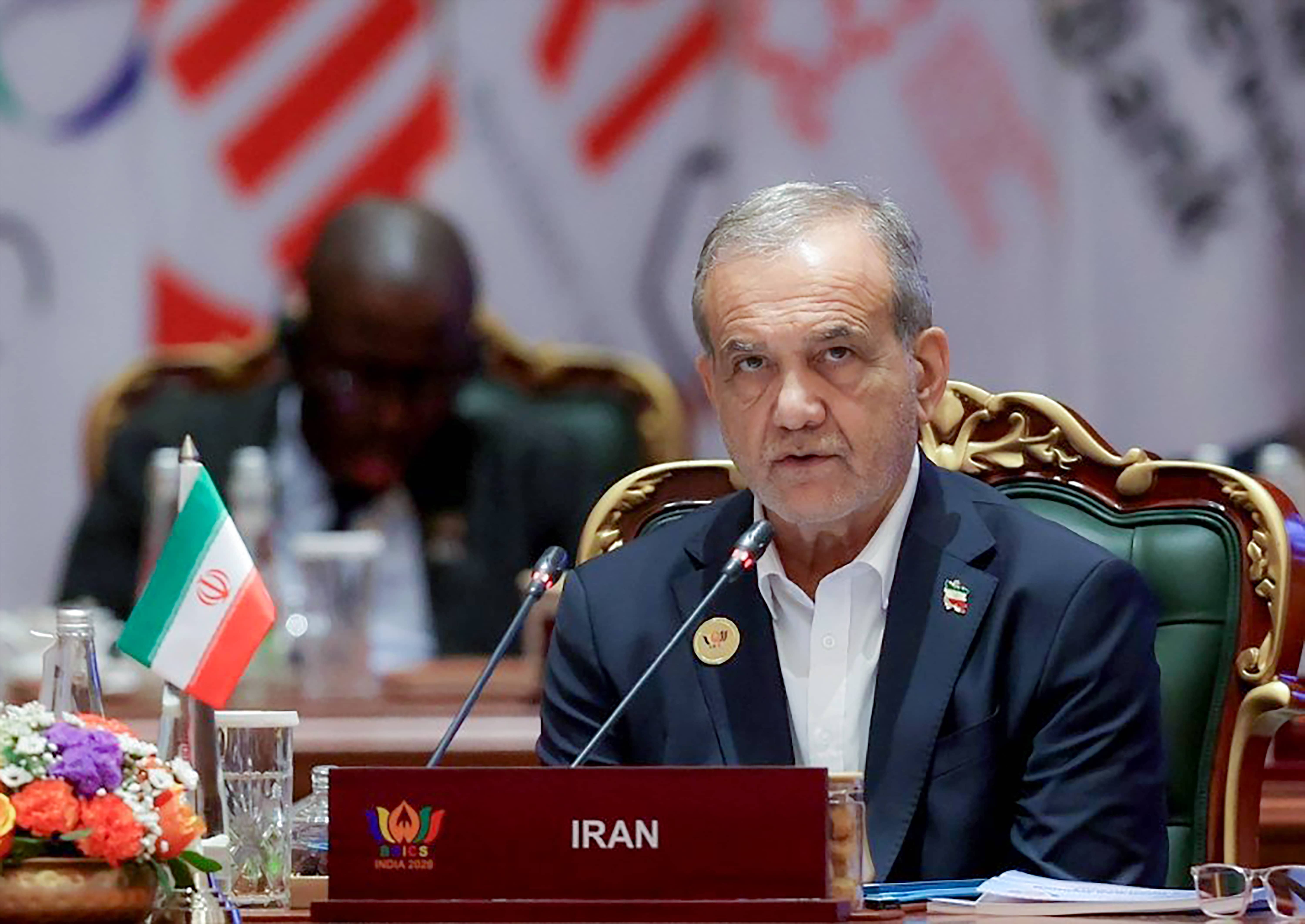
The article, published on the MBN news website by Jim Snyder, points to recent diplomatic events as evidence of this deliberate distancing. During the BRICS+ summit held in New Delhi last week, Chinese President Xi Jinping reportedly kept a notable distance from Iranian President Masoud Pezeshkian, an observation that challenges common perceptions of a burgeoning strategic partnership between the two nations.
According to the report, there was no public interaction observed between the two leaders on the occasion. Snyder further noted that President Xi spent less than a day in India, primarily engaging with his host, Prime Minister Narendra Modi, and briefly seeking to garner Global South support for his security governance initiative. The absence of any reported interaction with President Pezeshkian during this high-profile international gathering served as a strong indicator of Beijing's current diplomatic posture.
“It was a notable display of distance between two countries often portrayed as strategic partners,” the article states, emphasizing the contrast between public perception and observed diplomatic reality. This suggests a more cautious and selective approach by Beijing in its international diplomacy, particularly concerning its engagement with nations facing significant international scrutiny or sanctions.
China's Divergent Engagements at International Forums
The report highlights that China's approach to Iran differs significantly from its engagement with other major powers, particularly Russia. This disparity in diplomatic treatment underscores a strategic differentiation in Beijing's foreign policy. In contrast to its interactions with Tehran, President Xi Jinping has been much more overt and publicly supportive in his engagement with Russian President Vladimir Putin, signaling a deeper level of strategic alignment and comfort.
This divergence was particularly evident at the Shanghai Cooperation Organisation (SCO) summit held last month in Bishkek, Kyrgyzstan. The article details that President Xi held formal, photographed meetings with President Putin, as well as with Uzbek President Shavkat Mirziyoyev and Kyrgyz President Sadyr Japarov. These prominent engagements, complete with official photo opportunities and public statements, conveyed a clear message of robust bilateral relations and shared regional interests.
In stark comparison, Iranian President Pezeshkian received only a brief sideline meeting and considerably less public attention from the Chinese leadership during the SCO summit. The report cites experts who suggest that China does not want to appear to be particularly cozy with Iran at this time. This indicates a deliberate effort by Beijing to manage its international image and strategic positioning, potentially to avoid implications of deeper political or military alignment with Iran, especially in regions of geopolitical sensitivity.
Beijing's Calculated Regional Posture
The observed diplomatic distancing at both the BRICS+ and SCO summits suggests a broader, calculated strategy by Beijing. China appears keen to avoid being perceived as too closely aligned with Iran, particularly as it navigates complex relationships in the Middle East and seeks to project an image of a responsible global power. This strategic separation allows China greater flexibility in its diplomatic engagements across the region and globally, without being constrained by Iran's specific geopolitical challenges or international standing. Such a posture enables China to pursue its economic and strategic interests with a wider array of partners without being drawn into specific regional conflicts or controversies associated with Tehran.
Economic Foundations and Asymmetrical Trade
Despite the clear diplomatic distancing observed at recent summits, the underlying economic ties between Beijing and Tehran remain robust, driven by mutual commercial interests. The article highlights that these relationships have historically been founded on commerce rather than deep political or strategic alignment. China has consistently sought reliable access to cheap Iranian oil, a critical component of its energy security strategy, while Iran has relied heavily on this trade for much-needed revenue and access to a wide array of Chinese goods, especially under the weight of international sanctions.
Iran sends more exports to China than to any other country, underscoring the Islamic Republic's significant economic dependence on the Chinese market. Furthermore, Iran continues to rely heavily on Chinese imports, making China an indispensable economic partner. This profound economic interdependence is reflected in data from MBN’s inaugural 'Great Powers Index,' which places Iran closer to China than any other country in the Middle East and North Africa (MENA) region in terms of economic ties.
However, the article further states that the nature of this relationship is more complicated than raw trade data might suggest. It emphasizes that the partnership is distinctly not one of equals. The Islamic Republic accounts for less than 1 percent of China's global trade, a figure that starkly illustrates the asymmetrical nature of their economic connection. For China, Iran represents a relatively small, albeit strategically important, piece of its vast global economic network. For Iran, however, China is a dominant and critical lifeline, a disparity that grants Beijing significant leverage in their bilateral relationship.