


Chinese Officials Reject New US Entity Designations
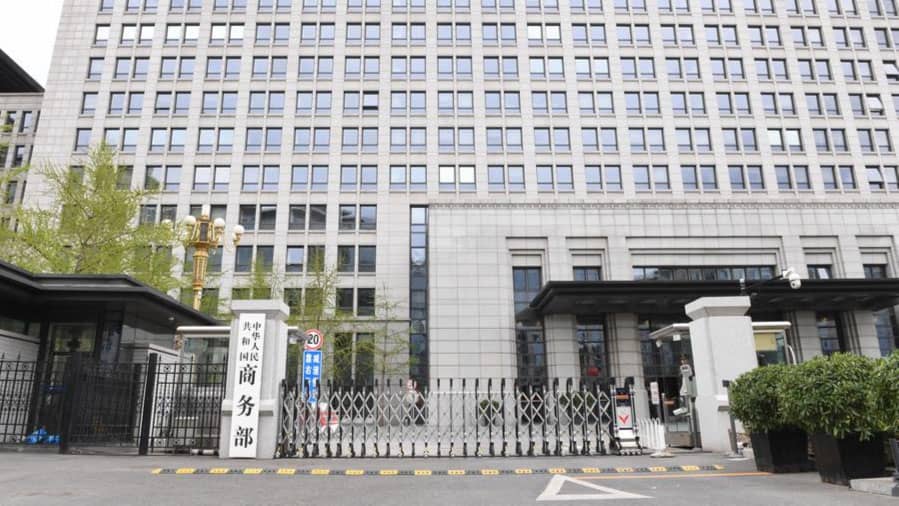
A spokesperson for China’s Ministry of Commerce dismissed Friday's decision by the United States as groundless. The official stated that Beijing views this action as another attempt to impose unilateral sanctions on Chinese companies under the pretext of so-called human rights and forced labor concerns.
According to reports from August 4, 2026, China condemned the United States’ decision to add more than 40 Chinese entities to the entity list under the so-called Uyghur Forced Labor Prevention Act. The condemnation came as part of a broader diplomatic response involving government officials and trade representatives who addressed the implications of these designations.
The Ministry of Commerce spokesperson emphasized that China believes such measures are not based on factual evidence but rather serve political objectives unrelated to genuine labor rights issues. This perspective aligns with previous statements from Beijing regarding similar actions taken by Washington in recent years, which have been characterized as protectionist moves disguised under the banner of ethical compliance.
China’s response highlights a growing tension between trade partners over how international standards are defined and enforced. The Chinese government argues that these unilateral designations create an uneven playing field for companies operating in global markets, where adherence to diverse regulatory frameworks is expected but often interpreted differently by various nations.
Impact on Global Industrial Stability
The spokesperson further asserted that the move disrupts the stability of global industrial and supply chains. Beijing stated that China’s legitimate rights and interests are seriously undermined by these actions, which it claims lack sufficient justification or transparency.
Industry analysts note that such disruptions can have cascading effects across multiple sectors, affecting not only Chinese firms but also international businesses reliant on cross-border trade. The uncertainty surrounding the validity of these designations could lead to hesitation among investors and partners who must navigate increasingly complex geopolitical landscapes.
In a related development, sources indicate that some multinational corporations are reassessing their supply chain strategies amid rising tensions between major economies. While no specific company names were provided in available reports, industry observers suggest that companies may seek alternative suppliers or diversify sourcing locations to mitigate potential risks associated with geopolitical friction.
Diplomatic Pushback and Broader Implications
China’s reaction underscores its commitment to challenging what it perceives as unjustified interference in domestic affairs. The government maintains that accusations of forced labor without concrete proof are baseless and intended to justify restrictive trade policies.
Diplomatic channels remain open for dialogue, though recent exchanges have been marked by heightened rhetoric from both sides. Chinese officials continue to urge the United States to refrain from using human rights concerns as a tool for economic coercion against other nations.
The situation reflects broader challenges facing international trade governance in an era of increasing geopolitical fragmentation. Experts argue that resolving these disputes requires cooperation rather than confrontation, emphasizing the need for multilateral approaches to address legitimate labor and environmental issues without resorting to punitive measures.
As discussions continue, stakeholders on both sides will likely monitor developments closely, given their potential impact on future trade agreements and relations between China and its global partners. The outcome of these negotiations could set precedents for how similar disputes are handled in the years ahead.