

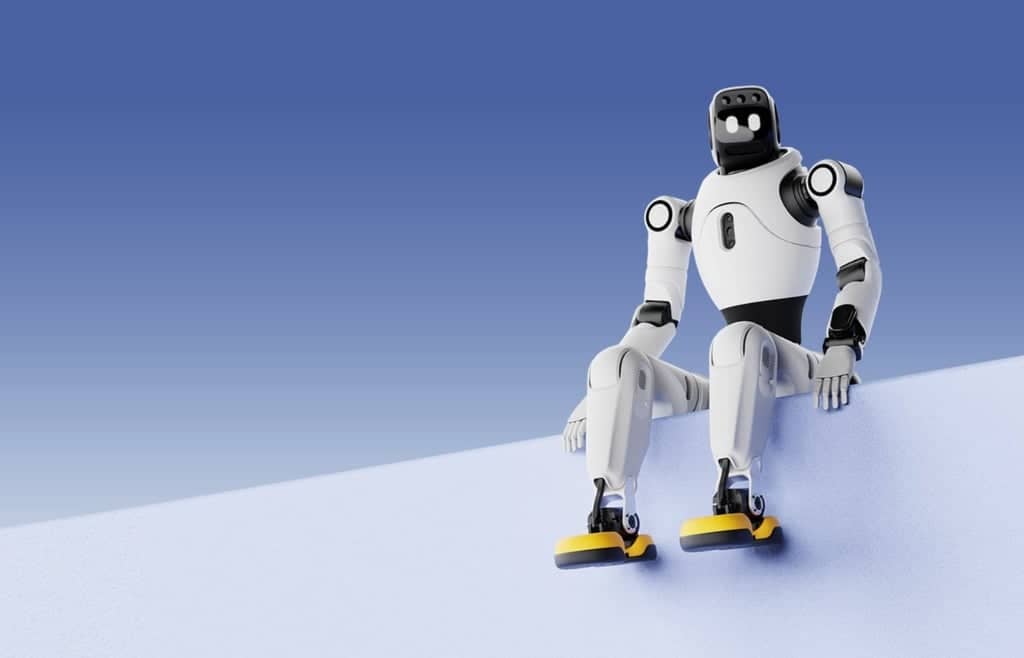

Market Share Consolidation in Humanoid Robotics
The global humanoid robot industry has experienced a dramatic shift in market dynamics, characterized by a substantial increase in unit shipments and a near-total consolidation of supply among Chinese manufacturers. According to data reported by TechRepublic, total shipments of humanoid robots surged by 272 percent during the measured period. This exponential growth in volume coincides with a stark concentration of market control, as Chinese vendors captured 97 percent of all shipments.
The dominance of Chinese firms in this specific sector highlights a significant divergence in industrial capacity and deployment rates compared to other global regions. The reported figures indicate that the vast majority of physical units entering the market are sourced from entities based in China. This level of market penetration suggests that current production capabilities, supply chain infrastructure, and manufacturing scale for humanoid robotics are heavily centralized within Chinese borders.
The 97 percent market share held by Chinese vendors represents a near-monopoly position in the early stages of humanoid robot commercialization. The remaining 3 percent of shipments is attributed to non-Chinese entities, though specific details regarding these competitors were not provided in the available reporting. The disparity between the volume growth and the geographic distribution of supply underscores the current competitive landscape, where Chinese manufacturers are effectively setting the standard for availability and deployment.
Leading Entities Driving Production
Within this concentrated market, specific companies have emerged as primary contributors to the shipment surge. TechRepublic identified AGIBOT and Unitree as key players leading the charge in this sector. These two firms are cited as central to the 97 percent share captured by Chinese vendors, indicating that a small number of entities are responsible for the bulk of global humanoid robot distribution.
AGIBOT and Unitree Market Position
AGIBOT and Unitree are recognized in reports as the primary drivers behind the industry's expansion. Their prominence in the shipment data suggests that they possess the manufacturing throughput required to support a 272 percent increase in global demand. The identification of these specific companies highlights the current oligopolistic nature of the humanoid robot supply chain, where market leadership is defined by a select few Chinese technology firms.
The focus on AGIBOT and Unitree aligns with broader observations of China's rapid advancement in robotics technology. These entities are not merely participating in the market but are actively defining its scale. The reported data does not provide specific financial metrics or unit counts for these individual companies, but their designation as leaders correlates directly with the overall 97 percent market share statistic attributed to Chinese vendors.
Drivers of Adoption and Deployment
The surge in shipments is not occurring in a vacuum but is linked to specific patterns of industry adoption. According to the reporting, the growth in humanoid robot units is attributed to increasing adoption in workplaces. This suggests that the primary demand driver for these machines is commercial and industrial application rather than consumer or residential use.
Workplace adoption implies that businesses are integrating humanoid robots into operational environments. The 272 percent increase in shipments reflects a corresponding increase in procurement by these workplace entities. While the specific types of workplaces or the nature of tasks being performed by these robots were not detailed in the source material, the link between shipment volume and workplace integration is explicitly stated.
This trend indicates a phase of industrial scaling where humanoid robotics are moving from experimental prototypes to deployed assets in professional settings. The concentration of supply among Chinese vendors like AGIBOT and Unitree means that this wave of workplace adoption is being facilitated almost entirely by Chinese manufacturing output. The reported correlation between shipment growth and workplace adoption provides a factual basis for understanding the current demand landscape, without speculating on future market corrections or technological limitations.
Implications of Supply Concentration
The data presented by TechRepublic establishes a clear picture of the current state of the humanoid robot market. The combination of a 272 percent shipment increase and a 97 percent Chinese market share defines the industry's present reality. The leadership of AGIBOT and Unitree further clarifies which entities are capitalizing on this growth.
As workplace adoption continues to drive demand, the reliance on a specific geographic region for supply becomes a critical factor in the industry's development. The reported facts confirm that Chinese makers currently dominate the production and distribution of humanoid robots. This dominance is quantified by the 97 percent share and the volume spike, providing a verifiable snapshot of market power in the robotics sector.