

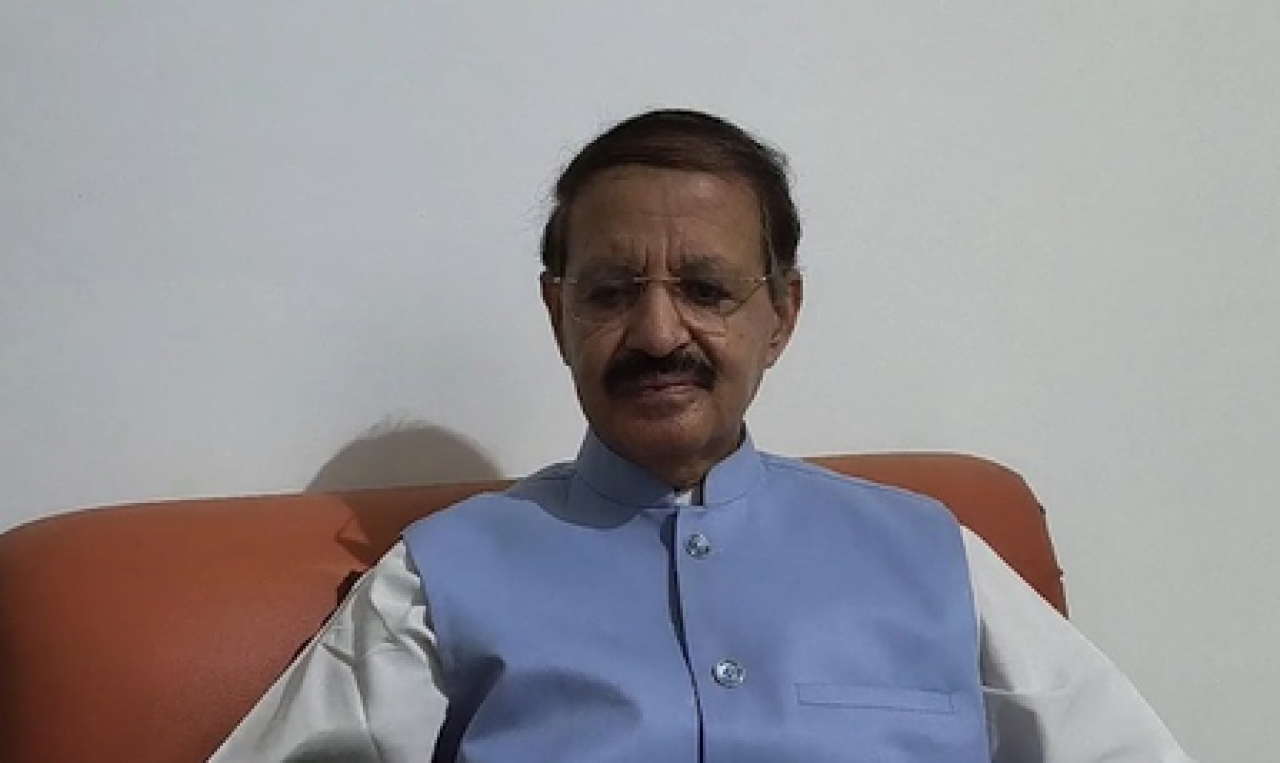

Alvi Challenges CJP on Protest Withdrawal
New Delhi, September 3: Congress leader Rashid Alvi has formally challenged the Communist Party of India (Marxist) over its abrupt decision to withdraw a significant protest that was originally slated for September 5. Speaking in an exclusive conversation with a prominent news agency, Alvi underscored the imperative for the CJP to provide a comprehensive public clarification regarding the sudden cancellation of the demonstration. This demand comes particularly in light of the fact that the proposed protest had already garnered considerable support from various opposition parties, making the withdrawal a matter of heightened political scrutiny.
Alvi unequivocally emphasized that the act of withdrawing a planned protest without offering a clear, transparent explanation inevitably casts a shadow of doubt over the organization’s fundamental credibility. He directly questioned the underlying rationale for such a sudden reversal, particularly stressing that once a protest is publicly announced and subsequently endorsed by a spectrum of opposition parties, the public and political allies are entitled to a robust and unambiguous justification for its subsequent cancellation. The absence of such an explanation, he argued, undermines trust and accountability within the political sphere.
Credibility Concerns and Public Suspicion
In a forceful assertion on the necessity of transparency within democratic political processes, Alvi articulated that should any political motives underpin the CJP’s decision, the electorate and concerned citizens possess an inherent right to be fully apprised of the precise reasoning behind such a pivotal shift. He characterized the sequence of announcing a major protest only to retract it shortly thereafter as an aberration from normal political conduct. This unusual pattern, Alvi contended, naturally fosters an environment of suspicion and distrust among the populace, who expect consistency and clear communication from political entities.
The Congress leader extended his critique to the ruling Bharatiya Janata Party (BJP) and its government, accusing them of consistently employing a range of political tactics that often complicate the political landscape. Alvi suggested that the CJP’s unexpected withdrawal of the protest, in this broader context, only serves to intensify existing skepticism regarding political maneuvering and potentially hidden agendas. He reiterated his urgent call for the CJP to promptly and thoroughly clarify the specific reasons and the full chain of circumstances that ultimately culminated in the decision to cancel the significant September 5 protest, thereby addressing the growing public and political unease.
Questions Regarding Coordination
When directly confronted with inquiries regarding the possibility of undisclosed coordination or understanding between the Communist Party of India (Marxist) and the ruling BJP, Alvi adopted a cautious stance. He deliberately refrained from leveling any direct accusations or making definitive claims of such an alliance. Instead, he strategically redirected the focus, reiterating with emphasis that the onus squarely lies with the CJP to comprehensively explain the underlying reasons for its decision to withdraw the protest. Alvi underscored that, for him, the paramount and most pressing issue at hand was not the speculative nature of alleged coordination, but rather the fundamental and undeniable need for complete transparency from the CJP regarding its actions.
Alvi further posited that if the cancellation of the protest was indeed influenced by specific political motives or strategic considerations, then it becomes an imperative for the CJP to openly inform the public about the full circumstances that led to this significant decision. His remarks carried a clear implication: such an abrupt and substantial shift in political strategy demands robust justification. This justification, he argued, is essential not only to uphold and maintain the crucial trust of the electorate but also to reassure and solidify confidence among the various opposition allies who had previously extended their unequivocal support to the planned demonstration, and who now find themselves questioning the sudden change of course.
Political Accountability and Future Opposition Dynamics
The unannounced withdrawal of the planned September 5 event represents a significant and unexpected alteration in the Communist Party of India (Marxist)’s immediate political agenda and tactical approach. By unilaterally calling off the protest, the party has effectively sidestepped a direct confrontation on the originally scheduled date. However, this avoidance has come at a cost: the conspicuous absence of any official statement or explanation from the CJP regarding the cancellation has not gone unnoticed. Instead, it has actively provoked widespread scrutiny and critical questioning from a multitude of other political figures and commentators across the spectrum.
Rashid Alvi’s pointed intervention serves to draw critical attention to the intricate and often fraught dynamics that characterize the relationship between diverse opposition groups and the incumbent ruling party. He underscored a fundamental principle of political integrity, stressing that the enduring credibility and public trust of any political organization are inextricably linked to its commitment to consistent, clear, and forthright communication. This principle, Alvi argued, becomes even more paramount and non-negotiable when a party’s publicly declared plans undergo an abrupt and unexplained alteration, especially after having successfully garnered significant public or partisan support for its initial stance.
The Congress leader’s insistent demand for a comprehensive explanation from the CJP profoundly underscores the critical importance of accountability and transparency in the planning and execution of public demonstrations and political actions. Without the provision of a clear, coherent, and credible narrative from the CJP, a multitude of unresolved questions persist regarding the precise factors and considerations that ultimately influenced the decision to cancel the rally. Furthermore, this lack of clarity raises serious concerns about the potential ramifications for future coordination efforts among opposition parties, who rely on mutual trust and predictable conduct to forge united fronts against the ruling establishment.