

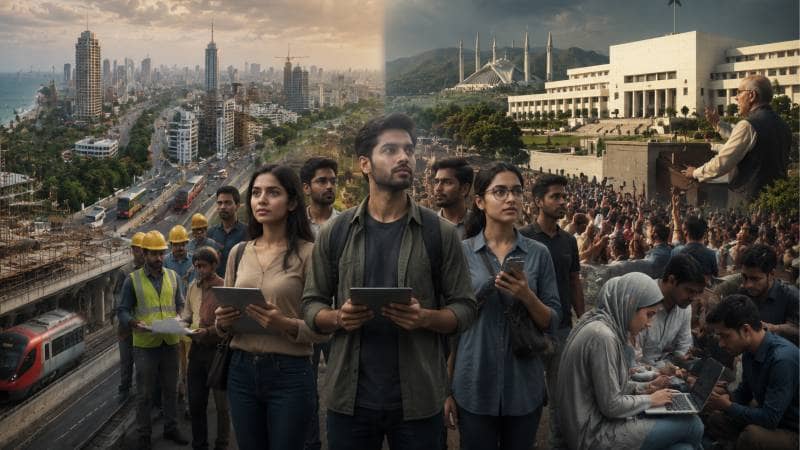

Youth Transition From Passive Subjects To Active Political Agents
In a significant transformation of the political landscape across South Asia, young people in Colombo and Islamabad have moved from being passive subjects of political rhetoric to becoming active agents who force the political conversation. This shift has occurred over just a few years, marking a departure from previous eras where youth were merely discussed within political speeches rather than driving the discourse themselves.
According to reporting by The Friday Times, this generation is no longer content with being the object of political analysis. Instead, they have positioned themselves as the ones pressuring governments and unsettling entrenched arrangements that have long defined governance in these regions. The transition represents a fundamental change in how political power is perceived and challenged by younger demographics.
The movement is characterized by a direct challenge to established power structures. By pushing questions about jobs, merit, and accountability, young voters are demanding a level of transparency and performance that was previously absent from the political dialogue. This active engagement has disrupted traditional methods of political control and communication.
Evaluating Governance Through Tangible Performance Metrics
The core criterion for this generation's assessment of leadership is tangible results rather than rhetorical flourishes. Young people are judging governments based on their actual performance and the delivery of concrete outcomes. This focus on results over rhetoric signals a pragmatic approach to political evaluation, where promises are weighed against measurable achievements.
Key demands emerging from this demographic include specific attention to employment opportunities, the implementation of merit-based systems, and greater governmental accountability. These issues have become central to the political conversation as youth pressure governments to address them directly. The emphasis on merit suggests a desire for systems where advancement is based on ability rather than connection or patronage.
Accountability remains a critical pillar of this new political expectation. Voters are holding leaders responsible for their actions and decisions, moving away from an era where political figures might operate with limited oversight. This demand for accountability is intertwined with the push for meritocracy, as both concepts rely on a fair and transparent evaluation of performance.
Disrupting Entrenched Political Arrangements
The actions of young voters in Colombo and Islamabad are actively unsettling entrenched political arrangements. By challenging established power structures, they are forcing a reevaluation of how governance is conducted. This disruption is not merely symbolic but has practical implications for how policies are formulated and implemented.
The pressure exerted by this demographic is resulting in a shift in political priorities. Issues that were previously marginalized or addressed with insufficient urgency are now at the forefront of political debate. The focus on jobs reflects an economic reality where youth unemployment or underemployment may be a significant concern, driving the demand for tangible outcomes.
Implications For Political Structures And Future Governance
The shift toward outcome-based evaluation is reshaping the relationship between citizens and the state. Political leaders can no longer rely solely on rhetoric to maintain support; they must demonstrate capability and results. This requirement places a higher burden of proof on those in power and raises the stakes for political performance.
The challenge to established power structures indicates a potential long-term impact on political stability and reform. As young people continue to push for accountability and merit, traditional systems may need to adapt or face increasing resistance. The focus on specific issues like jobs and merit provides a clear framework for this ongoing political negotiation.
As the conversation remains forced by youth pressure, the political landscape in Colombo and Islamabad continues to evolve. The emphasis on results over rhetoric suggests that future political success will depend on the ability of leaders to deliver on these tangible demands. This dynamic creates a new standard for political legitimacy, rooted in performance rather than tradition or speech.