

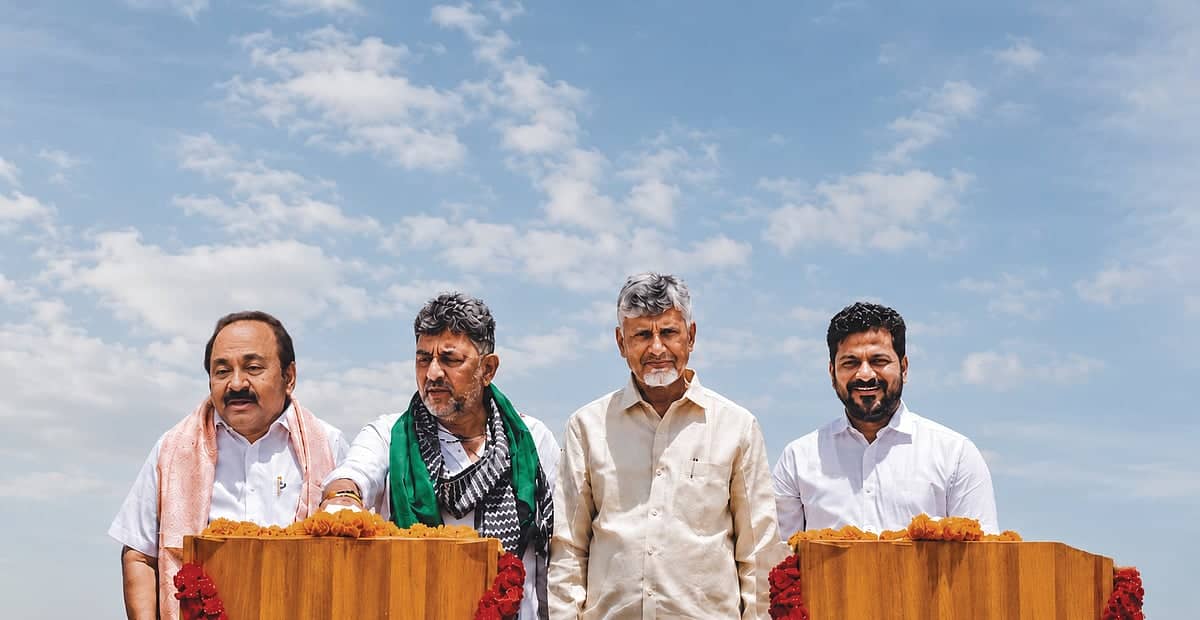

Regional Power Disparity Defines Current Political Landscape
The political geography of the Indian National Congress has undergone a significant transformation, characterized by a stark contrast between its performance in different regions of the country. According to recent analysis published by The New Indian Express, the party is currently "decimated in North India" while simultaneously maintaining control over "most of South India." This geographical divergence has sparked internal discussions regarding the future direction of the party and its leadership structure as it approaches the 2029 general elections.
The article titled "Southern Storm," updated on July 26, 2026, highlights this imbalance as a critical factor in the party's strategic planning. The publication notes that the Congress party governs the majority of the southern states, creating a power base that stands in sharp relief to its weakened position in the northern territories. This regional disparity has led to speculation about whether the national face of the party should reflect its current stronghold in the south.
Historical Parallels and Leadership Questions
The discussion surrounding the party's future leadership draws direct comparisons to historical precedents within the Congress organization. The article questions whether it is time for a South Indian Congressman to become the national face of the party in 2029. This inquiry references a specific historical moment, asking if the current situation mirrors the opportunity that K. Kamaraj missed in 1966.
K. Kamaraj, a prominent figure in Congress history, was once poised to assume higher national leadership roles but did not take them at that time. The current analysis suggests that the party might be facing a similar juncture, where the regional balance of power necessitates a shift in national representation. The text implies that the success and stability of the party in southern states may now dictate its national trajectory, moving away from traditional northern-centric leadership models.
DK Shivakumar Emerges as Central Figure in Southern Governance
At the center of this regional shift is DK Shivakumar, who currently serves as the Chief Minister of Karnataka. The New Indian Express describes Shivakumar as being "comfortable with power," a trait observed in his daily conduct and administrative style. His presence in the Vidhana Saudha, the seat of government in Karnataka, is depicted as commanding immediate attention and respect from those around him.
Reports detail scenes within the expansive, wood-lined chief minister’s chamber where Shivakumar sits at the head of the conference table. The atmosphere in the room is described as charged with energy, filled with ministers, bureaucrats, politicians, and aides. The Chief Secretary is noted for his efficiency, rapidly reviewing notes to present to Shivakumar, who is referred to by his initials, DKS.
Administrative Style and Political Authority
Shivakumar’s approach to governance is characterized by active engagement with officials. He is described as listening carefully to reports, asking for clarifications, and occasionally interrupting with a voice that is neither soft nor harsh. This vocal tonality is portrayed as the result of years of political struggle, having taken "many years and many wars" to be heard by New Delhi and reach the pinnacle of government in Karnataka.
The article further illustrates his political versatility. His voice is described as capable of rising to the "highest octave of a battle cry," serving him well as a negotiator who cajoles foes and reassures allies. Beyond administrative duties, Shivakumar is depicted as a leader who connects with constituents through grassroots camaraderie. He is shown walking alongside crowds with ease, enjoying adulation and showers of rose petals, indicating a strong rapport with his supporters.
Implications for National Party Strategy
The prominence of southern leaders like Shivakumar raises questions about the party's ability to project a unified national image. The article notes that other key figures are also part of this southern political landscape, including VD Satheesan, Chandrababu Naidu, and Revanth Reddy. These individuals are presented as part of the broader political ecosystem that supports the Congress party's dominance in the region.
The contrast between the party's governance in South India and its struggles in North India suggests a potential realignment of priorities. If the party is to maintain its relevance on the national stage, the analysis implies that leveraging the administrative success and political comfort of southern leaders may be essential. The reference to Kamaraj’s missed opportunity in 1966 serves as a cautionary tale, suggesting that failing to adapt to regional power shifts could result in lost opportunities for national leadership.
As the 2029 elections approach, the party must decide how to balance its regional strengths with national ambitions. The current governance structure in Karnataka, under Shivakumar’s leadership, provides a model of authority and negotiation that has been effective at the state level. Whether this model can be scaled to address the challenges in North India remains an open question within the party.
The discussion is not merely about individual leaders but about the structural identity of the Congress party. The article suggests that the party’s future may depend on its willingness to embrace a leadership profile that reflects its current geographical reality. With the south firmly under its control, the party has the opportunity to redefine its national narrative, provided it can navigate the complexities of regional politics and historical expectations.