


Ownership Structure and Expansion Plans
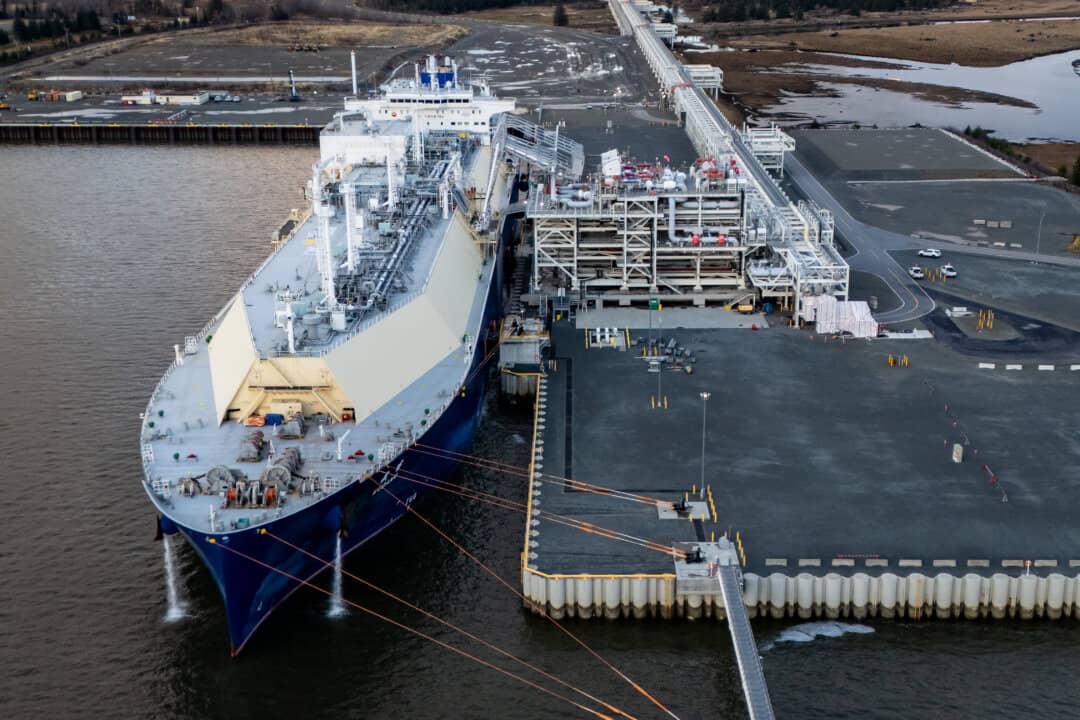
Conservative Member of Parliament Dean Allison has drawn attention to the partial Chinese ownership of LNG Canada, identifying it as the country’s largest liquefied natural gas (LNG) company. Allison noted that PetroChina, a state-controlled Chinese entity, holds a 15 percent stake in the facility.
LNG Canada operates as a joint venture with a diverse group of international partners. Shell holds the largest share at 40 percent, followed by Petronas with 25 percent. Mitsubishi Corporation and PetroChina each own 15 percent, while Korea Gas Corporation holds the remaining 5 percent.
The company recently announced a final investment decision for Phase Two of its export terminal located in northern British Columbia. This expansion is projected to double the facility's production capacity from 14 million tonnes to 28 million tonnes per year. The project is expected to become operational by the early 2030s.
According to government statements, the Phase Two expansion is anticipated to draw approximately $33 billion in private-sector capital. Officials have described the expanded facility as potentially becoming the second-largest LNG facility globally.
Parliamentary Scrutiny and Security Reviews
The issue of foreign ownership has been raised within federal parliamentary committees. During a hearing in April, Conservative MP Shannon Stubbs questioned Minister of Internal Trade Dominic LeBlanc regarding whether the government conducted a national security review of PetroChina’s stake in the project.
LeBlanc responded that he had been "briefed regularly" by officials from Canada’s Major Projects Office and Canadian national security officials. He stated that he was satisfied the review had been completed based on these briefings.
The federal government has not publicly disclosed specific details of the security review, citing confidentiality rules established under the Investment Canada Act.
Supply Chain and Export Data
Details regarding the construction of Phase Two have also drawn scrutiny. LNG Canada stated that large prefabricated sections for the expansion will be manufactured in China using Chinese steel. The company indicated that these components cannot be built within Canada.
Data from the Canadian Association of Petroleum Producers indicates the current distribution of LNG Canada’s exports. From June 2025 through January 2026, shipments were directed to South Korea (41 percent), Japan (27 percent), China (25 percent), and Taiwan (7 percent).
Historical Precedents and Political Commentary
The debate over Chinese investment in Canadian energy infrastructure has historical context. In 2012, the Harper administration approved CNOOC’s $15 billion takeover of Nexen. Following that transaction, the government announced that future purchases of oilsands-related companies by foreign governments would be blocked, except under exceptional circumstances.
Dean Baxendale, CEO of the China Democracy Fund, has warned that the Chinese regime could utilize Canada’s energy exports as leverage, drawing parallels to previous actions taken regarding canola exports.Commentary from state-owned media in China has previously framed LNG Canada’s development through a geopolitical lens. A 2019 commentary in CGTN claimed the plant and the Kinder Morgan pipeline were built largely to serve the Chinese market. The report noted that PetroChina’s stake virtually guarantees financial success for the project and could help wean Canada away from over-dependence on the United States.