

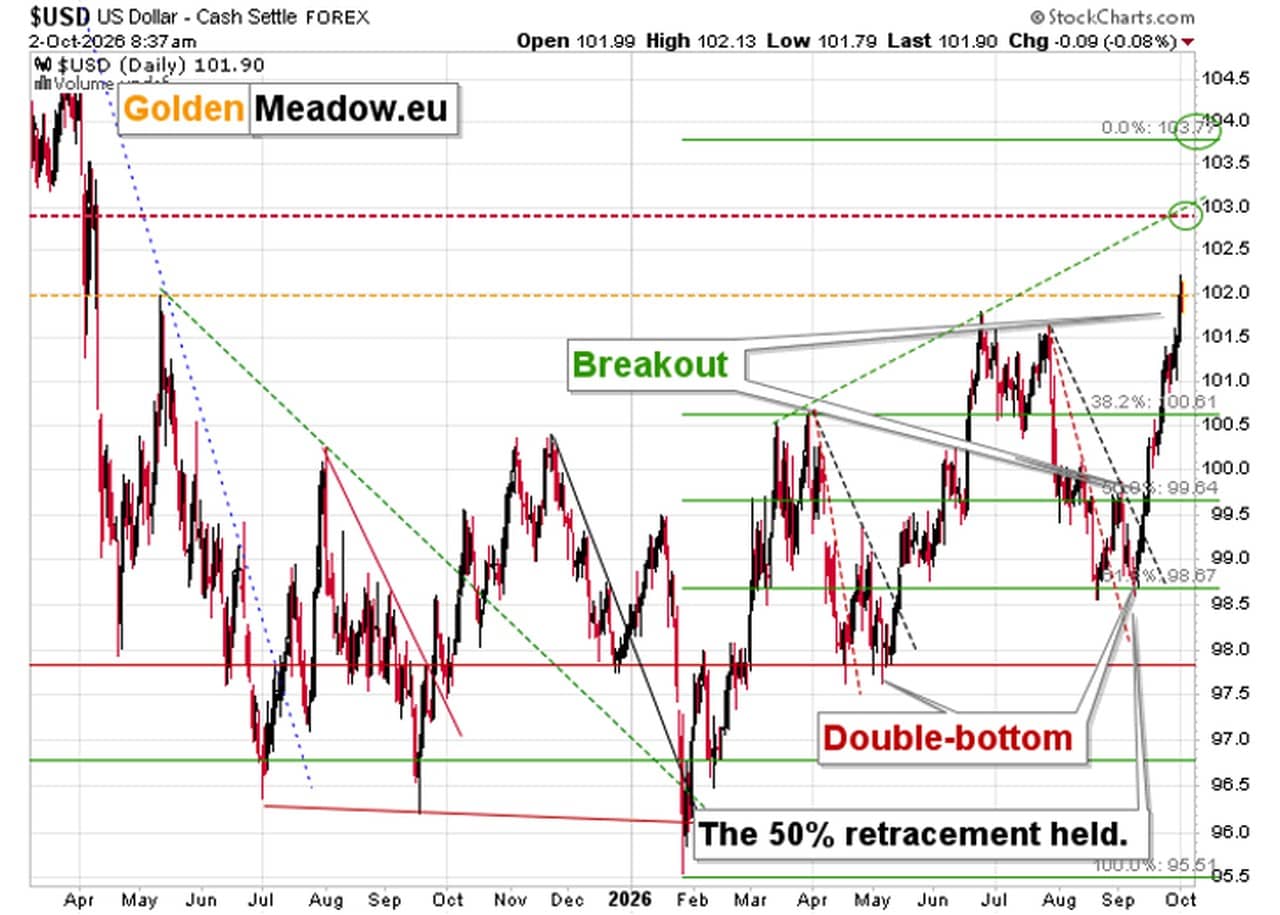

U.S. Dollar Strengthens Amid Rising Long-Term Yields
The U.S. dollar index closed near 102.1 on Thursday, marking its highest level since April 2025, according to an analysis by Przemyslaw K. Radomski, CFA. The currency index rose for a fourth consecutive day, refusing to give back its recent breakout despite a softer outlook from the Federal Reserve and softening inflation data that typically weigh on the greenback.
The strength of the dollar was driven largely by rising long-term Treasury yields. The 10-year Treasury yield touched 5.30 percent, reaching a peak last seen in 2007, before climbing to 5.344 percent on Thursday. Meanwhile, the 30-year Treasury yield traded above 5.66 percent, marking a 24-year high.
The bond market concluded its worst quarter this century, with the 10-year yield rising 87 basis points over three months and on track for an eighth straight weekly gain. The Treasury Department attempted to cap the long end of the curve through an enlarged buyback program, but the effort met limited success. In September, the program filled only $5.19 billion of its $6 billion target, while the 30-year yield continued to rise on the same day.
Euro Weakness and Oil Prices Add to Dollar Pressure
External factors also contributed to the dollar's strength. The euro fell below the 1.13 level against the dollar for the first time since May 2025. This decline was attributed to higher oil prices and concerns regarding the French budget, with the euro representing the largest component of the dollar index.
Despite these headwinds, the odds of a Federal Reserve rate hike in October roughly halved. Soft inflation data had previously cut the odds of an October hike from approximately 70 percent to about 37 percent, yet the dollar did not retreat as investors focused on the trajectory of long-term yields rather than short-term policy expectations.
Gold Prices Face Resistance from Bond Market Dynamics
The divergence between short-term rate expectations and long-term yields has impacted gold prices. Gold spiked to $4,251 but was sold off within hours as long-term yields continued to rise. Radomski noted that gold competes with long-term yields, such as those on 10- or 30-year Treasuries, rather than the Fed's overnight rate.
Because gold pays no interest, it faces direct competition from rising bond yields. A softer Federal Reserve stance is unlikely to lift gold prices if the long end of the yield curve continues its upward trajectory. The currency index's refusal to fall back suggests that market participants are prioritizing long-term yield dynamics over short-term monetary policy shifts.