

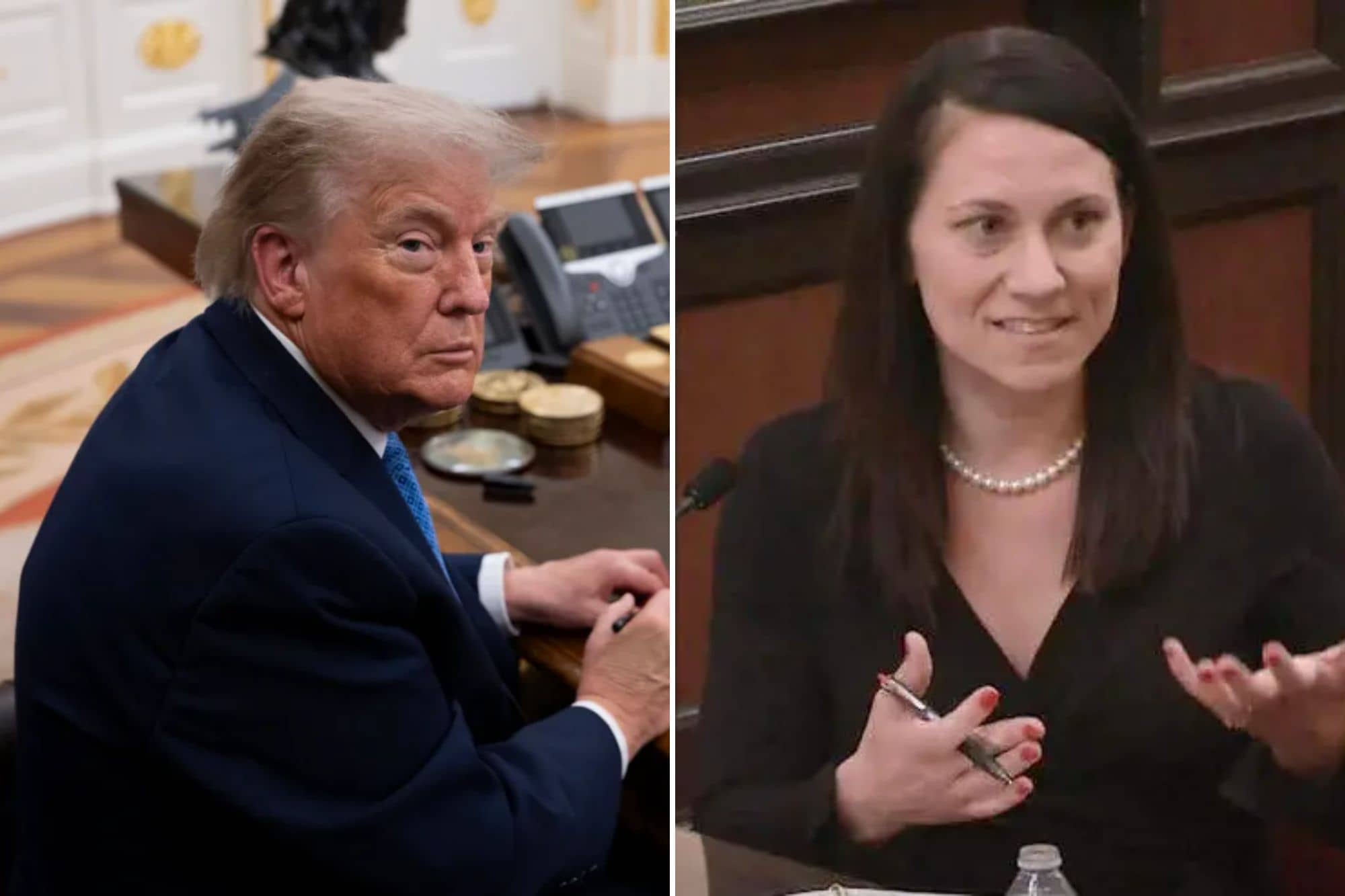

Disparate Standards for Political Figures
Critics on the political left have consistently expressed strong disapproval regarding the business dealings associated with former President Donald Trump. These criticisms often center on perceived conflicts of interest and the commingling of private enterprise with public office. However, these same critics are alleged by some observers to have made few public objections when instances of corruption or what has been described as “wiretap sleaze” involve close allies of prominent Democratic figures.
This perceived imbalance in scrutiny has drawn attention, particularly following recent revelations concerning an attorney for a former chief of staff to Governor Gavin Newsom. The attorney stated that a Newsom appointee cooperated with the Federal Bureau of Investigation (FBI) by wearing a wire for an extensive period. This cooperation was reportedly part of a federal probe into the former chief of staff, who was subsequently indicted on multiple serious counts of bank and wire fraud.
Allegations of Selective Outcry
The core of the argument from these observers is not merely the existence of alleged wrongdoing, but the selective nature of public outcry. While President Trump's financial activities and business ventures frequently drew intense media scrutiny and condemnation from a specific segment of the political spectrum, similar allegations or confirmed instances of surveillance and corruption involving figures close to Democratic leadership are said to elicit a muted response from the very same groups. This disparity, critics argue, suggests a political rather than purely ethical motivation behind the condemnation.
The California Probe: An Insider's Cooperation
The California Post recently broke a significant story detailing the attorney's revelation. According to reports from that publication, the attorney representing Dana Williamson, who served as the former chief of staff to Governor Gavin Newsom, confirmed that Alexis Podesta had quietly cooperated with federal investigators. Williamson's role as chief of staff is a highly influential position, typically involving close proximity to the governor and significant power in state operations and policy-making.
Alexis Podesta is described in these accounts as a longtime insider within California's political circles and a state board appointee made by Governor Newsom. State board appointments often place individuals in positions of trust and influence over various public sectors, from regulatory bodies to commissions. The nature of Podesta's cooperation was particularly striking: it involved wearing a wire to record conversations for two years. This prolonged period of covert surveillance underscores the depth and seriousness of the federal investigation into Williamson.
The investigation ultimately led to Williamson's indictment last year on 23 counts of bank and wire fraud. The sheer number of counts indicates a broad scope of alleged financial impropriety. The article notes that this alleged surveillance activity, conducted by a gubernatorial appointee, occurred while the extensive federal investigation into the former chief of staff was actively underway. The revelation brings to light the intricate and often hidden dynamics of federal probes into high-level political figures and their associates.
The Focus of Outrage
An opinion piece published by the New York Post attributed these claims and the commentary on selective outrage to Richie Greenberg. Greenberg specifically noted where the outrage from the left is allegedly located, or, more pointedly, where it is conspicuously absent. The author argues that the same crowd often incensed by President Trump's business dealings and perceived ethical lapses has made few, if any, public objections to the circumstances surrounding the Williamson investigation and Podesta's role as an FBI informant.
This commentary highlights a perceived double standard in how political corruption and ethical breaches are addressed depending on the political affiliation of those involved. For critics like Greenberg, the silence surrounding the alleged wiretap sleaze involving Democratic allies stands in stark contrast to the vociferous condemnation directed at Republican figures, suggesting a partisan rather than principle-based application of moral judgment.
Connections Among Influential Allies
The scope of these allegations and the critical commentary extends beyond just Dana Williamson and Alexis Podesta. It encompasses a broader network of close allies of Governor Gavin Newsom and his designated “heir apparent,” Xavier Becerra. Becerra, a prominent figure in Democratic politics, has held significant roles, including Attorney General of California and Secretary of Health and Human Services, making his association with Newsom's political circle particularly noteworthy.
These individuals are central to the allegations regarding what critics describe as "corruption sleaze" that, according to these observers, goes largely unchallenged by certain political factions and media outlets. The implication is that a protective shield may exist around powerful Democratic figures and their associates, allowing alleged improprieties to escape the intense scrutiny often applied to their political adversaries. The use of a wire by a state appointee to investigate a former chief of staff underscores the sensitive and high-stakes nature of the political environment in which these alleged acts of corruption occurred, raising questions about accountability and transparency within influential political networks.