

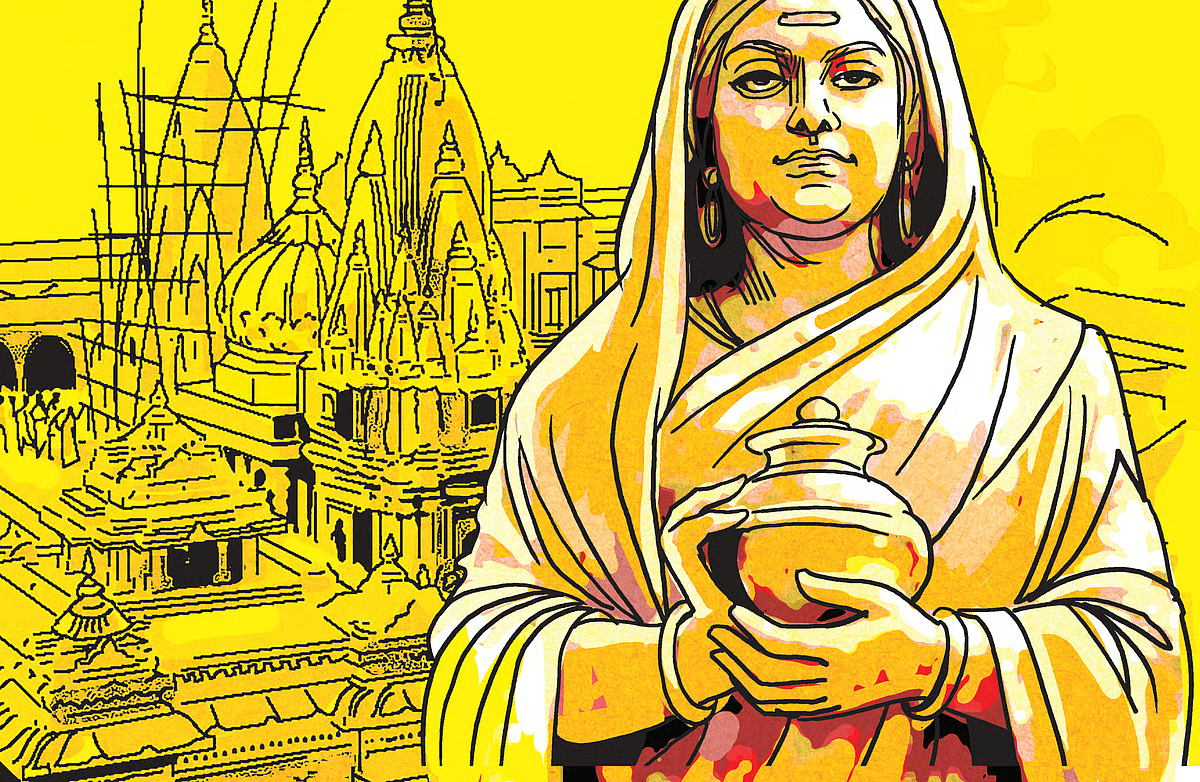

Defining Hindutopia and the Neo-Orientalist Framework
\nA recent article published by The New Indian Express on November 1, 2026, examines the concept of \"Hindutopia\" as a modern Orientalist construct. The piece critiques how contemporary academic labels are applied to Hindu mythology and its role in modern Indian society.
\nThe term \"Hindutopia\" was coined by Portuguese scholar João Pedro Oliveira in a 2025 paper published in the journal South Asian Studies. Oliveira combined the words \"Hindu\" and \"utopia\" to describe a specific literary and cultural phenomenon. His work groups Indian writers of myth-fiction and mythology into a single voice, arguing that they picture a Hindu world that serves the ambitions of the new middle class created by the 1991 economic reforms.
\nThe New Indian Express article argues that this labeling is part of a broader pattern of neo-Orientalism. It asserts that while European scholars historically built labels such as \"primitive,\" \"savage,\" \"civilisation,\" and \"superstition\" to explain India, modern scholarship has simply replaced these terms with new ones. The article states that these historical labels were presented as neutral science, where India supplied the stories, rituals, and people, while Europe supplied the explanation.
\n\nPostmodern Theory and Academic Labeling
\nThe article identifies the current set of labels as emerging from humanities departments in European and American universities shaped by postmodern theory. This school of thought treats \"grand narratives\" as stories built to serve power. According to the text, the modern labels include neoliberalism, nationalism, essentialism, and invented tradition.
\nThe article highlights how postmodern scholars following Michel Foucault have stretched the term \"neoliberalism.\" It states that these scholars use the term to describe the tendency to see people as economic assets. Consequently, they label choices, ambition, and self-improvement in modern retellings of ancient epics as dragging market values into the past.
\nThe article contrasts this with the approach of 19th-century scholars. It asserts that while 19th-century scholars believed their categories were universal, modern scholars hold the same belief by calling the Hindu worldview a \"construction.\" The text notes that modern frameworks require Dharma to be historicized, implying that the spiritual or philosophical aspects are secondary to political or economic interpretations.
\n\nComparisons to Occidentalism
\nTo illustrate the double standard in cultural analysis, the article presents an analogy involving American biblical scholarship. It asks readers to imagine three Americans writing about the Bible in the 21st century: one who reads it literally, another who reads it as a skeptic, and a third who compares its stories with Greek myths.
\nThe article posits that if an Indian professor were to put all three American approaches into one box and declare that White Americans are using Biblical lore to justify the values of Trump’s America, this would be termed \"lazy Occidentalism.\" This is defined as an outsider inventing a picture of the West while pretending to be neutral.
\nThe article states that such Occidentalism rarely happens in reverse. Instead, it claims that the reverse has occurred for 200 years, beginning with European scholars building labels to explain India. The piece argues that while Orientalism has been criticized, it persists today with new labels derived from postmodern theory.
\n\nUniversalism and Local Mythologies
\nThe article draws a distinction between different mythological traditions regarding their scope and intent. It states that Christianity and Islam, built on belief in one God, seek to convert and to be universal.