


Dak Lak Unveils Ambitious Development Blueprint
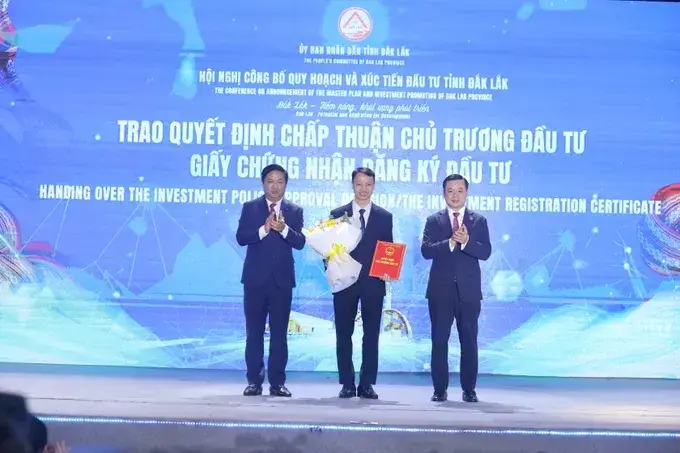
Dak Lak province officially announced its revised provincial master plan for the period spanning 2021-2030, concurrently establishing a long-term development vision that extends through 2050. The significant announcement took place on June 27, coinciding with a major investment promotion conference orchestrated by the Dak Lak Province People’s Committee.
The conference, aptly themed "Dak Lak – Potentiality and Aspiration for Development," served as the primary platform for provincial leaders to articulate the core tenets and strategic directions embedded within the updated planning framework. This comprehensive blueprint is designed to guide the province's socio-economic trajectory over the coming decades, aiming to unlock its inherent potential and steer it towards sustained growth and prosperity.
During the event, Do Huu Huy, Chairman of the Dak Lak Provincial People’s Committee, delivered key remarks. He meticulously presented the province's distinct advantages, which form the bedrock of its development strategy, alongside a curated list of priority investment projects. The revised plan specifically delineates critical sectors earmarked for concentrated development, including high-tech agriculture, processing industries, robust logistics networks, and a thriving tourism sector.
National Leaders Signal Support for Provincial Growth
The investment promotion conference garnered significant attention from the highest echelons of national leadership, underscoring the strategic importance the central government places on Dak Lak's future. Among the distinguished attendees were Politburo Member and Deputy Prime Minister Phan Van Giang, a prominent figure in national policy-making. Also present was Politburo Member and Party Central Committee Secretary Nguyen Thanh Nghi, who holds the influential position of Head of the Central Party Committee's Policy and Strategy Commission.
The presence of such senior government officials, alongside representatives from various central ministries and agencies, was a clear signal of strong national backing for Dak Lak's development agenda. Their attendance at the June 27 event highlighted a crucial alignment between the province's ambitious development goals and broader national policy directives, suggesting integrated support for the master plan's implementation.
In his directive remarks, Deputy Prime Minister Phan Van Giang emphasized Dak Lak's unique geographical advantages, noting that the province possesses "broad development space stretching from the Central Highlands." His comments underscored the region's inherent geographic and economic potential, positioning it as a pivotal area for national growth and investment. This high-level endorsement serves to bolster investor confidence and validate the strategic direction outlined in the revised master plan.
Targeting Key Sectors for Economic Transformation
The revised provincial planning document, formally introduced by local authorities, meticulously identifies several core areas designated for substantial capital injection and infrastructural advancement. These priority sectors are seen as catalysts for transforming Dak Lak's economy and elevating its position within the national landscape.
- High-tech Agriculture: This sector remains a paramount focus, reflecting Dak Lak's historical and current agricultural prominence. The emphasis on "high-tech" signifies a strategic shift towards modernizing production methods, enhancing efficiency, and increasing the value of agricultural output, moving beyond traditional farming practices.
- Processing Industries: Listed as another critical priority, the development of processing industries indicates a clear intent to transition beyond the mere extraction and export of raw materials. This strategic move aims to foster value-added manufacturing within the province, creating more sophisticated products and generating higher economic returns.
- Logistics: Robust logistics networks are highlighted as essential components of the updated roadmap. Improved connectivity and efficient supply chains are crucial for supporting both agricultural and industrial development, facilitating the movement of goods, and integrating Dak Lak more effectively into regional and national economic corridors.
- Tourism Development: Leveraging the province's natural beauty and cultural heritage, tourism is identified as a key growth engine. The plan seeks to develop diverse tourism offerings, attracting both domestic and international visitors, thereby contributing to local economies and creating new employment opportunities.
Fostering an Investor-Friendly Environment
The investment promotion conference was meticulously designed to serve as a compelling showcase of Dak Lak's significant potential advantages, targeting both domestic and international investors. Provincial officials aimed to actively attract capital by presenting a clear, actionable list of priority projects meticulously aligned with the identified key development sectors.
Reports from the event indicated that the gathering successfully drew substantial interest from a diverse array of attendees, representing various investment firms and financial entities. This positive reception underscores the effectiveness of the province's strategy to engage with external capital sources.
Crucially, the province reaffirmed its unwavering commitment to continuously enhancing the business environment. This commitment is a cornerstone of its broader strategy, which aims to provide robust support for businesses, facilitating their rapid growth and ensuring their operations contribute to the province's sustainable development goals. By fostering a predictable, transparent, and supportive regulatory framework, Dak Lak seeks to cultivate an ecosystem where investments can thrive and contribute meaningfully to the local economy.
Strategic Positioning in the Central Highlands
The comprehensive development roadmap for 2021-2030, with its ambitious vision extending to 2050, strategically positions Dak Lak within the broader context of regional and national growth. The province's unique geographic location, particularly its prominent role within the Central Highlands, is cited by Deputy Prime Minister Phan Van Giang as offering "broad development space" and is recognized as a foundational element of this long-term strategy.
Officials at the conference consistently emphasized the profound aspiration for development that is deeply aligned with the province's inherent potentiality. The revised plan is specifically engineered to translate these significant geographic advantages into tangible economic outcomes. This transformation is envisioned through targeted investment across the identified priority sectors: high-tech agriculture, processing industries, enhanced logistics, and dynamic tourism development.
The June 27 announcement of the master plan represents a formal and decisive step in the implementation of this expansive, long-term vision. By meticulously detailing priority sectors and proactively hosting a high-profile investment promotion conference, Dak Lak officials are not merely outlining parameters; they are actively shaping the future economic landscape and defining the trajectory for sustained prosperity in the region for decades to come.