

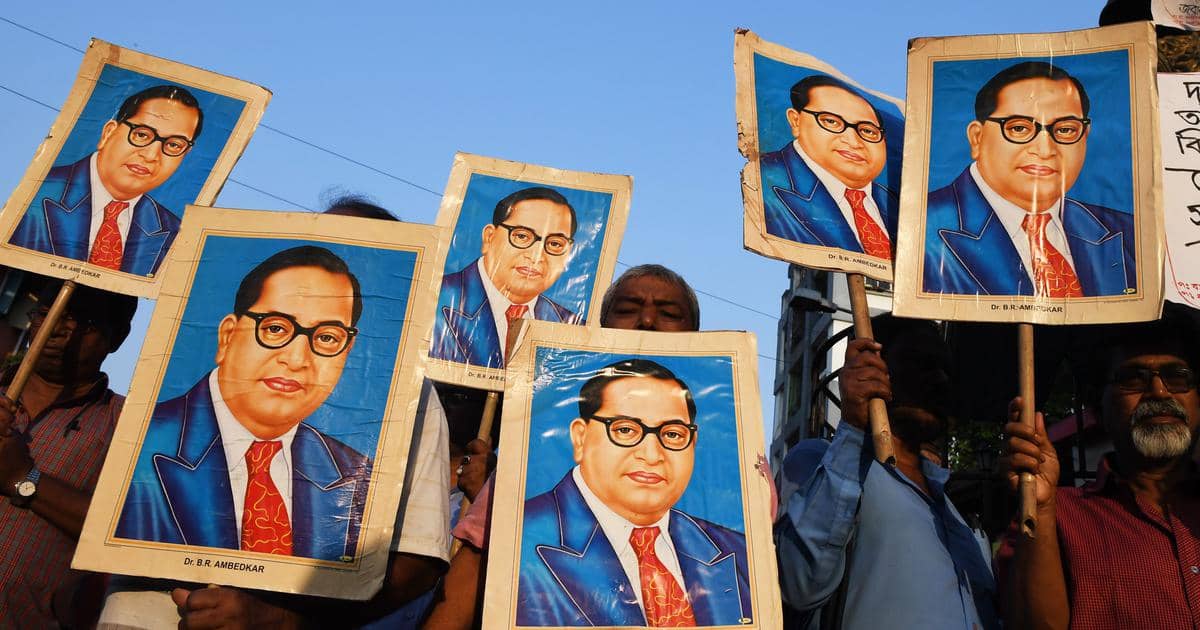

A Defining Moment in Nagpur
Seventy years ago, on October 14, 1956, Dr. B.R. Ambedkar converted to Buddhism in Nagpur, a move that historian Ramachandra Guha describes as striking "a blow against the caste system." The conversion was the culmination of a long political and social campaign aimed at securing equal status for India’s Dalit population.
The event drew massive crowds to the city. A correspondent for the Bombay Chronicle reported that from Friday afternoon, October 12, all incoming trains, buses, and other vehicles were "overcrowded with the followers of Dr Ambedkar" traveling to the ceremony. The newspaper noted in a front-page report the day after the event that "thousands of people almost in unbroken waves had been moving in the p..." toward the site.
Ambedkar formally announced his plans to become a Buddhist, selecting Nagpur as the location due to his large following there. He chose October 14, known as Vijay Dashami, for the occasion. Prior to the ceremony, long lines formed outside Ambedkar’s Scheduled Caste Federation office in Nagpur, where thousands registered to participate.
Origins of the Movement
Ambedkar’s path to conversion began decades earlier, rooted in direct experiences with caste discrimination. In October 1935, upper-caste Hindus in the Gujarati village of Kavitha boycotted untouchables after they asked to admit their children to a local school.
Following the Kavitha incident, Ambedkar stated that "if we were members of another faith none would dare treat us so." He told his followers to "choose any religion which gives you equality of status and treatment." A meeting of the Depressed Classes in Nasik subsequently passed a resolution urging them to leave Hinduism and embrace a religion offering equal status.
Although Ambedkar expressed his intention to sever ties with Hinduism in October 1935, he waited 21 years to act. Guha notes that this delay was due to a desire to consider options carefully as well as preoccupation with political reform and representation.
Evaluating Religious Options
Before settling on Buddhism, Ambedkar considered several other faiths. He rejected overtures from Muslim and Christian missionaries because he determined those religions were not of Indic origin. He briefly considered conversion to Sikhism but found that Sikhs had reproduced the Hindu caste system in their congregations.
From the 1940s, Ambedkar became increasingly attracted to Buddhism, studying and writing about the Buddha and his legacy. This intellectual shift culminated in December 1954, when Ambedkar attended a World Buddhist Conference in Rangoon and decided to embrace Buddhism.
The Delay and the Final Act
Despite this decision, political and social reform activities, along with bouts of ill-health, delayed the actual conversion. During this period, Ambedkar focused on literary work that would underpin his new faith. In May 1956, he completed the book The Buddha and his Dhamma and sent it to printers.
The conversion itself was brief but historically significant. Ambedkar died seven weeks later, leaving unwritten books he had planned to make the religion "respectable to the masses of the country." His decision in Nagpur, however, stood as a permanent challenge to the caste hierarchy, marking a definitive break from the social structures that had excluded him and his followers for generations.