

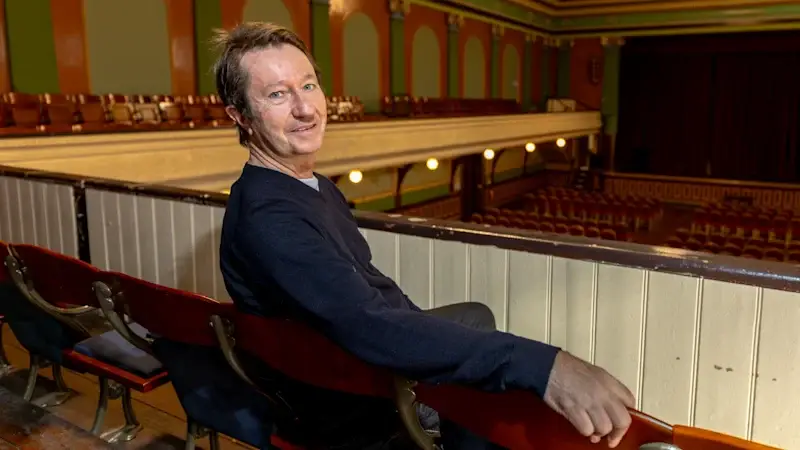

A Political Truce Broken: Kennett Endorses Jolly for Lord Mayor
The decades-long political silence between former Victorian Premier Jeff Kennett and City of Yarra Mayor Stephen Jolly has been formally dissolved. On Tuesday, October 14, 2026, Kennett publicly announced his endorsement of Jolly as a candidate for the upcoming 2028 Lord Mayor of Melbourne election, marking a significant shift in the dynamic between two figures who have historically represented opposing ends of the state's political spectrum.
The announcement came via a post on X, where Kennett described Jolly as an "excellent and attentive Cr and Mayor of Yarra" who "genuinely cares for his community and (is) supportive of business." The endorsement serves as a notable departure from the adversarial relationship that defined much of their respective careers, particularly during Kennett's tenure as premier.
Surprise and Skepticism
Jolly’s reaction to the unexpected support was one of genuine surprise. Speaking to the CBD, he admitted that the initial reception of Kennett’s post was met with disbelief among his inner circle. Jolly noted that his son initially suspected the endorsement was AI-generated, a comment that highlighted the improbability many felt regarding such an alliance.
Despite the public nature of the endorsement, Jolly acknowledged the historical weight of their relationship. He pointed out that while there are fundamental differences between him and Kennett regarding his reign as premier, there is a mutual recognition of local governance realities. Jolly stated that Kennett acknowledges that local council issues are supported by the "vast majority of locals," suggesting a pragmatic alignment on municipal matters despite ideological divides.
Historical Context: The Richmond Secondary College Occupation
The political distance between the two men is rooted in specific historical conflicts. Jolly, known for his background as a unionist and former socialist, was instrumental in organizing a 360-day occupation of Richmond Secondary College in 1992/1993. This prolonged protest was aimed at stopping the school's closure during Kennett’s premiership, an event that cemented their reputations as political opponents.
While the current endorsement signals a thawing of relations, it does not erase this history. Instead, it suggests a maturation in their political engagement, moving from direct confrontation to a more nuanced acknowledgment of each other's roles in public service.
Jolly’s Political Future and Legal Clearance
As Jolly prepares for the 2028 mayoral race, he has clarified his immediate local commitments. He confirmed that he will not run in the Yarra mayoral election in November and will remain as the ward councillor for Fitzroy. This decision allows him to focus on the broader metropolitan contest without abandoning his current constituents.
Jolly also addressed recent legal matters, noting that he was found not guilty by the Melbourne Magistrates’ Court earlier this month of an assault charge stemming from a 2024 local government election after-party. This legal clearance removes a potential obstacle to his political ambitions and allows him to campaign without the distraction of ongoing litigation.
Liberal Party Dynamics
The endorsement has sparked speculation about Jolly’s standing within the Liberal Party, given his past affiliations. Jolly quipped that if every person in the Liberal Party votes for him in two years' time, there would be "quite a lot of them," a remark that underscored the irony of his potential support from a party he has often criticized.
This comment reflects the complex nature of his campaign strategy. While he seeks broad support, including from traditional conservative voters, his base remains rooted in progressive and community-focused politics. The endorsement from Kennett may help bridge this gap, but it also highlights the challenges Jolly faces in uniting disparate political factions.
Implications for Melbourne’s 2028 Election
The 2028 Lord Mayor election is shaping up to be a pivotal moment for Melbourne’s governance. With Kennett’s endorsement, Jolly gains credibility among conservative voters who may have previously dismissed him due to his political history. This could broaden his appeal and provide a strategic advantage in a competitive field.
However, the endorsement also raises questions about the future of local politics in Melbourne. Will this truce signal a broader shift towards bipartisanship in municipal governance? Or is it merely a tactical move by both men to advance their respective interests?
As Jolly continues to navigate his political career, the support from a figure like Kennett will be closely watched. It represents not just a personal reconciliation but a potential turning point in how political alliances are formed and maintained in Melbourne’s evolving landscape.