

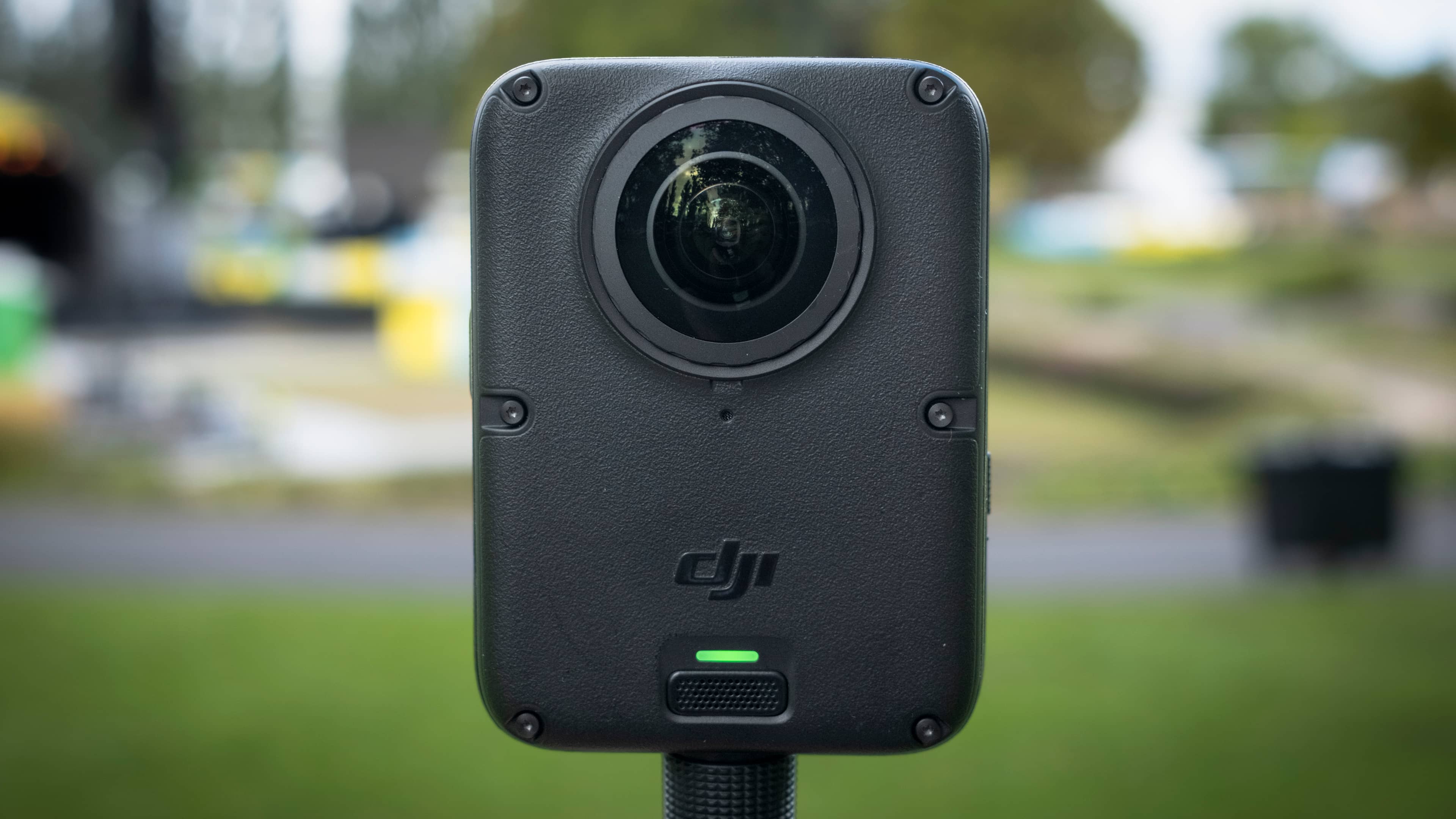

Hardware Specifications and Technical Capabilities
The DJI Osmo 360 II has been identified as a new 360-degree camera featuring specific technical upgrades. According to reporting by CNET contributor Geoffrey Morrison, the device includes replaceable lenses, new image sensors, and the capability to record 8K60 video. These specifications define the core hardware configuration of the unit tested in Berlin.
Morrison, who writes about technology and travel for CNET and The New York Times, conducted a review of the camera while physically located in Berlin. The testing focused on the physical attributes and operational performance of the device. The report indicates that the hardware itself does not present problems. The assessment suggests that the mechanical and electronic components function as intended within the context of the review.
Geographic Availability and Market Restrictions
A primary constraint regarding the DJI Osmo 360 II is its distribution status in North America. The camera will not be available in the United States. This exclusion from the US market is a definitive condition of the product's release cycle, regardless of its technical performance.
The decision to test the device in Berlin was necessitated by this lack of domestic availability. Morrison traveled to the German city specifically to evaluate the hardware because it could not be purchased or tested within the United States. The geographic separation between the testing location and the US consumer market highlights the regional disparity in product access.
Reviewer Context and Methodology
Geoffrey Morrison serves as a contributor for CNET, with additional bylines for The New York Times. His role involves covering technology and travel topics. The review was conducted under the premise that the hardware quality is not the limiting factor for US consumers; rather, the limitation is market availability.
The article notes that CNET’s staff selects products for coverage and conducts rigorous research and testing. The publication states that commissions may be earned if readers purchase items through provided links, a standard disclosure practice for tech reviewers. However, this financial model does not alter the factual statement that the DJI Osmo 360 II is physically present in Berlin for testing purposes.
Implications for International Tech Distribution
The situation with the DJI Osmo 360 II illustrates a scenario where hardware quality and market access are decoupled. The review confirms that the device possesses advanced features such as replaceable lenses and high-resolution video capture. These features are present in the unit tested in Berlin.
Despite the positive assessment of the hardware, the product remains inaccessible to consumers in the United States. The testing in Berlin serves as a proxy for evaluating the device's capabilities for an audience that cannot directly acquire it. The report does not speculate on the reasons for the US exclusion, only stating the fact of its absence from that market.
The review focuses on the technical attributes: replaceable lenses, new image sensors, and 8K60 video support. These elements are confirmed as part of the DJI Osmo 360 II's design. The hardware is described as not problematic in the context of the Berlin test.
Product Positioning
The DJI Osmo 360 II is positioned as a high-specification 360 camera. Its features align with professional or enthusiast-grade equipment, given the inclusion of replaceable lenses and 8K video resolution. However, its availability is restricted to regions outside the United States.
The testing in Berlin provides evidence of the device's physical existence and operational status. The review confirms that the hardware functions correctly in this international setting. The lack of US availability remains a separate issue from the hardware's performance.
Review Scope
Morrison’s article addresses the specific intersection of hardware capability and geographic restriction. It does not offer predictions about future US releases or speculate on trade policies. The facts are limited to the existence of the camera, its technical specs, the location of the test (Berlin), and the confirmed unavailability in the US.
The source material emphasizes that the hardware is not the problem. The issue is defined strictly by market availability. The review provides a factual account of the device's features and the logistical steps taken to evaluate it outside its primary target markets.