


A Digital Dialogue Unfolds at Roosevelt's New Library
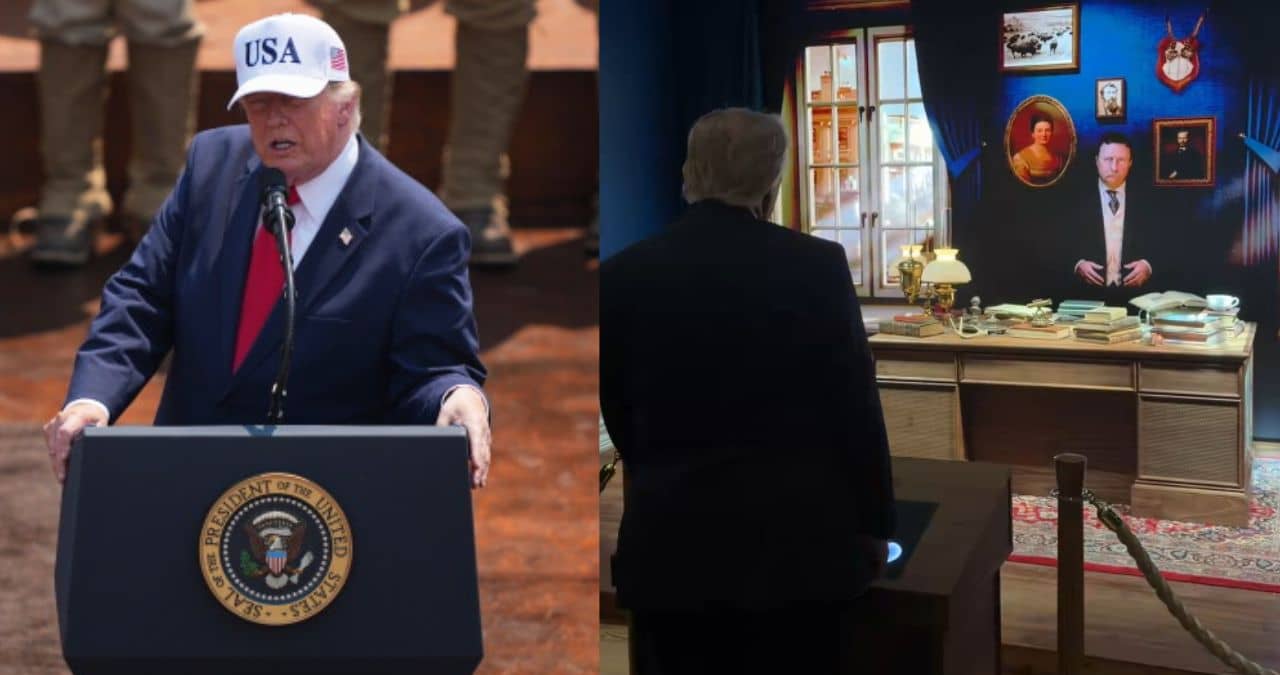
Former President Donald Trump engaged in a unique interaction with a representation of Theodore Roosevelt, who passed away in 1919. This encounter was not a physical meeting or a holographic projection, as some initial reports might have suggested, but rather a sophisticated conversation facilitated by an artificial intelligence-powered version of the 26th U.S. President.
The AI Interaction and its Setting
The event took place during the grand opening of the Theodore Roosevelt Presidential Library in North Dakota, specifically on July 2, 2026. This location holds particular significance, as the Badlands region of North Dakota was deeply influential in Roosevelt's life, shaping his character and his later commitment to conservation. The inauguration of a library dedicated to his legacy provided a poignant, albeit technologically advanced, backdrop for this simulated dialogue.
During the AI-powered conversation, President Trump posed specific questions to the digital Roosevelt concerning historical events and achievements. One notable query involved Trump asking if the artificial intelligence version considered the Panama Canal to be Roosevelt's greatest accomplishment. This interaction showcased how modern technology can enable contemporary leaders to simulate discussions with predecessors who have been deceased for over a century, offering a novel way to engage with historical figures and their legacies.
Bridging Eras for America's 250th Anniversary
The entire occasion was framed as a key component of America’s 250th anniversary celebrations, a nationwide commemoration of the nation's founding. Organizers referred to it as the "bicentennial plus fifty years anniversary," emphasizing a blend of historical reflection and forward-looking technological engagement. The event was designed not only to honor the past but also to inspire younger audiences and maintain reverence for historical figures who shaped national policy during critical periods in American history, utilizing advanced AI to bridge the gap between eras.
The spectacle, combining cutting-edge AI with historical tribute, immediately generated significant online discussion. Observers were left to ponder whether they were witnessing a genuine historical moment unfold or participating in a meticulously staged theatrical performance for political effect. The scene, described by some as feeling "straight out of a political fever dream," underscored the evolving nature of public engagement with history in the digital age.
Patriotic Pageantry in the Badlands Landscape
Beyond the AI interaction, the event was characterized by a grand display of patriotic pageantry, deeply rooted in American symbolism and the rugged landscape of North Dakota. The festivities were designed to evoke a sense of national pride and historical continuity, albeit with a distinctly modern political flavor.
The "Freedom 250" Train Journey
A central element of the elaborate display was a red-white-and-blue train, aptly named the "Freedom 250." Former President Trump embarked on a journey aboard this train, traversing the rugged and iconic Badlands landscape. This journey was presented by event organizers and observers as echoing Theodore Roosevelt’s own frontier-era travels and his profound connection to the American West. The sight of the patriotic train winding through the natural beauty of the Badlands, accompanied by blasting music, waving flags, and cheering crowds chanting "USA! USA!," created an immersive and highly charged atmosphere.
Rough Riders Reenactment and Modern Messaging
Adding another layer of historical reenactment and visual narrative were horseback riders dressed as Roosevelt’s famed Rough Riders. These performers rode through the Badlands during the ceremony, recreating the imagery of a bygone era. The inclusion of the Rough Riders, a volunteer cavalry unit led by Roosevelt during the Spanish-American War, served to visually connect the event to Roosevelt's adventurous spirit and military service. Critics, however, noted that this historical reenactment was presented with a "distinctly modern political twist," blending elements of historical tribute with contemporary political messaging.
The combination of these various elements—the AI dialogue, the patriotic train journey, and the Rough Riders reenactment—created an atmosphere that many observers characterized as bizarre, given Roosevelt’s death in 1919. The internet was abuzz with talking points focusing heavily on the surreal experience of a former president seemingly conversing with someone who had been deceased for more than a century, all while riding through a landscape so central to Roosevelt's own legend.
Public Reactions and the Blurring of Historical Lines
The moment instantly went viral across social media platforms following its broadcast, disseminating rapidly after the event took place in North Dakota. The immediate and widespread online discussion highlighted a broader societal debate about the nature and implications of such technological demonstrations, particularly when applied to historical figures.
Online Discourse and the "History or Theater" Debate
Many observers expressed profound confusion regarding whether they were witnessing a genuine historical engagement or a carefully orchestrated piece of political theater. This sentiment reflected a deeper public grappling with the boundaries between factual representation and technologically enhanced, potentially fictionalized, portrayals of past leaders. The rapid spread of images and clips fueled conversations about authenticity, historical accuracy, and the role of AI in public life.
Critics and Supporters Weigh In
Critics of the event and the use of artificial intelligence in this manner raised significant questions about the ethical implications. They argued that such practices blur the line between factual historical accounts and fictionalized or manipulated portrayals, potentially leading to a distorted understanding of history. Concerns were voiced about the potential for AI to be used to create narratives that serve contemporary political agendas rather than purely educational or commemorative purposes.
Conversely, supporters of the initiative suggested that it offered an innovative and respectful way to honor Theodore Roosevelt’s legacy. They posited that allowing new generations to engage directly with his recorded words and simulated responses through advanced technology could serve as a powerful educational tool. Organizers, in particular, framed the artificial intelligence interaction as a means to inspire younger audiences and maintain reverence for historical figures who have profoundly shaped the nation's trajectory during critical periods in American history, presenting it as a forward-thinking approach to historical commemoration.