

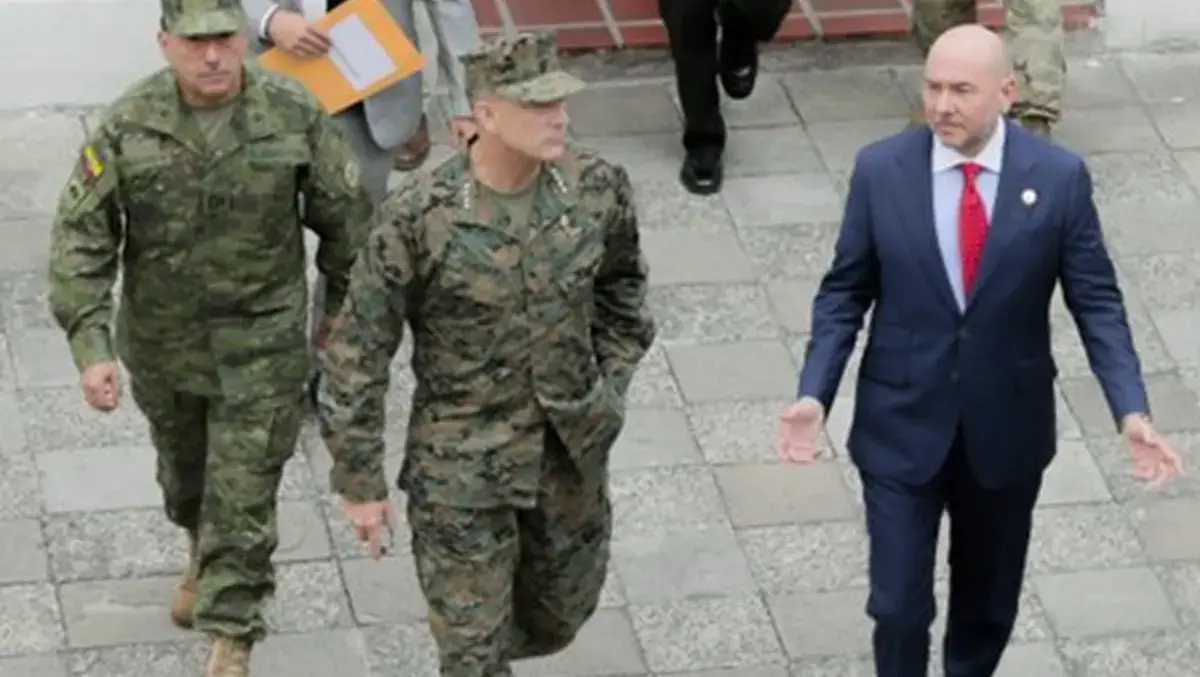

Ministers Meet in Quito to Coordinate Security Strategy
Ecuadorian Defense Minister Gian Carlo Loffredo and U.S. Southern Command (SouthCom) Commander Gen. Francis Donovan held a meeting on Tuesday to discuss the strengthening of joint actions against drug trafficking and transnational organized crime. The discussions took place in Quito, with Ecuadorian Armed Forces Joint Command chief Gen. Henry Delgado also in attendance.
During the meeting, officials addressed new rules established for the temporary entry of U.S. military personnel and contractors into Ecuador. These regulatory measures are part of the broader framework governing the presence of foreign forces within the Andean nation's borders.
Ecuadorian authorities stated that the alliance aims to enhance capabilities, intelligence, and cooperation to combat mafias and protect citizens. In a statement regarding the partnership, officials noted, "This alliance allows us to add capabilities, intelligence and cooperation to hit the mafias harder and protect those who matter most: our families." The government emphasized that the primary objective of these joint operations is the protection of Ecuadorian families and the reduction of criminal influence within the country.
Integration Into Regional Coalition Against Cartels
The meeting occurred two weeks after SouthCom launched the Western Hemisphere Joint Task Force. This initiative involves 18 countries that make up the Coalition Against the Cartels of the Americas. The task force was established to coordinate regional efforts against organized criminal networks operating across the hemisphere.
Ecuador's participation in these joint operations follows its entry into the Americas Shield coalition in March. Also known as the Americas Shield, this alliance is promoted by the United States with several countries in the region to supposedly strengthen cooperation on security and the fight against transnational organized crime. Ecuador joined the coalition as part of a broader effort to bolster regional security cooperation.
Operational Context and Internal Conflict
The Andean country has maintained an "internal armed conflict" status, which has influenced its approach to security partnerships. The establishment of new rules for U.S. military personnel and contractors reflects the complex legal and operational environment in which these joint actions must take place.
Gen. Francis Donovan and Gen. Henry Delgado participated in the discussions alongside Minister Loffredo, signaling high-level military coordination between the two nations. The focus of their dialogue centered on how to effectively utilize shared intelligence and enhanced capabilities to address the threat posed by transnational criminal organizations.
The timing of the meeting underscores the urgency of these security measures. With the recent launch of the Western Hemisphere Joint Task Force, Ecuador is aligning its domestic security strategies with broader regional initiatives aimed at dismantling cartels. The new entry rules for U.S. personnel provide a structured mechanism for American forces to support these objectives within Ecuadorian territory.
Officials from both sides indicated that the strengthened alliance is intended to directly impact the operational capacity of criminal groups. By combining Ecuadorian intelligence with U.S. capabilities, authorities aim to disrupt supply chains and leadership structures within drug trafficking networks.
The involvement of Gen. Henry Delgado, head of the Armed Forces Joint Command, ensures that military protocols are integrated into the joint planning process. His presence at the Quito meeting highlights the operational nature of the discussions, which moved beyond diplomatic statements to address concrete security arrangements.
As the Americas Shield coalition continues to expand its activities, Ecuador's role within the group remains a focal point for regional security analysts. The country's entry in March marked a significant shift in its foreign policy regarding security alliances, moving toward closer integration with U.S.-led initiatives.
The new rules for temporary entry of U.S. military personnel and contractors are expected to facilitate more frequent and coordinated operations. These regulations define the scope and duration of American presence, ensuring that joint actions comply with Ecuadorian legal standards while achieving shared security goals.
SouthCom's launch of the Western Hemisphere Joint Task Force represents a broader strategic effort to counter transnational organized crime across the Americas. Ecuador's participation in this task force, alongside 17 other nations, demonstrates a collective approach to addressing regional security threats.
The discussions between Loffredo and Donovan reflect a continued commitment to deepening bilateral ties. By focusing on joint actions against drug trafficking, both governments are prioritizing the dismantling of criminal infrastructure that threatens national stability.
As operations proceed under the Americas Shield framework, Ecuadorian authorities remain focused on the protection of citizens. The stated goal of hitting mafias harder is intended to reduce violence and restore security in areas affected by organized crime.