

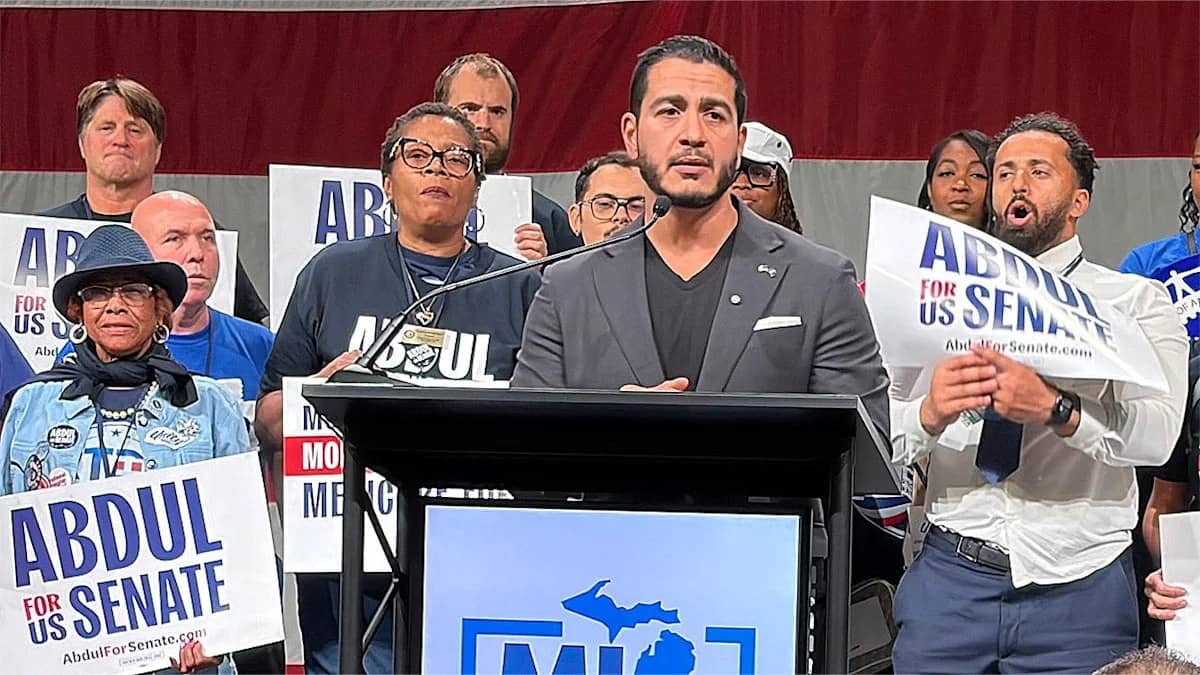

El-Sayed Seeks Reconciliation with Jewish Democrats
Abdul El-Sayed, the Democratic nominee for the U.S. Senate in Michigan, engaged in a significant outreach effort this past weekend, meeting with members of the Michigan Democrats' Jewish Caucus. The purpose of the gathering was to address and mitigate concerns stemming from public statements El-Sayed had previously made. During the Saturday appearance, El-Sayed offered an apology specifically for remarks he issued following a March attack on a suburban Detroit synagogue.
This meeting represented a deliberate step by El-Sayed's campaign to mend and strengthen relationships with Jewish Democratic voters across the state. The apology, delivered directly to the caucus, was also reiterated in a subsequent statement provided to Fox News Digital, underscoring the candidate's intent to clarify his position and express regret for the impact of his earlier comments related to the synagogue incident. The effort highlights the importance of maintaining broad coalition support within the Democratic Party, especially in a crucial swing state like Michigan.
Stance on Hasan Piker Draws Further Scrutiny
While El-Sayed demonstrated a willingness to apologize for his own past comments concerning the synagogue attack, he maintained a firm boundary when confronted with questions about repudiating controversial statements made by Hasan Piker. Piker, a prominent left-wing streamer, has been a vocal and visible supporter of El-Sayed’s Senate campaign, making his association a point of contention in the political landscape.
When pressed on whether he would distance himself from Piker’s more contentious remarks, El-Sayed explicitly declined the request. He chose not to disavow the streamer, indicating a continued endorsement of Piker despite the public controversy surrounding the streamer’s online content and political commentary. This decision immediately created a stark contrast with his efforts to reconcile with the Jewish Caucus, suggesting a nuanced and potentially challenging position for his campaign regarding his alliances and public messaging.
The refusal to repudiate Piker's comments has drawn attention to the complexities of El-Sayed's progressive coalition. For some, maintaining support for a controversial figure, even while apologizing for one's own past remarks, signals an inconsistency or a prioritization of certain political alliances over others. This dynamic is particularly relevant given the sensitive nature of the issues at play, including discussions around antisemitism and criticism of Israeli policy, which are often central to the concerns of the Jewish Caucus.
Republican Rival Calls Apology a "Sham"
The actions and statements from El-Sayed quickly drew sharp criticism from his Republican opponent, Mike Rogers. Rogers, a former U.S. Representative and the Republican nominee for the open Senate seat, publicly dismissed El-Sayed’s outreach to the Jewish Caucus as a "sham apology." Rogers argued that El-Sayed’s gesture did not represent a genuine rejection of antisemitism or other forms of problematic rhetoric, especially in light of his continued association with Hasan Piker and his broader stance on international issues.
Rogers’ critique is a strategic move, aiming to highlight what he perceives as a fundamental flaw in El-Sayed’s approach to sensitive issues. The Republican campaign has consistently sought to draw attention to El-Sayed’s broader political leanings and associations. El-Sayed has been identified as a vocal critic of Israel, notably characterizing its military actions against Hamas in Gaza as "genocide." This strong stance has been a recurring point of scrutiny from opponents, who often link such views to broader concerns about antisemitism, particularly in the context of the ongoing conflict and its impact on American foreign policy debates.
The tension between the two candidates extends beyond individual comments, encompassing their respective ties to controversial figures and their differing stances on the complex geopolitical issues surrounding Israel and Gaza. Rogers' campaign appears poised to continue leveraging these points, framing El-Sayed's refusal to disavow Piker as evidence that his apology to the Jewish Caucus lacks sincerity and depth, thereby attempting to undermine El-Sayed's credibility with a wider electorate.
Michigan's Pivotal Senate Race
A National Battleground
The contest between Abdul El-Sayed and Mike Rogers for Michigan's open Senate seat is shaping up to be one of the most closely watched and nationally significant races in the upcoming midterm elections. This particular Senate seat is considered crucial for Democrats, who are actively working to regain control of the chamber. The outcome in Michigan could therefore have profound implications for the balance of power in Washington, making it a focal point of national political attention and investment from both parties.
The stakes are exceptionally high in a state like Michigan, which is often seen as a bellwether for national political trends. The state's diverse electorate and its history of competitive statewide races mean that every campaign decision, every public statement, and every controversy is scrutinized not just locally, but also by national political strategists and media outlets, all keenly aware of the race's potential to swing the Senate majority.
El-Sayed's Path to Nomination
El-Sayed’s journey to becoming the Democratic nominee was itself a testament to the ideological complexities within the party. He secured the nomination through a narrow victory over Rep. Haley Stevens, who is generally described as holding more moderate political positions compared to El-Sayed. This close intraparty showdown underscored the significant ideological diversity present within Michigan’s Democratic coalition, a factor that could influence general election unity and turnout as the party seeks to consolidate support around its nominee.
The primary result highlighted the challenge for El-Sayed to unify different factions of the Democratic base, from progressives who align with his critical stance on Israel and his broader left-wing views, to more moderate voters who might be wary of controversial associations. His current efforts to reconcile with Jewish Democrats while simultaneously maintaining support for figures like Hasan Piker exemplify this ongoing balancing act required to navigate the diverse interests within his party.
Campaign Narratives and Future Debates
As the Senate race progresses, the debate over El-Sayed’s associations and his comments on Israel continues to be a central and defining theme. Rogers has consistently used the streamer controversy and El-Sayed’s refusal to repudiate Piker as key points of attack, aiming to paint his opponent as out of step with mainstream Michigan voters or as holding views that are too extreme. These attacks are designed to peel away moderate and independent voters, as well as potentially disaffected Democratic segments, by emphasizing perceived radicalism.
Conversely, El-Sayed's campaign strategy involves drawing a clear distinction between his personal apology for remarks related to the synagogue attack and his broader support for campaign allies and his right to express his views on international policy. He aims to frame his apology as a sincere act of reconciliation, while simultaneously defending his political alliances and his critical perspective on Israeli actions, which resonates with a segment of the progressive base and aligns with his established political identity.
The ongoing tension surrounding these issues ensures that the Michigan Senate race will remain a dynamic and closely contested battle, with both candidates attempting to define the narrative and appeal to a broad, yet often divided, electorate in a state critical to national political control.