

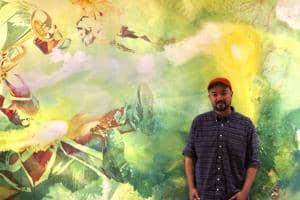

Defining Early Memories Shape Street Artist Perspective
EASTON — Local visual artist Esteban del Valle identifies two distinct moments from his childhood that serve as defining first memories regarding the nature of art. One memory involves viewing Vincent van Gogh's painting titled "The Bedroom" while standing before a museum wall. The second memory centers on observing a graffiti mural painted outside the window of his mother's car.
According to del Valle, these two specific experiences represent formative influences that have directly impacted his subsequent street art practice. He notes that seeing the famous Impressionist work in an institutional setting provided one foundational perspective on composition and color theory within a traditional gallery environment. Conversely, witnessing the unauthorized mural through the vehicle window offered a contrasting lesson regarding public space, accessibility, and the raw immediacy of urban expression.
In discussing these memories with The Star Democrat, del Valle emphasized that both instances occurred early in his life before he fully developed as an artist. He stated that the juxtaposition between the curated experience of high art and the spontaneous nature of street graffiti created a duality within his artistic identity. This dual influence is evident in how he approaches mural creation today.
Del Valle explained to reporters that while "The Bedroom" taught him about structure, the car window view introduced him to the concept of art as an intervention in daily life for passersby. He described these moments not merely as nostalgic recollections but as active components guiding his current creative decisions. The artist indicated that understanding both contexts allows him to navigate the expectations of traditional patrons while maintaining the rebellious spirit associated with graffiti culture.
Exploring What Constitutes Great Art in Public Spaces
Beyond personal history, del Valle addresses broader questions regarding aesthetic value and public reception. He speaks on what makes great art within the context of street murals versus gallery pieces. According to his statements during the interview, the definition of greatness often hinges on how an artwork resonates with its audience rather than solely adhering to technical perfection or historical precedent.
He noted that a mural viewed from a car window possesses a different kind of impact compared to one hung in a museum. Del Valle suggested that public art must communicate effectively across distances and withstand environmental elements, requiring distinct skills from those needed for canvas work. He attributed the power of such works to their ability to enter private moments—like driving home or commuting—and offer visual engagement without invitation.
The artist also touched upon how viewers interpret these images differently depending on their proximity and familiarity with the location. A mural seen briefly through a rearview mirror might hold different significance for one person than another who spends hours walking past it. Del Valle indicated that this variability in viewer experience is intrinsic to street art, distinguishing it from static displays where viewing conditions are controlled.
During the conversation about artistic merit, del Valle avoided ranking his own work against historical masters or contemporary peers. Instead, he focused on describing the intent behind specific pieces and how they function within their communities. He stated that great art in this medium often serves a narrative purpose for local residents while remaining open to interpretation by outsiders.
Artistic Identity Through Diverse Influences
Easton-based del Valle continues to draw upon these early lessons as he executes new commissions and independent projects. He maintains that the tension between formal training represented by "The Bedroom" and informal learning derived from graffiti culture remains a productive force in his career.
He expressed no intention of choosing one influence over the other, noting instead that blending elements from both worlds allows for greater creative flexibility. Del Valle remarked that acknowledging these origins helps him remain grounded while pursuing ambitious projects that might otherwise seem disconnected from his roots.
The discussion concluded with del Valle reiterating how these formative memories continue to inform his approach to color selection, line weight, and subject matter choice in recent works. He did not speculate on future exhibitions or sales but focused entirely on the process of creation as influenced by those initial encounters with art history and street culture.