

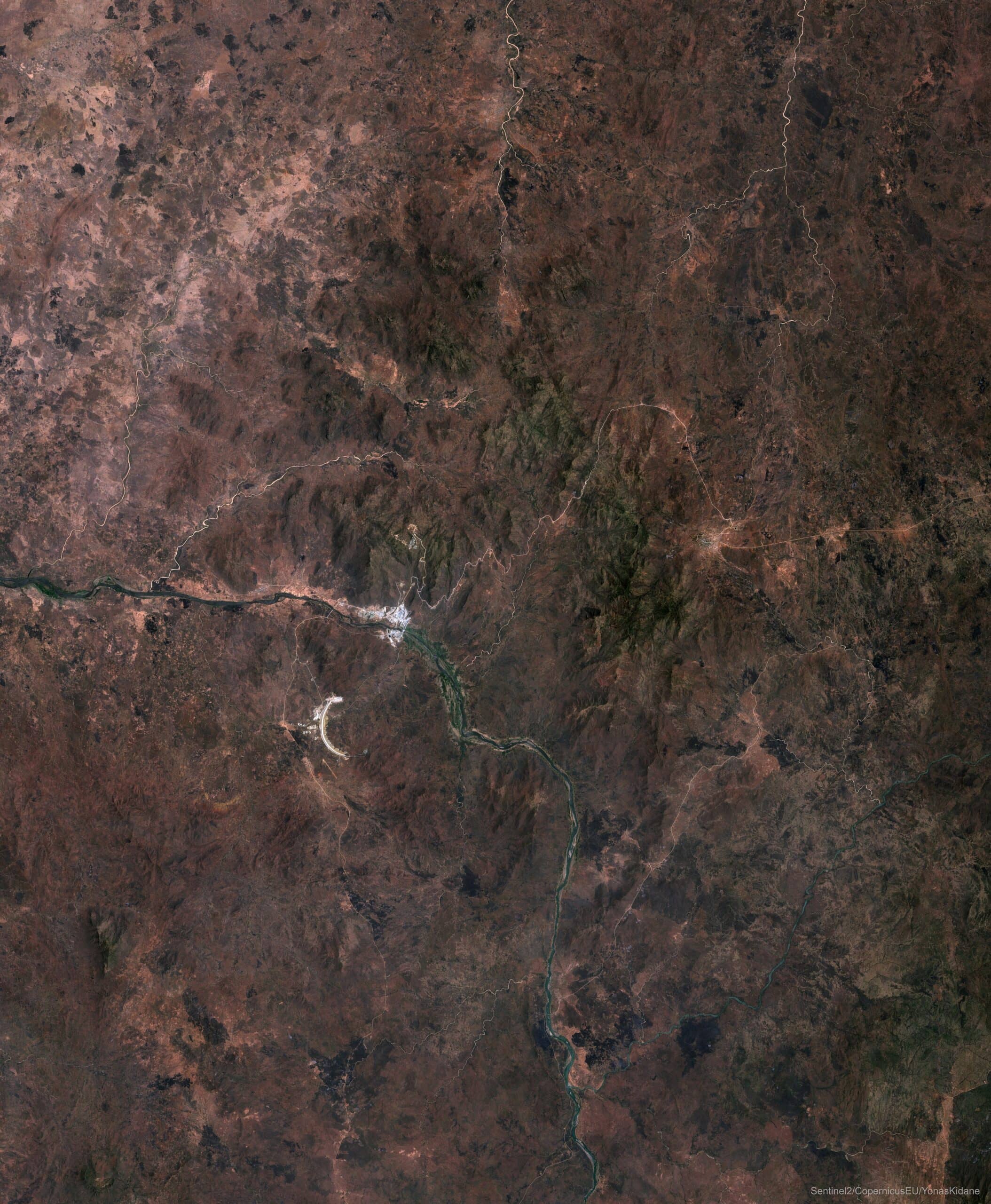

Announcement of $10.5 Billion Dam Expansion
Ethiopia has formally outlined plans to construct three new dams on the Blue Nile river. These proposed structures are located upstream from the Grand Ethiopian Renaissance Dam (GERD), which is currently the largest hydroelectric project in Africa. The Ethiopian government estimates that the total cost for this new infrastructure initiative will reach $10.5 billion.
The announcement marks a significant escalation in Addis Ababa's hydraulic development strategy along the Blue Nile, which serves as the primary source of water for the GERD. By positioning these new projects upstream of the existing dam complex, Ethiopia is expanding its control over the river's flow before it reaches downstream territories.
Ethiopia's Hydro-Development Vision
The $10.5 billion investment underscores Ethiopia's ambitious long-term strategy to harness its abundant water resources for economic development and energy independence. The Blue Nile, originating in the Ethiopian highlands, represents a critical asset for the nation's growth aspirations, particularly in the realm of hydroelectric power generation. This expansion is seen by Addis Ababa as a continuation of its sovereign right to develop natural resources to meet the energy demands of its growing population and industries.
The scale of this new investment, following the completion of the GERD, signals a sustained commitment to transforming Ethiopia into a major power exporter in East Africa. The additional dams are expected to further stabilize power generation, enhance water management capabilities within Ethiopia, and potentially provide more consistent flow regulation for the GERD itself, thereby maximizing its efficiency.
Strategic Positioning Upstream
The geographical placement of the new dams is a critical factor in the ongoing regional dynamics. Situated above the GERD, these structures will allow Ethiopia to regulate water levels and generation capacity further upstream than previously possible. This expansion adds another layer of complexity to the management of the Blue Nile's resources, which are vital for both hydropower generation and agricultural use across the region.
By controlling the flow at multiple points along the Blue Nile, Ethiopia gains enhanced operational flexibility. This upstream control could enable more precise water allocation for its own agricultural projects and ensure a more consistent water supply for its burgeoning hydropower sector. For downstream nations, however, this increased upstream control raises concerns about potential alterations to the natural flow regime and its implications for their water security.
Egypt’s Alarm Over Water Security
The announcement has triggered immediate concern in Cairo. Egypt relies on the Nile River for nearly all of its water supply, making any changes to the river's flow a matter of national survival. Egyptian officials have viewed the expansion of dam construction by Ethiopia with alarm, citing potential threats to their agricultural and drinking water supplies.
The downstream nation’s reaction underscores the high stakes involved in the hydro-politics of the Nile Basin. For Egypt, the Blue Nile is not merely a geographic feature but the lifeline of its population and economy. Any reduction in flow or alteration of seasonal patterns caused by upstream damming operations is perceived as an existential risk.
Historical Reliance on the Nile
Egypt's dependence on the Nile is deeply embedded in its history, culture, and economy. For millennia, the river has sustained its civilization, providing the water necessary for agriculture, industry, and domestic consumption. With over 97% of its renewable water resources originating from the Nile, Egypt's vulnerability to upstream developments is profound. The construction of additional dams by Ethiopia, particularly on the Blue Nile which contributes the majority of the Nile's flow, directly impacts this critical dependency.
Egyptian concerns stem from the potential for reduced water availability, which could devastate its agricultural sector, jeopardize food security, and impact the livelihoods of millions. The prospect of further regulation of the river's flow upstream raises fears of diminished water levels in the Aswan High Dam reservoir, which is crucial for Egypt's power generation and irrigation systems.
Intensification of the Water Dispute
The development of these new dams has intensified the long-standing water dispute between Ethiopia and Egypt. While negotiations regarding the filling and operation of the GERD have been ongoing for years, the addition of three more potential barriers on the same tributary complicates diplomatic efforts to reach a binding agreement. The existing dispute over the GERD has already seen numerous rounds of talks falter, highlighting the deep divisions between the two nations.
Egyptian authorities argue that unilateral actions by upstream countries can have detrimental effects on downstream water availability. The new $10.5 billion investment signals Ethiopia’s continued commitment to maximizing its hydroelectric potential, even as it faces diplomatic pressure from neighbors who fear the consequences of reduced river flow. This move is interpreted in Cairo as a further assertion of Ethiopia's control, potentially diminishing Egypt's historical water rights.
Regional Implications and Diplomatic Tensions
The standoff between the two nations is rooted in differing interpretations of water rights and historical usage. Ethiopia asserts its sovereign right to develop its natural resources for economic growth, while Egypt invokes historical treaties that guarantee it a specific share of the Nile’s waters. These divergent perspectives have consistently hampered efforts to find common ground.
As Ethiopia moves forward with its $10.5 billion plan, the diplomatic channels between Addis Ababa and Cairo remain strained. The construction of these new dams, if realized, would represent the most significant change in the Blue Nile’s infrastructure since the start of the GERD project, further solidifying Ethiopia’s position as a major hydro-power producer while deepening Egypt’s sense of vulnerability.
Contrasting Claims to Nile Waters
Ethiopia's position emphasizes its right as an upstream riparian state to utilize its natural resources for the benefit of its population, many of whom lack access to electricity. This perspective prioritizes development and poverty alleviation through projects like hydropower dams. Conversely, Egypt bases its claims on historical agreements, including colonial-era treaties, which it views as establishing its acquired rights to a substantial share of the Nile's waters, essential for its survival.
This fundamental disagreement over the legal and ethical framework for water allocation has prevented a comprehensive, mutually agreeable solution. The new dam projects exacerbate this tension, as Egypt perceives them as a further erosion of its historical water entitlements and a threat to its national security.
Future of Regional Hydro-Politics
International observers note that the resolution of this dispute requires not only technical agreements on water flow but also trust-building measures between the two riparian states. The current trajectory, marked by Ethiopian infrastructure expansion and Egyptian apprehension, suggests that the water conflict will remain a central issue in East African geopolitics for the foreseeable future. The implications extend beyond water management, touching upon regional stability, economic cooperation, and diplomatic relations across the Nile Basin.
The ongoing developments highlight the urgent need for a cooperative framework that balances the development aspirations of upstream nations with the water security concerns of downstream countries. Without such a framework, the Blue Nile, a source of life for millions, risks becoming a persistent point of contention, influencing the broader geopolitical landscape of the region.