Full story
Investment Package Unveiled in Nuuk
NUUK -- European Commission President Ursula von der Leyen announced plans on Monday for €200 million ($232 million) in investments directed toward Greenland, a move designed to strengthen ties with the Danish Arctic territory. The announcement came as part of a broader effort by the European Union to solidify its presence in the region following expressions of interest from the United States regarding the island's sovereignty.
Von der Leyen arrived in Greenland on Sunday for a two-day visit. The purpose of the trip was explicitly stated as a show of support for the governments of both Greenland and Denmark. This diplomatic gesture follows a period of heightened tension after U.S. President Donald Trump insisted that Greenland should belong to the United States, a proposal that has been strongly rebuffed by the governments in Copenhagen and Nuuk.
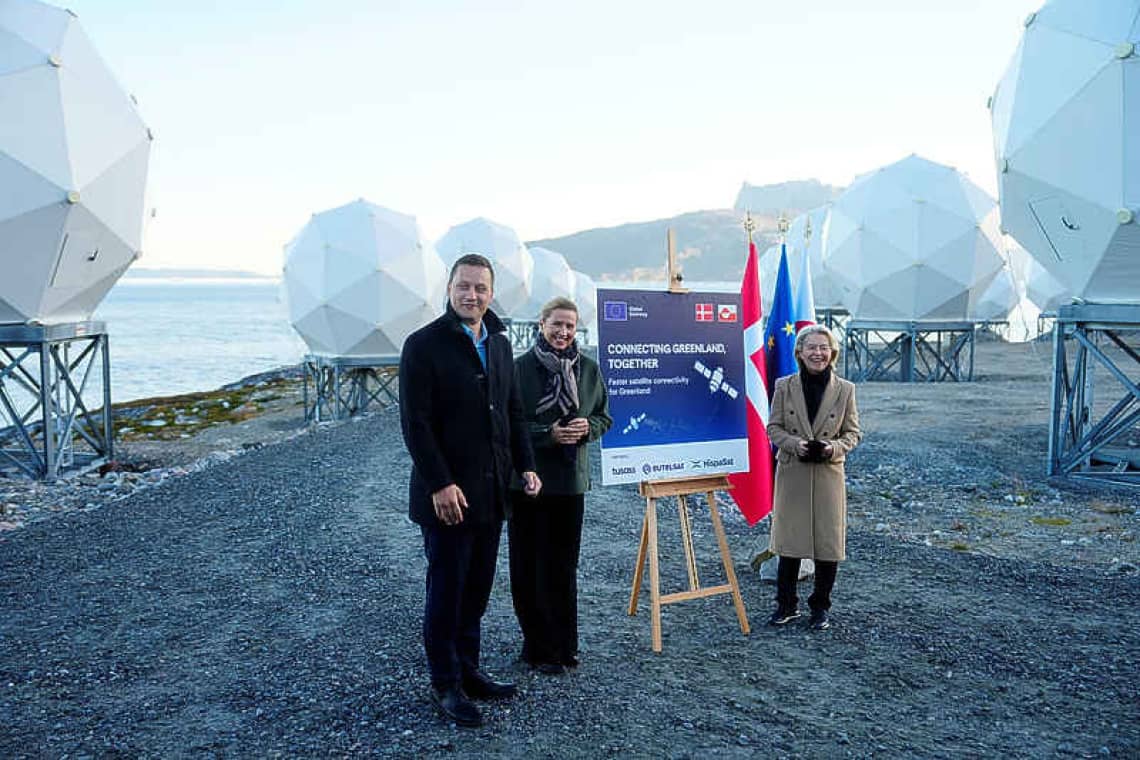
The European Commission head described the financial commitment as part of a new partnership with the territory. The funding is designated to target specific economic sectors within Greenland. According to von der Leyen, the EU money will focus on critical minerals, satellite communications, and renewable energy projects. These areas were selected to support local development while reinforcing the island's strategic infrastructure.
Greenland is described as a semi-autonomous part of the Danish realm. The territory has long held a unique geopolitical position due to its vast natural resources and location in the Arctic. The EU's financial pledge represents a significant increase in direct economic engagement with the region, aiming to provide an alternative to potential American influence.
Diplomatic Reactions and Sovereignty Stance
The visit by von der Leyen occurred against the backdrop of ongoing diplomatic friction between the European Union and the United States. President Trump’s campaign to acquire Greenland has been a point of contention in international relations. The governments of Greenland and Denmark have rejected the acquisition proposal, maintaining that the territory remains under Danish sovereignty with self-governing powers.
Von der Leyen stated that the EU's actions are intended to reassure Greenland of its partners' commitment to its future. The European Union views Greenland as a critical partner in Arctic policy and resource security. By directing funds toward renewable energy and satellite communications, the EU aims to support sustainable development and technological advancement in the region.
The investment package does not include direct political integration or changes to the current constitutional status of Greenland. Instead, it focuses on economic cooperation and infrastructure development. The €200 million figure was specified as a total commitment for the initial phase of this partnership.
Critics of the U.S. position have pointed to the EU's move as a counterbalance to American expansionism in the Arctic. However, official statements from the European Commission avoided direct criticism of the United States, focusing instead on the benefits of the new partnership for Greenland. The EU emphasized that the investment is voluntary and based on mutual interest.
Strategic Implications for the Arctic
The focus on critical minerals highlights the strategic importance of Greenland's natural resources. The island holds significant deposits of rare earth elements, which are essential for high-tech industries and defense applications. By investing in this sector, the EU seeks to diversify its supply chains away from other global powers.
Satellite communications represent another key area of interest. As Arctic shipping routes become more accessible due to climate change, the need for reliable communication infrastructure increases. The EU's involvement in this sector aims to improve connectivity and safety for maritime activities in the region.
Renewable energy investments align with the EU's broader climate goals. Greenland possesses substantial potential for hydroelectric and wind power generation. The funding will support projects that reduce reliance on imported fossil fuels and promote local energy independence.
The visit by von der Leyen underscores the EU's willingness to engage directly with semi-autonomous territories. It signals a shift in European foreign policy toward more active economic diplomacy in the Arctic. The outcome of this partnership will depend on the continued cooperation between Greenland, Denmark, and EU member states.
No immediate response from the White House regarding the EU's investment announcement was available at the time of reporting. The U.S. administration has not commented on the specific details of the €200 million package. Diplomatic channels remain open for further discussions on Arctic policy between all parties involved.