


Inaugural Asian Edition Opens in Bangkok
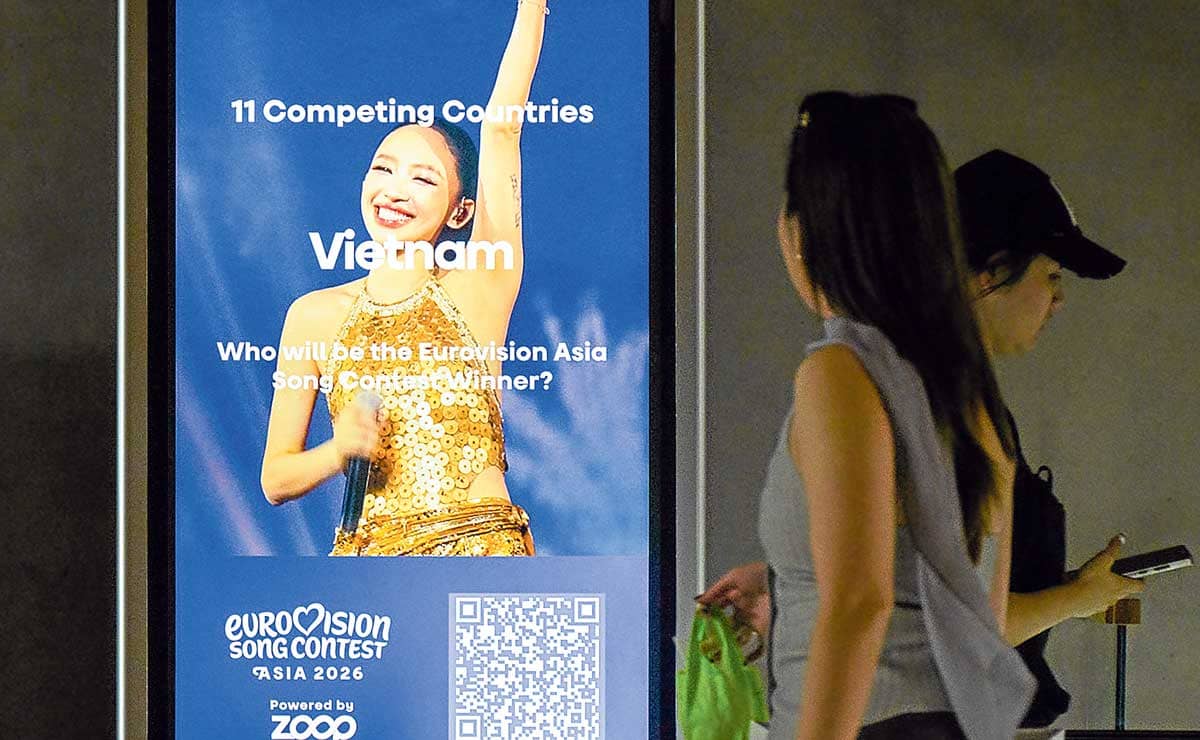
\nThe first-ever Eurovision Song Contest Asia is set to begin on Saturday in Bangkok, Thailand, marking the European song contest’s expansion into the world’s most populous region. Eleven countries are competing in the inaugural event, with participants ranging from Laos and Mongolia to the Philippines.
\nThe lineup features a diverse array of musical styles, including K-pop and Bangladeshi beatboxing. Finalists include Vietnam’s Toc Tien, South Korea’s Junhee, Bangladesh’s Beatmosphere, Nepal’s Pratik Himal Rai, and the Philippines’ Carmelle.
\nExecutive producer Assaf Blecher acknowledged that Eurovision remains \"very new in Asia\" but stated that three years of preparation have fostered a public appetite for the show's music and extravagance. The event will be broadcast live on television in participating countries and streamed on YouTube.
\n\nMajor Markets Absent as Budget Constraints Loom
\nDespite the geographic expansion, significant Asian markets are not participating in the Bangkok edition. India, Japan, and China are absent from the lineup.
\nOrganizers have also reported sluggish ticket sales for the event. Prior to the announcement of the competition, Eurovision faced reported budget cuts of one million dollars, forcing organizers to issue a statement insisting the show would proceed despite production limitations.
\nThe Asian edition is organized by commercial broadcasters, distinguishing it from the original contest, which is held by national public broadcasters.
\n\nGeopolitical Tensions and Historical Context
\nThe contest’s expansion comes as the European version faces its own challenges. Eurovision drew 131 million viewers in 2026, a figure down 35 million from the previous year due to a boycott by five countries over Israel’s participation.
\nExecutive producer Assaf Blecher noted that voting dynamics in Asia could be influenced by regional tensions. He pointed out that viewers from Cambodia and Thailand might vote against each other due to their border clash last year.
\nThe contest marks its 70th birthday this year, having been first held in 1956. It has historically been marked by controversy, including Russia’s exclusion over the 2022 invasion of Ukraine.
\n\n