


Shah Asserts Border Security Is Prerequisite for National Safety
SILIGURI, West Bengal — Union Home Minister Amit Shah stated on Friday that India cannot be considered safe until its frontiers are secured. Speaking at a ceremony in Siliguri, Shah asserted that neither the state of West Bengal nor the country as a whole can achieve safety without proper border protection.
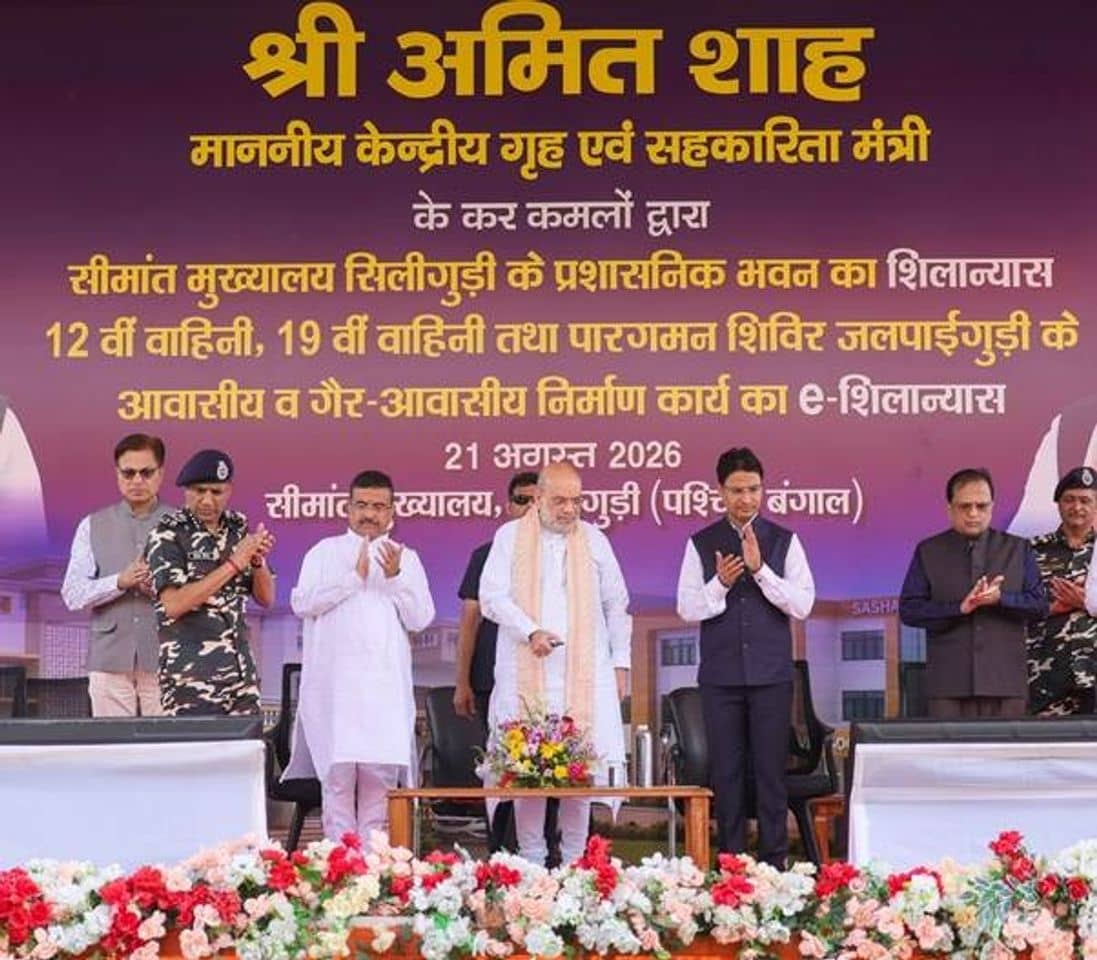
The comments were made during groundbreaking and foundation stone laying ceremonies for various projects by the Sashastra Seema Bal (SSB) at its frontier headquarters. Shah used the platform to outline what he described as historical failures in border management under previous state governments in West Bengal.
Disputes Over Land Acquisition for Border Fencing
Shah directed criticism toward former West Bengal Chief Minister Mamata Banerjee, alleging that she did not provide the necessary land for fencing the India-Bangladesh border despite repeated requests. He described his efforts to secure this land as "desperate pleas" that "fell on deaf ears," according to reports from the event.
Shah specified that he had been requesting 1,129 acres of land to strengthen border security through the Border Security Force (BSF) since 2014. He stated that the land parcel was only received after the formation of the new Adhikari government in the state.
"We received the land parcel only after the Adhikari government was formed in the state," Shah said, contrasting the current administration's cooperation with what he characterized as the previous dispensation's refusal to engage with central border security initiatives.
Congratulates Current Chief Minister for Attendance
Shah congratulated West Bengal Chief Minister Suvendu Adhikari for attending the SSB program, describing his presence as "breaking the glass ceiling." Shah noted that no previous chief ministers of West Bengal had ever attended programs organized by the SSB or the BSF.
He argued that the absence of previous chief ministers from these events sent incorrect signals regarding national security cooperation. Shah emphasized that the SSB is not a political organization, implying that participation in its functions should be viewed as a standard administrative duty rather than a partisan act.
Remarks on National Song and Historical Recognition
Beyond border infrastructure, Shah expressed regret regarding the historical recognition of the national song "Vande Mataram." He stated that he was saddened by previous dispensations in India for not awarding due recognition to the song since the country gained independence.
Shah noted that the complete version of "Vande Mataram" had never been sung in India until the Independence Day celebrations at the Red Fort held earlier that year. He marked this occasion as significant, noting it coincided with the 150th year of the song's creation by Bankim Chandra Chattopadhyay.
"It gives me solace that the nation has finally recognised the song on the 150th year of its creation," Shah said. He framed this recognition as a corrective measure to past oversights, linking cultural heritage to national identity in his address.
Implications for Border Management Policy
The ceremony in Siliguri highlighted ongoing efforts to strengthen border infrastructure between India and Bangladesh. By citing the specific acreage of land secured only after the change in state leadership, Shah provided a timeline for the resolution of logistical hurdles in border fencing.
Shah's remarks positioned border security as a critical component of national safety, directly linking the physical security of frontiers to the broader concept of state stability. The event served as a public forum for these assertions, with the home minister using the occasion to evaluate past administrative records and acknowledge current cooperation.
Shah did not provide immediate responses from former Chief Minister Banerjee or other political critics regarding his allegations about land acquisition or attendance at border force events. The focus of the event remained on the inauguration of SSB projects and the home minister's assessment of border security protocols.