


India Positioned as Global Growth Anchor Amidst Resource Weaponization
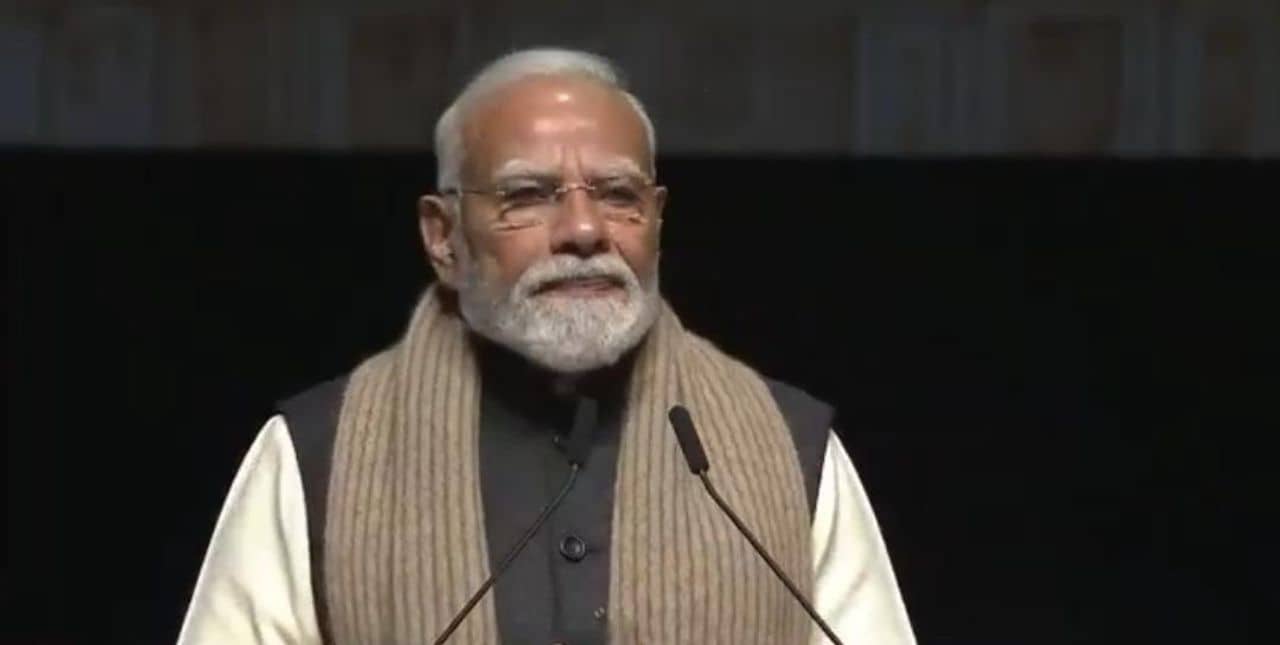
New Delhi, Aug 21: Prime Minister Narendra Modi asserted on Friday that India possesses significant political stability and continuity in its policies, describing the nation as a "bright spot of growth and hope" for the world. Addressing attendees at the Economic Times World Leaders Forum, the Prime Minister emphasized that his government remains committed to implementing reforms across all sectors to ensure sustained economic momentum.
Modi highlighted that while global concerns regarding growth persist due to resources being weaponized, India continues to advance with a clear roadmap for reforms. He noted that the National Democratic Alliance (NDA) government maintains a strong focus on governance as it pushes ahead with these structural changes. This steadfast approach, he suggested, provides a crucial anchor of stability in an otherwise volatile international economic landscape, attracting global attention and investment.
"India continues to take several steps to ensure continued growth momentum. India is pushing ahead with reforms across sectors and reforms are our commitment," Modi said during his address. He characterized the current economic environment by pointing out that resources are increasingly being used as tools of geopolitical leverage, a factor contributing to global uncertainty. Despite these external pressures, the Prime Minister conveyed confidence in India's internal strengths and its capacity to maintain a trajectory of robust economic expansion.
Contrasting Regulatory Philosophies and Economic Models
In his speech, the Prime Minister drew sharp distinctions between the regulatory approaches of his administration and those of previous regimes. Modi alleged that prior governments operated under a policy designed to keep people in scarcity, thereby forcing citizens to "beg before the government for even basic needs." He criticized the era known as the "licence raj," stating that it historically added to the burden of unemployment by creating bureaucratic hurdles and stifling entrepreneurial spirit.
Modi argued that his government has moved away from this model toward one focused on production-linked incentives. "Our government is rewarding higher production with incentives," he said, describing the shift as a move from what he termed the "Production Linked Punishment" (PLP) model of previous administrations to the current "Production Linked Incentives" (PLI) framework. He explained that the PLP model, by its very nature, discouraged growth and innovation, whereas the PLI model is designed to actively foster them.
The Prime Minister described a fundamental change in regulatory philosophy. He stated that his government believes there should be no regulation for doing something that has not been explicitly prohibited under law. This represents a shift from a "prohibited-unless-permitted" approach to a "permitted-unless-prohibited" model, according to Modi. This new philosophy aims to reduce red tape, foster trust, and create an environment where businesses and individuals can operate with greater freedom and less bureaucratic interference.
A New Era of Regulatory Frameworks
This paradigm shift in regulatory thinking is central to the government's broader economic strategy. By presuming permission rather than prohibition, the administration seeks to unlock potential across various sectors, encouraging investment, innovation, and expansion. The Prime Minister underscored that this change is not merely cosmetic but represents a deep-seated alteration in the government's approach to economic governance, designed to empower rather than restrict.
Scope of Reforms and Policy Implementation
Modi outlined the government's efforts to implement next-generation reforms at the policy level, alongside governance-level changes aimed at improving ease of living. He emphasized that the current administration is not merely changing regulations but is altering the entire policy of regulations. These comprehensive reforms are intended to streamline processes, enhance transparency, and create a more predictable and supportive environment for economic activity, ultimately contributing to both national growth and individual prosperity.
Government Commitment to Production and Opportunity
The Prime Minister reiterated that the PLI model is designed to create opportunities for employment and production across various industries. By offering incentives for increased output, the government aims to stimulate manufacturing, boost exports, and generate a significant number of jobs, thereby addressing the challenge of unemployment that Modi attributed to previous economic models. This initiative is a cornerstone of the government's strategy to make India a global manufacturing hub.
He stated that the NDA government has a clear roadmap for reforms, with a strong focus on governance as a means to achieve these economic goals. This governance-centric approach ensures that reforms are not just enacted but are also effectively implemented and monitored, leading to tangible improvements in the economic landscape. The emphasis on good governance is presented as crucial for maintaining the political stability and policy continuity that India offers to the world.
Addressing the global perception of India, Modi said the world sees the country as a bright spot of growth. He maintained that the steps being taken are intended to ensure continued growth momentum despite the challenges posed by weaponized resources in the international arena. India's commitment to reforms, its stable political environment, and its focus on production-linked incentives collectively position it as a resilient and promising economy on the global stage, capable of navigating and thriving amidst complex geopolitical and economic shifts.