

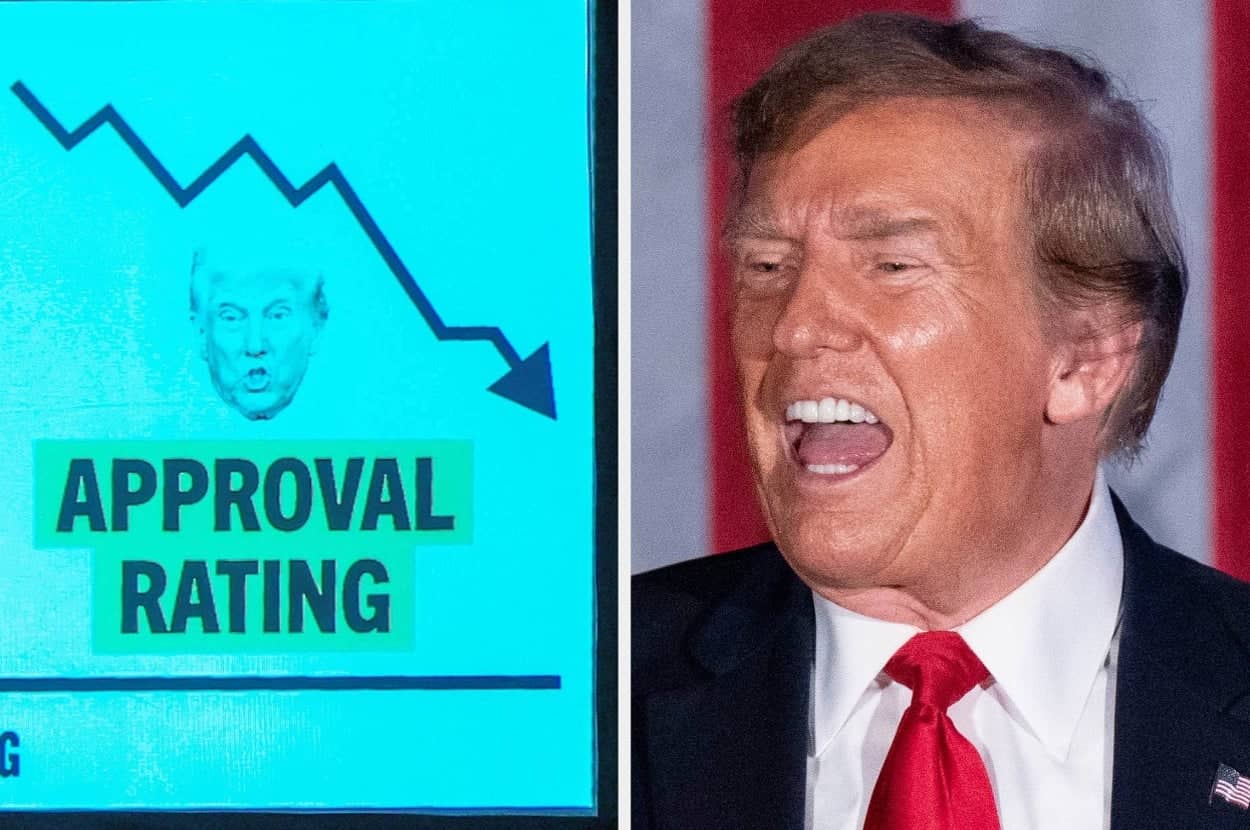

Former President Trump's Approval Rating Reaches Notable Low
Recent polling data indicates that former President Donald Trump's approval rating has fallen to 37%. This figure represents a notable low point in his approval ratings since leaving office in January 2021, according to various surveys tracking public sentiment.
Approval ratings serve as a key metric for gauging public perception of political figures and their performance. These ratings are typically derived from nationwide polls that survey a representative sample of the adult population, asking whether they approve or disapprove of a public figure's job performance or overall standing. While individual polls may vary slightly, consistent trends across multiple reputable surveys often highlight significant shifts in public opinion.
Understanding Approval Ratings in Post-Presidency
For former presidents, approval ratings can reflect a combination of factors, including their ongoing political activities, public statements, and the broader political landscape. Unlike sitting presidents, whose ratings often fluctuate based on policy decisions and current events, a former president's ratings can be influenced by their continued relevance in political discourse and their engagement with national issues. A rating of 37% places former President Trump among historical figures who have experienced periods of lower public approval, particularly when out of office and not directly commanding the executive branch.
Historically, presidential approval ratings tend to decline over the course of a term, often dipping during periods of economic downturn, national crisis, or significant political controversy. For former presidents, their ratings can sometimes see a rebound over time as historical perspectives solidify, or they might remain polarized depending on their continued involvement in public life. The current 37% rating for former President Trump reflects a segment of the electorate that continues to support him, while a larger portion expresses disapproval.
Political Analysts Observe Communication Patterns
In the context of fluctuating approval ratings, political commentators and analysts frequently examine how public figures, including former President Trump, manage their public image and respond to unfavorable polling data. Observers have often noted recurring patterns in communication strategies employed by political figures when faced with negative news cycles or declining public support.
One such pattern frequently highlighted by political analysts regarding former President Trump's approach involves a strategic redirection of public and media attention. This often manifests through the initiation of new public controversies, strong critiques of political adversaries, or a heightened focus on issues designed to energize his base and shift the narrative away from less favorable topics, such as approval ratings or ongoing legal challenges. These strategies are often observed across various communication platforms, including social media, public rallies, and media appearances.
Political analysts suggest that by creating new points of contention or emphasizing different aspects of the political debate, the aim can be to dominate news cycles and reframe public discourse. This approach can serve to galvanize supporters, reinforce existing loyalties, and potentially divert scrutiny from areas where public opinion may be less favorable. The consistent observation of these tactics by political commentators underscores a recognized method of engagement within contemporary political communication.
Implications for Public Discourse
The observed communication patterns, as noted by political analysts, have broader implications for public discourse and media consumption. When a prominent political figure consistently employs strategies to shift focus, it can influence the topics that receive widespread media coverage and the issues that dominate public conversation. This dynamic can present challenges for media organizations in maintaining focus on a range of issues while also reporting on significant political developments and statements.