


Predictions of a Late-Year Diplomatic Encounter
Two prominent experts on Korean affairs have suggested that US President Donald Trump may invite North Korean leader Kim Jong-un to the Group of 20 (G20) summit scheduled to take place in Florida this December. The speculation regarding a potential bilateral summit between the two leaders emerged during a podcast episode hosted by the Center for Strategic and International Studies (CSIS) on Wednesday.
Vincent Brooks, the former commander of US Forces Korea, and Victor Cha, currently serving as the president of CSIS Geopolitics and Foreign Policy Department and its Korea chair, provided the analysis. According to their assessment, the earliest possible window for a Trump-Kim summit would occur between November and December of the current year.
The suggestion places the potential meeting within the context of several upcoming high-profile diplomatic events. Brooks identified a series of strategic opportunities that could facilitate engagement, including the United Nations General Assembly, an anticipated visit to the United States by Chinese President Xi Jinping, the US midterm elections in November, and the G20 summit itself in December.
Assessment of North Korean Rhetoric and Readiness
In outlining the basis for these predictions, Brooks pointed to a distinct shift in the tone of diplomatic language employed by Pyongyang. He noted that North Korea has adopted notably restrained rhetoric toward the United States, which stands in contrast to the continued critical and barbed language directed at South Korea.
While acknowledging the changing tone, the experts clarified the current status of inter-Korean and US-DPRK relations. Both Brooks and Cha stated that North Korea is not immediately ready to engage in formal dialogue with the United States. However, they emphasized that the doors for engagement remain open, suggesting that Pyongyang is maintaining a posture that allows for future diplomatic overtures.
Historical Precedents and Future Windows
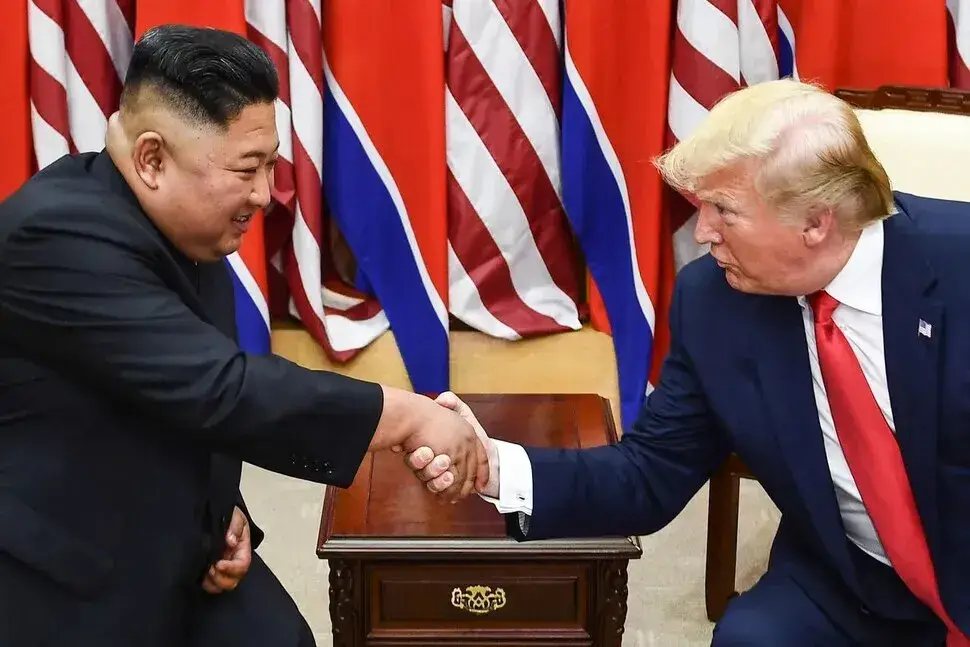
The potential for a summit draws attention to previous interactions between the two leaders. Visual records from past engagements show Trump and Kim Jong-un shaking hands during their 2019 summit at Panmunjom, an event captured by AFP/Yonhap.
Brooks, leveraging his experience as the former commander of US Forces Korea, utilized the upcoming calendar of international events to project potential timelines for renewed contact. The identification of the UN General Assembly and Xi Jinping’s visit to the US as key diplomatic windows highlights the complex geopolitical landscape in which any future summit would be situated.
The prediction that Trump might extend an invitation to Kim during the G20 summit in Florida underscores the significance of the host nation's role in facilitating multilateral diplomacy. The timing, potentially as early as November or extending into December, aligns with the experts' observation of a period where diplomatic channels may be more receptive to high-level engagement.
Divergent Diplomatic Signals
A critical component of the experts' analysis is the divergence in North Korea's diplomatic messaging. By contrasting the restrained approach toward Washington with the aggressive posture toward Seoul, Brooks provided a specific metric for evaluating Pyongyang's intentions toward the United States.
This assessment does not indicate an immediate thaw in relations but rather suggests a strategic opening. The CSIS experts characterized the situation as one where North Korea is not prepared to talk right now, yet remains accessible to engagement at a later date. This distinction is central to the prediction that a summit could be arranged within the specified November-December timeframe.
The involvement of Brooks and Cha adds weight to these predictions given their respective positions in military command and strategic policy analysis. Their joint appearance on the CSIS podcast served as the primary platform for disseminating this forecast, linking historical precedents with current diplomatic observations to suggest a plausible path for future US-North Korea interactions.