

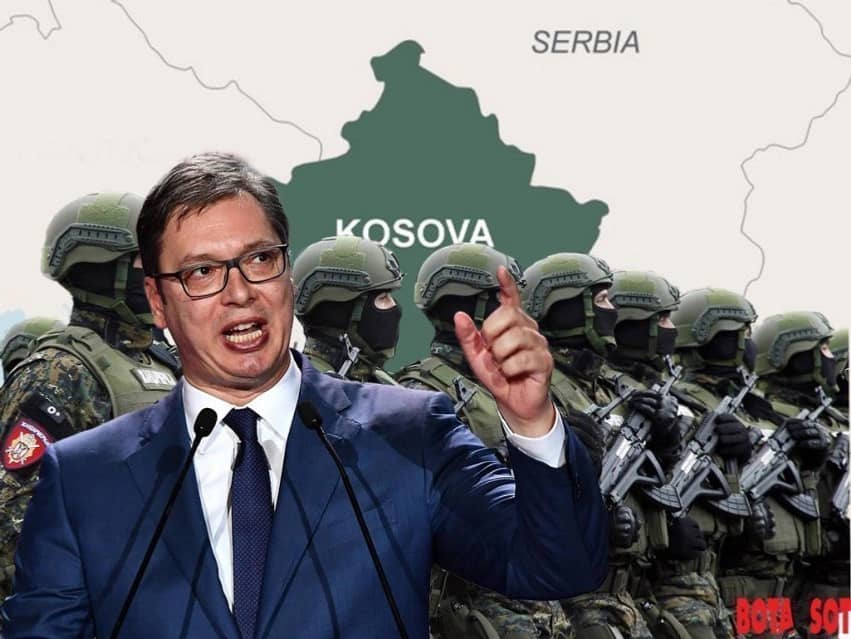

Vucic Reiterates Territorial Claims at Military Graduation
During a ceremony marking the graduation of 130 new officers from the Serbian Armed Forces, President Aleksandar Vucic reiterated Serbia's official position regarding Kosovo. In his address to the newly commissioned officers, Vucic stated that Kosovo belongs to Serbia "under the Constitution and divine justice." He urged the graduates to defend what he described as "sacred" territory.
Alongside these territorial assertions, Vucic called for the further expansion of Serbia’s military capabilities. The remarks were delivered at a formal event designed to celebrate the advancement of military personnel, yet they focused heavily on geopolitical claims that have long been central to Belgrade's foreign policy stance toward its southern neighbor.
Experts Critique Disconnect Between Diplomacy and Rhetoric
The statements issued by President Vucic have drawn sharp criticism from security experts who argue that the rhetoric undermines ongoing efforts to normalize relations in the region. Valdet Hoxha, a security affairs expert, characterized the president's approach as autocratic. In an assessment published regarding Vucic’s rule, Hoxha compared the Serbian leader’s tactics to those of former Yugoslav President Slobodan Milošević, but noted that Vucic employs "even more cunning" methods.
Hoxha argued that Vucic maintains a dual strategy regarding Kosovo. According to the expert, while Vucic participates in international dialogue processes and signs agreements to present himself as a cooperative partner, he simultaneously engages in provocative language toward Pristina. This combination of diplomatic engagement and hostile posturing is viewed by Hoxha as a course that continues to undermine stability in the Balkans.
Evidence of Instability Cited by Analysts
Security analysts point to recent violent incidents as evidence that such rhetoric cannot be ignored. Hoxha specifically cited events in Banjska and at the Ibër-Lepenc river crossing as indicators of the dangers posed by Belgrade's current stance. These incidents are described by experts as tangible results of the gap between Serbia's diplomatic engagements and its military-oriented public statements.
The timing of Vucic’s remarks has been noted by observers as particularly sensitive. The comments were made at a time when dialogue between Belgrade and Pristina is intended to ease tensions and normalize regional relations. Critics argue that calling for military expansion and reasserting territorial claims during periods of diplomatic negotiation creates a contradictory environment that hinders progress.
Implications for Regional Stability
The continued hostile statements from Belgrade are viewed by experts as an extension of Serbia’s official stance toward Kosovo. Security analysts warn that the disconnect between signing agreements and making territorial threats poses a risk to regional peace. The expansion of military capabilities, combined with rhetoric framing Kosovo as "sacred" territory under divine justice, is seen by critics as a method to maintain political control domestically while projecting strength externally.
As dialogue processes continue, the behavior of Serbian leadership remains a focal point for security experts monitoring the Balkans. The concern expressed by figures like Hoxha highlights a broader apprehension that rhetorical actions may contradict diplomatic intentions, potentially leading to further instability in a region where past conflicts have left deep political scars.